By Nwajiobi Ijeoma 9news Nigeria, Nnewi
The Anambra State Government has reaffirmed its commitment to institutionalising the state’s long-term development plan to ensure continuity, policy consistency and sustainable growth beyond the administration of Governor Chukwuma Charles Soludo.
The government said its vision was to transform Anambra into a major economic and logistics hub, a leading tourism destination and a state with strong human capital capable of sustaining development through 2070.
The Secretary to the State Government (SSG), Mrs Chiamaka Nnake, stated this during a strategic engagement with planning officers, where she emphasised the need for an enduring development framework to guide successive administrations and prevent frequent changes in development priorities following political transitions.
Nnake said the eight-year development vision of the Soludo administration should serve as a roadmap for future governments by documenting achievements, identifying outstanding projects and highlighting critical priorities requiring sustained attention.
She explained that the administration’s development philosophy was anchored on strategic investments in infrastructure, human capital development and economic growth, noting that the ultimate objective was to establish an institutional framework that would transcend the tenure of the present government.
Describing planning officers as the intellectual backbone and think tank of government, the SSG urged them to take greater ownership of government policies, programmes and projects within their respective sectors.
She stressed that their responsibilities should extend beyond routine documentation to effective monitoring, evaluation and assessment of the actual impact of government interventions on citizens.
Nnake challenged the officers to assess development projects beyond their physical outputs, particularly road construction, and examine their contributions to employment generation, improved livelihoods and broader economic growth.
“It is not just about building roads. What is the economic impact? We must look at development from the perspective of livelihoods, job creation and how government interventions improve the lives of individuals,” she said.
She also advocated stronger collaboration among planning officers, economists and other professionals to ensure that government policies and projects translated into measurable economic and social outcomes.
According to her, institutionalising development planning would discourage successive administrations from abandoning established priorities while providing a framework for incoming governments to sustain, review and improve existing programmes.
The SSG urged the officers to familiarise themselves with the administration’s performance reports, available in both hard and electronic copies, and understand the contributions of their respective sectors to the state’s development agenda.
In a related development, the engagement featured the presentation of a standard Monthly Performance Monitoring and Reporting Template designed to strengthen accountability, policy implementation and service delivery across government institutions.
Presenting the template, the Principal Planning Officer and Head of ECA&P, Mr Okpala Chinedu, said the reporting instrument would provide a uniform framework for assessing institutional performance, monitoring policy implementation, tracking financial activities and evaluating service delivery.
He explained that the template was designed to provide government with reliable information on the activities, achievements, challenges and operational requirements of ministries, departments, agencies, commissions and parastatals.
Chinedu emphasised the importance of submitting comprehensive and verified reports covering institutional activities within specified periods. He said such reports should be supported with relevant records, photographs, financial documents and other verifiable evidence.
He added that institutions would also be required to identify operational gaps, recommend corrective measures and specify the support needed from government to improve their performance.
According to him, the agency profile section of the template would require institutions to provide their official names, relevant institutional details and functional websites.
He expressed concern that inadequate information and poor communication had made it difficult for government to understand the mandates, activities and operational needs of some agencies and commissions, warning that some institutions risked becoming inactive despite the importance of their responsibilities.
Chinedu further disclosed that reports submitted under the framework would be analysed and presented to relevant government authorities to guide decisions on funding, staffing, institutional restructuring and timely appointments of managing directors, chief executive officers and other principal officers.
He also stressed the need for ministries and agencies to maintain functional and accessible websites through which government and members of the public could obtain information about their mandates, leadership and activities.
The engagement also featured a lecture by Professor Jaja Nwanegbo titled “Aligning Institutional Programmes and Performance with Government Priorities: From Policies to Measurable Results.”
Similarly, Mr Nwabachili C.M., who represented the Permanent Secretary of the Ministry of Budget and Economic Planning, delivered a lecture on “Results-Based Performance Monitoring, Key Performance Indicators (KPIs), Data Collection, Reporting and Evidence-Based Decision-Making.”
In his remarks, Dr Nwankwo, Permanent Secretary in the Office of the Secretary to the State Government, commended the state government for organising the workshop, describing it as a significant capacity-building initiative that would equip public officials with the knowledge and skills required to monitor Anambra’s development progress, both in the present and future.
The initiative is expected to strengthen government monitoring mechanisms, enhance institutional performance and provide credible data to support evidence-based policy formulation and decision-making.
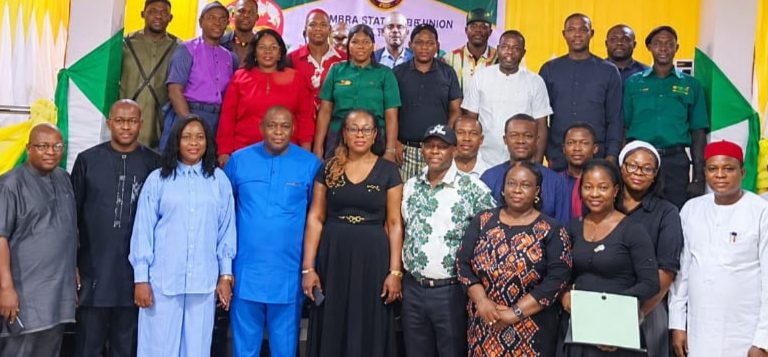
Those present at the engagement included Mr Agbafune Anthony of OCHA Brigade (Acting); the Managing Director of ANSEWCCA, Engr. Ifeanyi Nwasike; the Acting Managing Director of ASBA, Mr Nonso S. Emeka; and the Acting Managing Director of TRACAS, Mrs Njideka Okeke.
The engagement underscores the state government’s resolve to establish a sustainable institutional framework that will ensure Anambra’s development agenda survives successive administrations while remaining focused on long-term economic growth and the prosperity of its people.