By Princely Onyenwe | News Desk
The Independent National Electoral Commission (INEC) has announced new technological safeguards to prevent inaccurate polling-unit results and figures indicating over-voting from appearing on its Result Viewing Portal (IReV) ahead of the 2027 general elections.
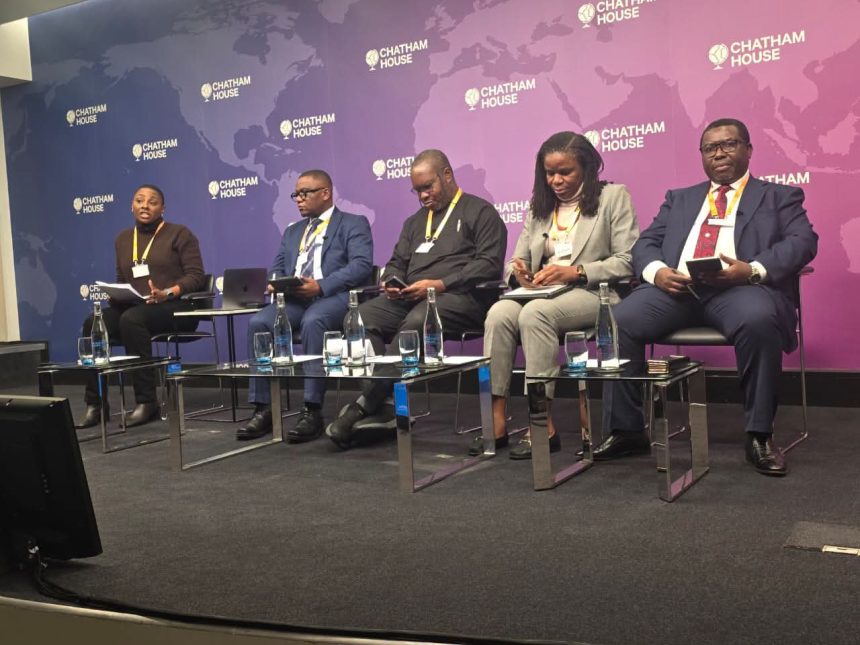
INEC Chairman, Prof. Joash Amupitan, disclosed this on Thursday, November 12, 2026, during an engagement at Chatham House, London, where he also announced November 28 for a nationwide mock accreditation and voting exercise to test the Commission’s electoral technology ahead of the polls.
Amupitan explained that the new safeguards were developed following an assessment of weaknesses identified during the 2023 general elections, particularly concerns surrounding result management and public confidence in the electoral process.
According to him, the Commission has introduced technical checks to prevent polling-unit results that fail prescribed accuracy requirements from being uploaded to IReV, thereby strengthening the integrity of the information made available to the public.
He acknowledged that controversies surrounding the 2023 presidential election had damaged public confidence in INEC, admitting that the Commission had yet to fully recover from the resulting trust deficit.
On preparations for 2027, the chairman disclosed that INEC had decided to strengthen its existing electoral technology rather than introduce an entirely new system, considering the limited time remaining before the elections.
He further revealed that the Commission had procured additional Bimodal Voter Accreditation System (BVAS) devices and reduced the maximum number of registered voters assigned to each machine from 1,250 to 850. Polling units exceeding that threshold would receive additional devices to improve accreditation efficiency.
Addressing concerns about BVAS malfunctions associated with extreme temperatures and storage conditions, Amupitan said INEC was constructing climate-controlled storage facilities across the states to protect the equipment.
The November 28 nationwide mock exercise will simulate the presidential election process, allowing the Commission to assess voter accreditation, technological performance and electronic transmission of results before the actual polls.
The INEC chairman also identified insecurity, logistics and result management as major challenges requiring attention, while expressing optimism about improvements recorded during recent off-cycle elections and legislative by-elections.
On funding, he disclosed that INEC had received a substantial portion of its 2027 election budget but was awaiting the release of outstanding funds, including allocations for recruiting and managing ad hoc election personnel.
Nigeria’s 2027 presidential and National Assembly elections are scheduled for January 16, while governorship and State Houses of Assembly elections are slated for February 6, 2027.
Although the proposed technological safeguards represent an important step towards strengthening electoral transparency, their effectiveness will depend on successful testing, credible implementation and strict compliance with electoral laws.
For Nigerians still concerned about the controversies surrounding the 2023 elections, the November 28 exercise will provide an important opportunity to assess whether INEC’s technological improvements can deliver the transparency and credibility expected ahead of 2027.
For more inquiries on this news report contact 9News Nigeria on +234 08036856526