Her empowerment drive sparks widespread reactions as constituents commend her performance and call for her return to the House of Representatives.
The Member Representing Ethiope Federal Constituency in the House of Representatives, Rt. Hon. Erhiatake Ibori-Suen, has reportedly made significant interventions through various empowerment programmes aimed at improving the economic well-being and livelihoods of her constituents.
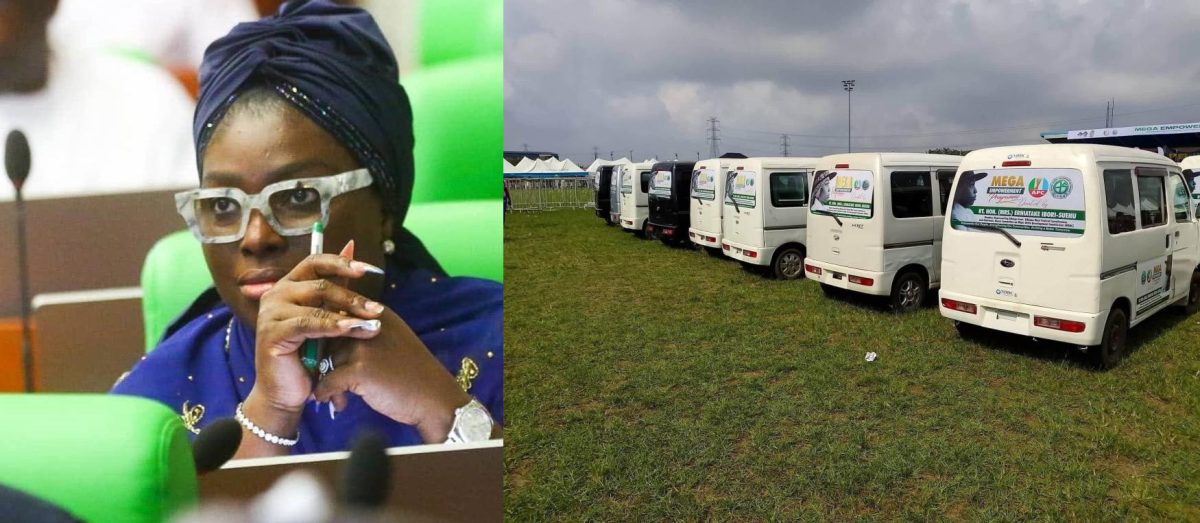
The empowerment initiatives, which have continued to attract attention across Delta State and beyond, reportedly include the distribution of 150 mini buses, 150 tricycles, 150 motorcycles and 100 grinding machines to beneficiaries across the constituency.
In addition to these items, the federal lawmaker reportedly extended direct financial support to 200 constituents, with each beneficiary receiving ₦100,000, alongside several other empowerment interventions.
The scale of these reported interventions has generated considerable reactions among residents and political observers, with many describing the initiatives as impactful steps towards economic empowerment, job creation and poverty reduction.
For beneficiaries, the provision of mini buses, tricycles and motorcycles represents more than just the distribution of vehicles. These items have the potential to create employment opportunities, support small businesses, improve transportation services and provide sustainable sources of income for individuals and families.
Similarly, the distribution of grinding machines is expected to support small-scale entrepreneurs, particularly those engaged in food processing and other community-based businesses.
The reported empowerment programmes have also triggered discussions about representation, accountability and the importance of delivering tangible dividends of democracy.
While many constituents have reportedly expressed appreciation and offered prayers for the lawmaker, others have openly advocated for her return to the House of Representatives, arguing that her performance within her current tenure deserves further consideration.
Supporters believe that if such interventions can be delivered within a single legislative tenure of less than four years, retaining her could provide an opportunity for more developmental projects, economic empowerment initiatives and other benefits for Ethiope Federal Constituency.
However, beyond the political conversations surrounding her future, the development has renewed attention on the responsibility of elected representatives to translate public trust into meaningful programmes that directly affect the lives of the people they represent.
At a time when Nigerians are increasingly demanding accountability and measurable results from elected public officials, empowerment programmes that target ordinary citizens deserve attention and proper assessment.
Rt. Hon. Erhiatake Ibori-Suen’s reported interventions present an example of constituency-focused representation that other lawmakers may wish to study and emulate.
Nevertheless, the sustainability, transparency and equitable distribution of such programmes remain important considerations to ensure that the benefits reach the intended beneficiaries.
Ultimately, effective representation should not be measured by political promises alone but by the positive changes citizens can experience in their daily lives.
For the people of Ethiope Federal Constituency, the bigger question remains: If these empowerment initiatives are sustained and expanded, how much more can be achieved for the constituency in the years ahead?