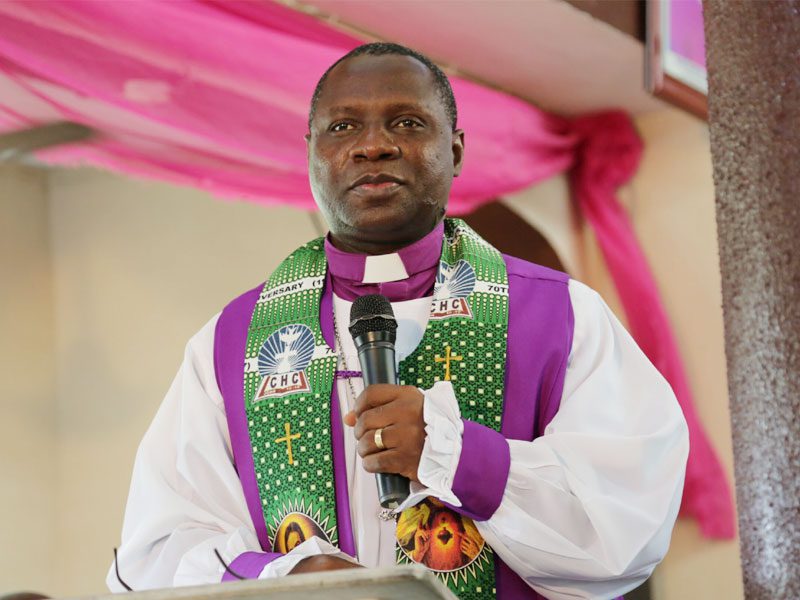
The Christian Association of Nigeria (CAN) has publicly challenged the Presidency, accusing it of misrepresenting its position on the killings of Christians in the country and reaffirming that what is occurring in parts of Northern Nigeria and the Middle Belt amounts to a “Christian genocide.”
In a statement signed by its President, Daniel Okoh, CAN declared that it never described the widespread violence as a “so-called Christian genocide,” contrary to what a press release from the Presidency purportedly claimed. The association said its position has remained consistent: dozens of Christian communities across Northern Nigeria and the Middle Belt have endured repeated violent attacks, displacement, death, and destruction of property.
During a meeting held at the National Christian Centre in Abuja, CAN’s Director of Planning, Research and Strategy, Mike Akpami, presented data from the Observatory for Religious Freedom in Africa (ORFA) showing sustained and targeted violence against Christians. The association urged the Federal Government to act with urgency and fairness, emphasising that Christian communities cannot be treated as mere statistics.
In its reaction, the Presidency, through its Special Adviser on Media and Policy Communication, Daniel Bwala, dismissed the allegations as “false and politically motivated,” describing them as part of an orchestrated campaign by foreign interests to tarnish Nigeria’s reputation. The government maintained that there is no official policy aimed at Christians and attributed the violence to terrorism, criminality, land disputes, and communal conflicts rather than a targeted religious genocide.
While CAN insists on the reality of systematic attacks on Christians, independent data offers a more nuanced picture. According to the Armed Conflict Location & Event Data Project (ACLED), between January 2020 and September 2025, there were approximately 11,862 attacks against civilians in Nigeria, resulting in about 20,409 deaths. Of these, 385 attacks were classified as “targeted events against Christians” where the Christian identity of victims was reported, resulting in 317 deaths. During the same period, 417 deaths were recorded among Muslims in 196 attacks. Security experts caution that while the scale of violence is very high, the data does not uniformly support the legal definition of genocide, which requires proof of intent to annihilate a protected group in whole or in part.
The debate has far-reaching implications. Analysts say that the mere use of the term “genocide” in relation to Nigeria weakens investor confidence and harms the country’s international image. Some human rights observers warn that failing to address the underlying causes and patterns of violence could lead to further escalation and state fragility.
CAN is calling for immediate and transparent investigations into attacks on Christian communities, equitable protection of all Nigerians regardless of faith or region, responsible communication from government officials, and unity among Christian leaders to ensure their advocacy promotes peace rather than division.
The Federal Government, on its part, faces increasing pressure both domestically and internationally. With faith-based organisations intensifying their claims and international observers closely monitoring Nigeria’s security and human rights record, the government must respond not only with statements but with tangible action. Whether the narrative will shift from denial of genocide to broad acknowledgement of targeted violence depends largely on its ability to deliver credible solutions.
The clash between CAN and the Presidency places Nigeria at a critical juncture. While Christian leaders allege organised, faith-based victimisation, the government insists the violence stems from broader security challenges rather than a specific religious agenda. The truth likely lies in a complex mix of criminality, communal conflict, and religious tension. What remains undisputed, however, is the urgent need for decisive action to protect vulnerable populations, restore trust in state institutions, and prevent further deterioration of peace and unity across the country.