The Democratic Republic of Congo (DRC) is planning long-term cobalt export controls as it seeks to stabilise global prices, promote local refining, and reduce China’s grip on critical mineral supply chains, Bloomberg reports.
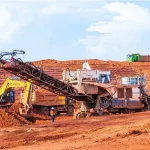
Responsible for about 75 percent of global cobalt output, the DRC shocked markets earlier this year by suspending cobalt shipments for four months starting February 22, then extending the ban by another three months in June. The halt has sent ripples across international markets, with China — the dominant processor of cobalt hydroxide — bearing the brunt.
Cobalt hydroxide, the main cobalt product exported by the DRC, is a key input in lithium-ion batteries. Most of it is currently refined in China into battery-grade material or metal. However, Kinshasa now wants more of that value chain rooted domestically.
‘We’re not pushing for cobalt to exceed $40 per pound,’ said the chairman of state mining company Gécamines, speaking to Bloomberg. ‘But as a country, we have a duty to keep prices steady. Stability is our goal.’
Supply glut triggers global shake-up
The move responds to a persistent oversupply that has led to swollen inventories across major markets. China’s cobalt imports fell by over 60 percent in June — the steepest drop since the DRC’s ban came into effect.
Adding to the pressure, CMOC’s trading arm — a top cobalt player — declared force majeure on hydroxide deliveries, indicating tightening conditions across the supply chain.
Glencore and Eurasian Resources Group (ERG), both operating extensively in Congo, are also affected. Gécamines holds minority stakes in joint ventures with all three major firms, giving the state substantial leverage in how the country’s cobalt resources are developed and sold.
US-DRC deal aims to break China’s lead
At the same time, the DRC is working with the United States to craft a strategic partnership focused on unlocking investment into its copper, cobalt, lithium and tantalum reserves. The aim is to diversify sourcing and disrupt China’s near-monopoly over mineral processing.
Post-ban, the government is now weighing the introduction of export quotas to avoid flooding the market. The Gécamines chairman described the idea of a quota as something that ‘could make sense’, noting that it would help manage supply, keep prices within a viable range, and build incentives for downstream investment in Congolese soil.
If implemented, such a quota system would mark a shift in strategy — from passive resource extraction to more assertive economic planning — positioning Kinshasa not just as a supplier of raw materials but as a central player in the global battery economy.
The implications are wide-ranging: from recalibrating supply chains to forcing a rethink among manufacturers reliant on cheap, unprocessed cobalt. For the DRC, the move may be the first real step toward reshaping the rules of the energy transition.