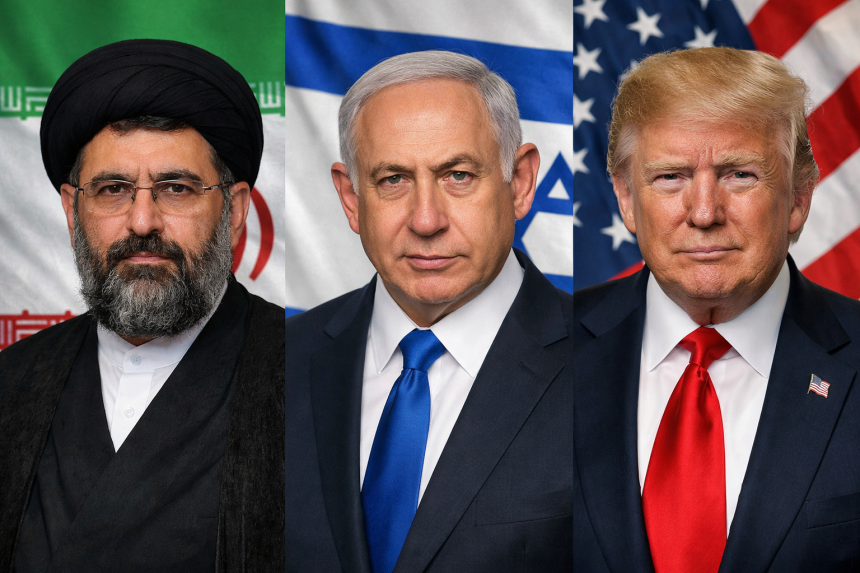
The confirmed killing of senior Iranian security figures in a dawn airstrike has pushed the Middle East to the brink of a wider and more dangerous conflict.
Iranian authorities confirmed that Ali Larijani, one of the country’s most powerful political and security figures, was killed in a strike targeting the upper echelon of Iran’s leadership.
Larijani’s death marks one of the most significant blows to Iran’s command structure in recent history.
The latest development comes just weeks after the reported assassination of Iran’s Supreme Leader, Ali Khamenei, who was killed in a joint U.S.-Israeli airstrike at the onset of the current conflict.
Iranian state media confirmed his death, declaring a period of national mourning and triggering a leadership transition process.
Israel has described the operation as part of a broader strategy aimed at dismantling Iran’s military and political leadership.
However, beyond the immediate tactical victory lies a deeper and more troubling question: is this the beginning of a wider regional war—or the reshaping of the Middle East as we know it?
The strike comes amid an ongoing conflict that began in late February, when coordinated attacks by the United States and Israel targeted multiple sites across Iran, triggering retaliatory missile and drone strikes across the region.
Iran also targeted neighboring countries in retaliation, including the United Arab Emirates, with casualties mounting and critical infrastructure at risk.
In security operations, killing of top leadership figures could provoke a shift in Iran’s response.
These includes proxy conflicts, cyber operations, and disruption of global oil routes such as the Strait of Hormuz.
While Israel has taken responsibility for the latest strike, the broader conflict has once again drawn attention to the long-standing involvement of the United States in Middle Eastern conflicts.
The Shadow of Global Powers
From Ronald Reagan to Donald Trump, successive U.S. administrations; Democrat and Republican alike have authorized military strikes across the region.
Most recently, U.S. forces carried out a large-scale bombing raid on strategic Iranian military infrastructure, targeting dozens of sites in what officials described as a precision operation aimed at weakening Tehran’s military capabilities.
These continued pattern reflects an intervention that has contributed to recurring crises while countering security threats and maintaining regional balance.
What Comes Next?
The immediate future remains uncertain.
Iran has vowed retaliation, but the form it will take remains unclear.
A direct confrontation with Israel risks full-scale war, while indirect responses through allied groups across the region—could prolong the conflict and draw in multiple countries.
Meanwhile, there are fears of economic fallout. Any disruption to oil shipments through the Gulf could trigger global energy shocks, affecting economies far beyond the Middle East.
Evidently, diplomatic efforts are ongoing, but security and political observers note that the killing of high-ranking figures like Larijani complicates any immediate path to de-escalation.
This moment in Iran’s history represents more than just another escalation, as it may mark a turning point.
Whether it leads to regime instability within Iran, a broader regional war, or a recalibration of global power dynamics remains uncertain.
One thing is clear above all: the question is no longer just what happened in Iran—it is what happens next.