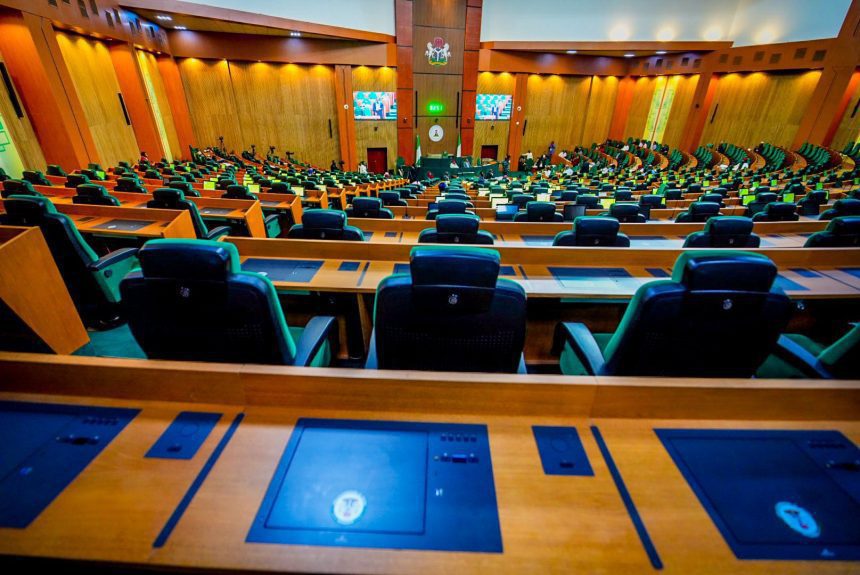
Nigeria’s House of Representatives has approved a major upward review of campaign spending limits for candidates contesting elective offices.
Under the amendment, presidential candidates can now spend up to ₦10 billion, double the previous ₦5 billion ceiling.
Governorship candidates’ limits were raised from ₦1 billion to ₦3 billion, while senatorial aspirants can now spend ₦500 million, up from ₦100 million.
Candidates for the House of Representatives will be allowed to spend ₦250 million, compared to the earlier ₦70 million.
At the state and local levels, the increases are equally significant.
State Assembly candidates’ limits rose from ₦30 million to ₦100 million, Local Government chairmanship aspirants from ₦30 million to ₦100 million, and councillorship candidates from ₦5 million to ₦10 million.
In addition, the amendment sets a cap of ₦500 million on donations from any individual or entity to a candidate.
The Political Reality
Supporters of the amendment argue that the previous spending limits had become unrealistic, given inflation, rising campaign costs, media expenses, logistics, and the scale of modern political mobilization.
In practice, many campaigns were already spending far above the legally permitted thresholds, creating a disconnect between the law and political reality.
Lawmakers say by revising the limits upward, the reform could reduce widespread non-compliance and make campaign finance regulations more aligned with current economic conditions.
A Situation of Money Politics
However, critics warn that the new limits risk further entrenching money as the dominant force in Nigerian politics.
With higher spending ceilings, wealthy candidates and those backed by powerful political financiers may gain even greater advantage, potentially squeezing out young candidates, reform-minded entrants, and grassroots politicians with limited access to funds.
A Double-Edged Sword: The ₦500 Million Donation Cap
The introduction of a ₦500 million cap on donations from individuals or entities is being viewed as a modest attempt to curb excessive influence by single donors.
While this provision may limit overt domination by one financier, in practice, donors could still bypass restrictions through proxies or multiple channels if monitoring remains weak.
Without robust disclosure systems and real-time auditing of campaign finances, the donation cap may exist more on paper than in practice.
Implications for Future Elections
The revised spending framework is likely to influence party primaries as much as general elections.
Higher spending limits could intensify competition within parties, raise the cost of securing tickets, and further commercialize internal party processes.
For voters, the concern remains whether increased campaign spending will translate into better issue-based campaigns or simply more billboards, campaign rallies, and vote-buying allegations.
The Bigger Question
Ultimately, the amendment raises a critical question for Nigeria’s democracy: Should electoral reforms focus on accommodating high campaign costs, or on reducing the role of money in politics altogether?
As Nigeria prepares for future election cycles, the impact of these new spending limits will depend largely on enforcement, transparency, and the political will of institutions like INEC to ensure that elections are contested on ideas and credibility, not just on the size of campaign war chests.