For many Nigerians, affording the basics of life has become a daily struggle.
As inflation tightens its grip, the cost of housing, transportation, and imported goods has surged beyond the reach of the average citizen.
In Lagos, for instance, a decent two-bedroom apartment now goes for as high as ₦3.5 million annually, an impossible feat for many earning below the yet-to-be-implemented ₦70,000 minimum wage.
But for those hoping to secure a vehicle before prices escalate further, this week may be their last chance.
From Friday, the Nigeria Customs Service (NCS) is expected to begin implementing a controversial new valuation system that removes the use of actual invoices to determine import duties, particularly on vehicles.
Instead, Customs officials will independently determine the value of goods, regardless of the importer’s invoice or declared transaction value.
This change, stakeholders argue, opens the door for arbitrary valuations, potentially leading to exorbitant import duties.
Car dealers and importers have already raised alarm, warning that the move will further destabilize the automobile market, burden consumers, and stifle an already fragile economy.
Beyond the new Customs policy, Nigerians are reeling from the cumulative effects of fuel subsidy removal, exchange rate unification, and rising food and utility prices.
These government reforms; aimed at fiscal stabilization have also stripped millions of Nigerians of their purchasing power.
The Nigeria Customs Service, under the current administration, has continued to boast record-breaking revenue generation.
However, many argue this revenue drive has come at the cost of citizen welfare and economic stability.
“No country prioritizes revenue over the welfare of its people, except Nigeria,” a Lagos-based economist told 9News Nigeria.
Other analysts in the economic circles say the government’s reliance on revenue from imports, rather than stimulating domestic production or protecting local industries, is worsening inflation.
Importers are now expected to pay not only duties, but also multiple levies, Value Added Tax (VAT), and Freight on Board (FOB) charges, costs that are inevitably passed on to consumers.
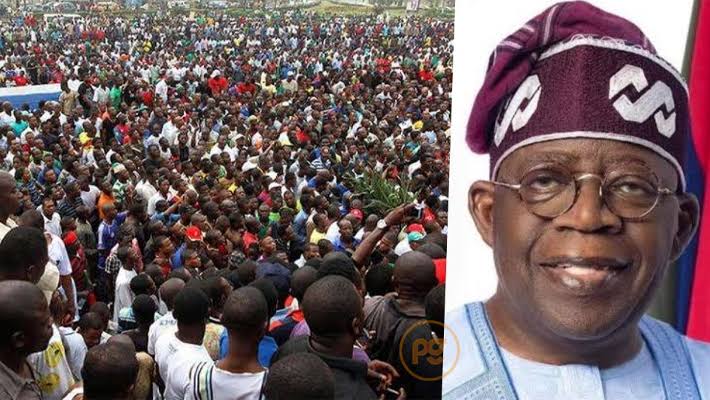
The administration of President Bola Ahmed Tinubu has defended its policies, emphasizing that difficult reforms are necessary to correct structural imbalances and rebuild the economy.
Key among these reforms are the removal of petrol subsidies, a unified exchange rate to curb arbitrage, and attempts to broaden the tax net.
The government has also rolled out some interventions, including loans for small businesses, palliative programs, and a proposed new national minimum wage, which is still under negotiation.
Also, in a notable move seen as a step in the right direction, President Tinubu recently signed a landmark Insurance Reform Bill into law, with the objective of strengthening Nigeria’s insurance sector.
The reform is expected to modernize the industry, expand insurance coverage for Nigerians, particularly low-income earners and improve confidence in the financial services space.
Yet, for many Nigerians, these efforts appear slow and insufficient.
The once-budding middle class is shrinking rapidly, caught between rising costs and stagnant earnings.
Owning a car, building a home, or even planning for migration (“japa”) is now out of reach for millions, particularly the youth.
Observers recall that during the Goodluck Jonathan administration (2010–2015), Nigeria saw a reduction in customs duties and the introduction of policies to encourage local manufacturing and automotive assembly.
Many credit that era with stimulating industrial activity and improving consumer access to imported goods.
But those gains have since eroded, as the country pivots back to an import-heavy economy choked by heavy taxation.
Nigeria’s 1999 Constitution clearly states that the welfare of citizens is the primary responsibility of government. But many argue that this constitutional mandate is increasingly observed in the breach.
As the Customs valuation policy takes effect, many fear that the already strained economy may slide further into crisis.
“Tax them like America, deliver the economy of Congo,” one social media user lamented.