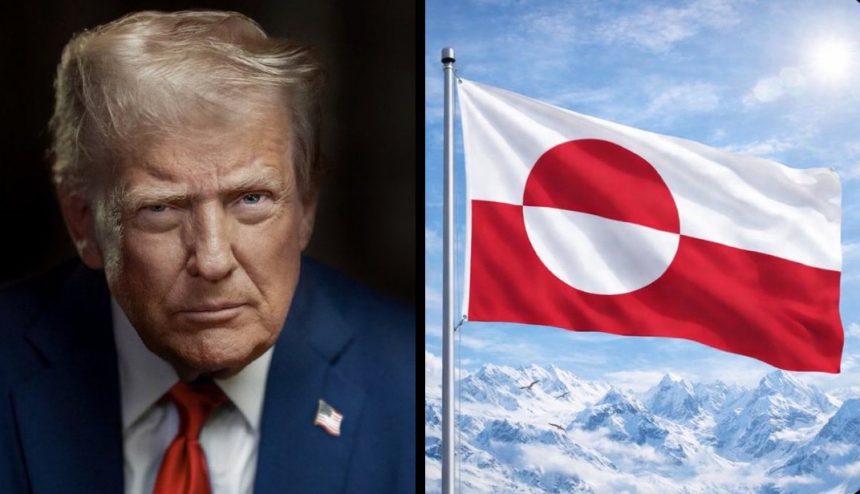
Reports that U.S. President Donald Trump’s administration is actively discussing options to acquire Greenland have surfaced.
According to the reports, the U.S offered direct payments to residents and even considering military options.
While the proposal may sound like a headline-grabbing stunt, the idea of Greenland as a strategic asset has deep roots in history and geopolitics.
Multiple sources explain that the Trump administration is considering offering cash incentives of $10,000 to $100,000 per resident to potential use of military force in a worst‑case scenario.
The White House has confirmed that these conversations are active, though diplomacy remains the preferred approach and the administration claims to be committed to NATO.
Why Greenland ?
Greenland, the world’s largest island, sits between North America and Europe.
The island holds access to emerging Arctic shipping routes and vast reserves of minerals, oil, and gas — resources growing more accessible due to climate change.
Additionally, Its geographic position makes it critical for military and economic strategy.
The United States sees Greenland as a potential leverage point in Arctic security and international trade.
Historical Explainer
U.S. involvement in Greenland dates back to World War II, when Denmark was occupied by Nazi Germany.
The United States stepped in, with approval from the Danish government-in-exile, to protect the island.
These led American forces to establish bases and weather stations that later became essential military infrastructure.
Furthermore, during the Cold War, Greenland’s importance only increased as the U.S. built Thule Air Base — now Pituffik Space Base to monitor potential missile threats from the Soviet Union.
Today, the base remains vital for missile defense and Arctic surveillance.
Greenland Not for Sale — Authorities Say
Despite the headlines, Greenland’s leaders and Denmark have flatly rejected the idea of selling or ceding the island to the United States.
European leaders have echoed this sentiment, stressing that only Denmark and Greenland can decide Greenland’s future.
Denmark’s prime minister has warned that any attempt by the U.S. to take control would undermine NATO and international alliances.
The Legal Reality and Public Opinion
Many Americans oppose territorial acquisition, and most Greenlanders prefer independence or autonomy, not becoming part of the United States.
Also, legally Greenland is a semiautonomous part of the Kingdom of Denmark, and any change in sovereignty would require agreement from both governments as well as Greenlandic residents, not just a U.S. executive decision.
The Proposal
The idea of “buying Greenland” is not new. In 1946, President Harry Truman reportedly offered Denmark $100 million in gold for the island. Denmark rejected the offer.
Decades later, Trump’s discussions about paying Greenlanders directly revived the concept, albeit in a much more controversial form.
Bottom Line
Despite the reports, Greenland is not for sale. Its government and Denmark has outrightly rejected the idea.
The fascination with Greenland reflects more than Trump’s headline-grabbing style.
While a U.S. acquisition is highly unlikely, the repeated discussions underscore why Greenland will remain a geopolitical flashpoint for years to come.