By Obinna Ejianya (9News Nigeria – Melbourne, Australia)
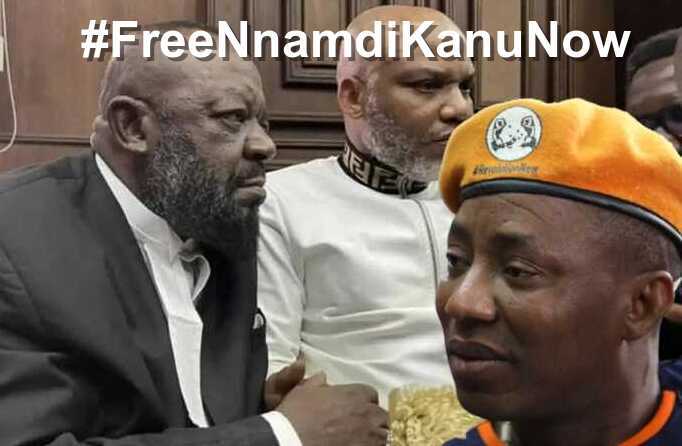
The peaceful protest held on October 20, 2025, in Abuja, tagged #FreeNnamdiKanuNow, has once again laid bare the deep-rooted injustices and systemic discrimination that continue to define Nigeria’s treatment of the Igbo people.
The demonstration, organised and championed by Comrade Omoyele Sowore, a renowned human rights and political activist and publisher of Sahara Reporters, sought the release of the incarcerated leader of the Indigenous People of Biafra (IPOB), Mazi Nnamdi Kanu. Among the participants were Kanu’s brother, Prince Kanu, and his lawyer, Barrister Aloy Ejimakor, who joined other Nigerians to peacefully demand justice and freedom.
However, in a disturbing twist of events, security operatives arrested Nnamdi Kanu’s brother, his lawyer, and a few other participants—mostly of Igbo descent—on the flimsy allegation that they entered a “restricted area.” Ironically, Omoyele Sowore, who led the same protest, spoke through a public address system, and stood side-by-side with the arrested individuals, was neither harassed nor detained.
This selective enforcement of the law is a clear manifestation of Nigeria’s double standards, exposing the persistent bias and marginalisation against the Igbo people. It reaffirms a bitter truth that many have long observed—that in today’s Nigeria, some citizens are treated as more Nigerian than others.
It is this culture of selective persecution and scapegoating that has instilled fear and silence among many Igbo elites, political leaders, and influential figures. These individuals, who should be the strongest voices calling for justice and the release of Mazi Nnamdi Kanu, have chosen to remain cautiously silent out of fear of political repercussions. Unlike those from other regions who faced similar situations—such as Sunday Igboho from the South-West, more so militants and bandits from the North—who have since been released, Nnamdi Kanu continues to languish in detention. His prolonged incarceration has become unnecessary, unjust, and vindictive.
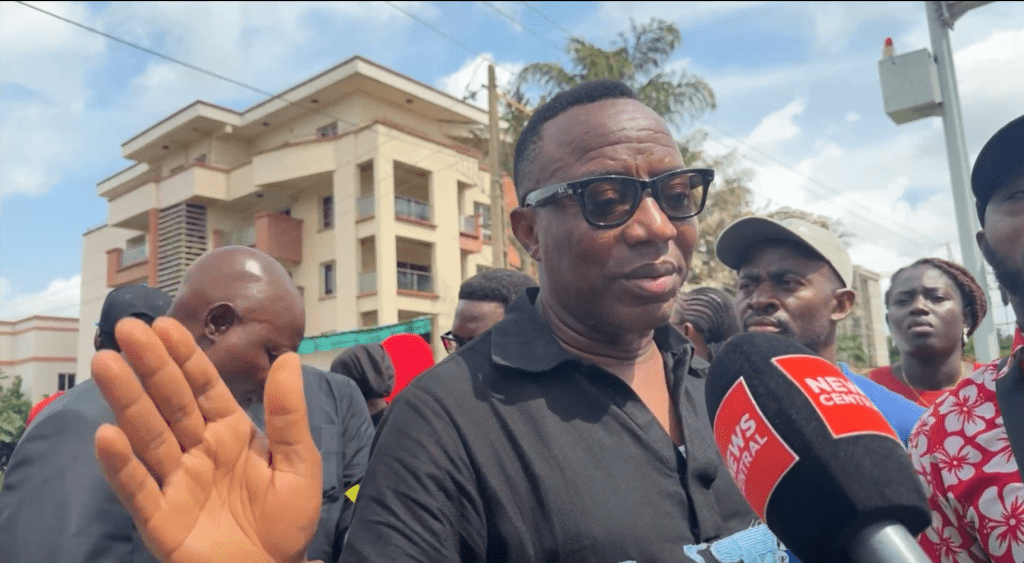
The unfortunate reality is that many Igbo leaders fear that speaking up or campaigning for Kanu’s release could result in heavy-handed reprisals, government intimidation, or political isolation—simply because they are Igbos and therefore easier to oppress, malign, and silence. This explains the irony of the #FreeNnamdiKanuNow protest: it was not led by an Igbo activist, but by Omoyele Sowore, a Yoruba man from the South-West, who boldly championed the call for justice. Yet, those who paid the price for participating were not the conveners but the Igbos who joined in solidarity. They became scapegoats and easy targets for arrest, humiliation, and detention—a recurring pattern in Nigeria’s ethnic and political landscape.
The continued incarceration of Nnamdi Kanu, coupled with the unjust treatment of Igbos who dare to speak out, highlights a broader national failure. Nigeria cannot achieve peace or progress while a significant part of its population feels alienated and treated as second-class citizens. This persistent marginalisation is one of the major reasons Nigeria continues to dwindle in unity and development. When one group is constantly undermined, neglected, and treated with disdain, the entire nation suffers.
The Nigerian national motto—“Unity and Faith, Peace and Progress”—adopted in 1978, encapsulates the nation’s foundational values. But these words have become hollow slogans when unity is replaced with division, faith with fear, peace with oppression, and progress with stagnation. No nation can move forward while suppressing its own citizens. Real unity is not forced—it is built on justice, equality, and respect.
The case of Nnamdi Kanu and the renewed Biafra agitation cannot be understood in isolation. It is a direct reaction to decades of exclusion, injustice, and systemic bias against the Igbo people. The call for self-determination emerged not from hate but from despair—when citizens realise that their voices no longer count and their rights are trampled upon without consequence. Rather than address the root causes of this discontent, the Nigerian government has chosen suppression over dialogue, arrest over engagement, and intimidation over understanding. By continuously punishing those who ask legitimate questions about justice, inclusion, and fairness, the state only fuels the resentment and alienation that it seeks to suppress.
It is time for Nigeria to face the truth: we cannot build a united nation by silencing one of its pillars. The oppression of the Igbos is not just an injustice to them—it is an injustice to Nigeria as a whole. Our diversity should be our greatest strength, not a tool for division. True power lies not in domination but in inclusion; not in fear, but in fairness. Showing might over others only breeds resentment, while justice builds loyalty and peace.
We must return to the spirit of our national motto—Unity and Faith, Peace and Progress—not merely as an inscription on our Coat of Arms, but as a living principle guiding our collective destiny. Until Nigeria learns to treat every citizen equally, irrespective of tribe, faith, or tongue, true peace and progress will remain a mere wishful thinking. Nigeria will continue to retrogress if we continue to think that Igbos or any part of the union are dispensable.