By Chinedum Anayo
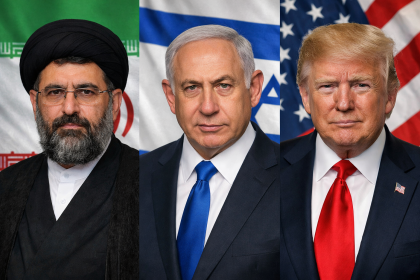
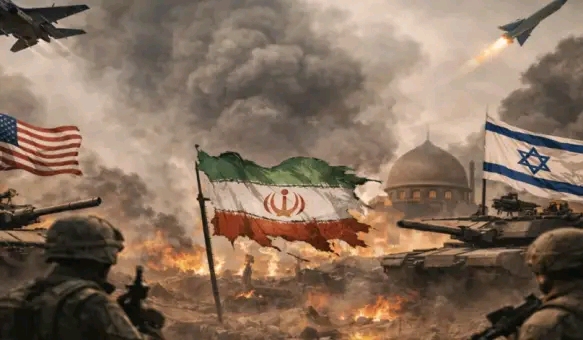
A major military confrontation has erupted in the Middle East following coordinated attacks by Israel and the United States on Iran, marking one of the most serious regional crises in decades.
The conflict, which began in late February 2026, has rapidly expanded beyond the borders of Iran and Israel, drawing in several countries across the Persian Gulf and threatening global security and economic stability.
What we are seeing in the region pass as imminent threats to world peace.
The current confrontation involving Iran, Israel, and the United States did not begin from a single event. Rather, it is a result of years of geopolitical rivalry, security fears, and escalating proxy conflicts across the Middle East.
Amongst others, Iran’s nuclear ambitions pose a major reason behind the conflict.
Israel and the United States have long accused Iran of attempting to develop nuclear weapons under the cover of a civilian nuclear program.
Meanwhile, Iran maintains that its program is for peaceful energy and scientific purposes.
Israel, which considers a nuclear-armed Iran an existential threat, has repeatedly warned that it would take military action if diplomatic efforts failed.
With negotiations over the nuclear program collapsed, tensions grew. This prompted Israel and its allies to strike Iranian military and nuclear facilities.
The war began on February 28, 2026, when Israel launched a large-scale military campaign against Iran, reportedly in coordination with the United States.
The operation, well organized and strategic, targeted military bases, missile facilities, nuclear infrastructure and senior Iranian officials in cities such as Tehran, Isfahan, Qom and Kermanshah.
One of the most dramatic developments occurred during the initial strikes when Iran’s Supreme Leader, Ayatollah Ali Khamenei, was killed in an airstrike near Tehran.
The operation—referred to by Israel as Operation Lion’s Roar and by the United States as Operation Epic Fury was aimed at weakening Iran’s military capabilities and preventing the country from developing advanced nuclear weapons.
However, without further ado, Iran quickly retaliated by launching ballistic missiles and drones at Israeli territory and U.S. military installations across the Middle East.
Military reports confirm hundreds of missiles and thousands of drones were fired from Iran during the early days of the conflict.
These attacks targeted U.S. bases and allied facilities in several countries, including: Bahrain, Qatar, Kuwait, Iraq, United Arab Emirates and Saudi Arabia.
While many of the projectiles were intercepted by missile defense systems, several strikes caused casualties and infrastructure damage.
This is a conflict that has been precise and devastating so far.
Reports indicate that more than 1,200 people have been killed in Iran as a result of U.S. and Israeli airstrikes, while additional casualties have been recorded in Israel and Lebanon.
The conflict has also expanded into Lebanon, where Hezbollah—an Iranian-backed armed group has launched attacks on Israel, prompting retaliatory Israeli airstrikes in Beirut and other areas.
Meanwhile, Iran’s attacks on shipping routes in the Strait of Hormuz, a crucial global oil transit corridor, have disrupted maritime traffic and raised fears of a global energy crisis.
The Strait of Hormuz is one of the most strategically important waterways in the world.
The strait lies between Iran to the north and Oman and the United Arab Emirates to the south.
The Strait of Hormuz serves as the main export route for global energy supplies as many of the world’s largest oil producers are located around the Persian Gulf.
According to reports, the Strait of Hormuz has not been officially and fully closed, but shipping through the waterway has largely stopped because of the war risks between Iran, Israel, and the United States.
The war has also triggered political debate within the United States.
Members of Congress attempted to pass a resolution requiring presidential authorization for continued military action against Iran, but the measure failed in the House of Representatives.
In significance, supporters of the military campaign argue that the strikes are necessary to prevent Iran from threatening regional security.
Others, mainly critics of the President Trump administration, warn that the conflict could escalate into a prolonged war with severe humanitarian and economic consequences.
International and world leaders fear that the confrontation could develop into a wider regional war involving additional actors in the Middle East.
The involvement of proxy groups, disruption of oil supplies, and the possibility of further retaliation have heightened concerns about global instability and tensions.
Iran has built influence across the Middle East through allied armed groups, including: Hamas, Hezbollah and the Houthi Movement in Yemen.
The repeated attacks and border tensions involving these groups have significantly increased the risk of a broader war.
In addition to Isreal and the United States plea, another reason behind the conflict is the struggle for influence in the Middle East.
Since the Iranian Revolution of 1979, Iran has pursued a strategy of expanding its influence across the Middle East.
Iran’s aims remain to; Counter Western influence in the region; Challenge Israel’s dominance in regional security matters; Build alliances with groups and governments that oppose Western-backed regimes.
These efforts are evident in the support for the several armed groups across the Persian Gulf.
For Israel, Iran’s growing regional presence is seen as a major national security threat.
As a result, Israel has conducted numerous airstrikes in Syria and elsewhere to prevent Iranian military expansion.
Israel’s strategy is often described as “containment” stopping Iran from building a network of forces capable of threatening Israel from multiple directions.
The United States has historically supported Israel and several Arab states in the region.
Washington’s goal remains to; Prevent Iran from becoming the dominant regional power; Support allies like Saudi Arabia and the United Arab Emirates; Protect global oil supply routes such as the Strait of Hormuz.
Although the war mainly involves Iran, Israel, and the United States, two other global powers; China and Russia are closely watching and indirectly influencing the situation.
Both countries have strategic interests in the Middle East and maintain political and economic ties with Iran.
In recent years, Russia has developed a strong partnership with Iran, particularly in military and geopolitical matters.
However, Russia is unlikely to directly enter the war because it is already heavily engaged in the Russian invasion of Ukraine, which continues to demand significant military resources.
China on the other hand, plays a different role, focusing mainly on economic and diplomatic interests.
Unlike the United States, China avoids direct military involvement in Middle Eastern conflicts and prefers diplomatic mediation.
China typically calls for dialogue and de-escalation, as stability in the region is crucial for China’s energy security.
China and Russia are not fighting in the war, but they support Iran politically and economically, reflecting the larger global power competition between Western and non-Western blocs.
So far, most Western countries have not officially joined the war militarily.
Some Western allies support the U.S. and Israel diplomatically or through military cooperation, but have not launched direct attacks on Iran.
So the question: Is There an Imminent Threat in Iran?
Yes. The situation inside Iran is currently considered highly volatile and dangerous.
The war has escalated rapidly.
For governments in the region and the West, the concern is not only Iran’s current military actions but also its long-term strategic capabilities, including its large ballistic missile arsenal and its potential to rebuild nuclear and military infrastructure after the war.
Chinedum Anayo is a Political Commentator and can be reached via [email protected]