By Obinna Ejianya (9News Nigeria)
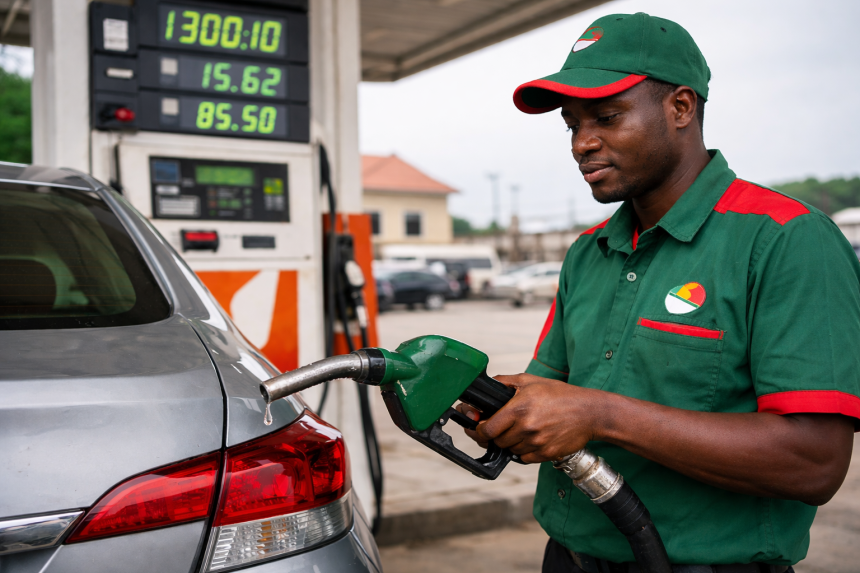
Nigeria’s business environment is expected to face even harsher economic conditions after petrol prices surged to about N1,300 per litre nationwide, raising fears of another wave of inflation that could further squeeze companies and households already struggling under a fragile economy.
The latest spike in pump prices followed an upward adjustment in the gantry price of Premium Motor Spirit by the Dangote Petroleum Refinery, triggering immediate increases at filling stations across major cities including Lagos and Abuja.
However, economists and industry stakeholders say the current fuel shock is not occurring in isolation. Rather, it is striking an economy that has been under severe pressure since 2023 when the Federal Government removed fuel subsidy, a policy decision that triggered an unprecedented surge in petrol prices and dramatically increased the cost of living.
Since that policy shift, transportation costs, food distribution expenses and production costs across multiple sectors have continued to climb, leaving millions of Nigerians grappling with declining purchasing power. Businesses, particularly small and medium enterprises, have struggled to absorb the rising costs of energy and logistics.
Analysts say the new fuel increase to around N1,300 per litre could deepen these pressures, pushing transport fares, food prices and the cost of manufactured goods even higher.
While the latest price surge has been linked partly to the ongoing geopolitical tensions involving Iran, the United States and Israel, economic experts note that Nigeria has been unusually vulnerable to the global oil shock despite being a major crude oil producer.
The conflict in the Middle East has disrupted global oil supply routes and triggered sharp volatility in energy markets, sending crude prices toward $120 per barrel before easing slightly. The crisis has also created fears of prolonged disruption to oil shipments through the Strait of Hormuz, a strategic route through which nearly a fifth of global oil supply passes.
In response to the escalating crisis, major global economies under the G7 have begun discussions on emergency interventions to stabilise the market. Options being considered include releasing strategic oil reserves held by industrialised nations to cushion supply shortages and prevent further price spikes.
The International Energy Agency confirmed that its member states currently hold more than 1.2 billion barrels of emergency crude stockpiles that could be deployed if the situation worsens.
While such measures may help stabilise global markets, analysts warn that Nigeria’s internal economic structure makes it particularly exposed to external oil shocks.
Despite producing crude oil, Nigeria still relies heavily on imported refined petroleum products due to limited domestic refining capacity. As a result, global price fluctuations often translate directly into higher pump prices at home.
Economic experts say the situation has created a paradox in which Nigeria, an oil-producing nation, experiences some of the harshest economic consequences whenever global oil prices surge.
For businesses, the implications are immediate. Rising petrol prices increase logistics and transportation costs, which in turn raise the price of food, raw materials and finished goods.
Manufacturers and traders warn that the latest fuel hike could weaken consumer demand even further, as households already facing economic hardship struggle to cope with additional increases in everyday expenses.
Small businesses operating on thin profit margins are particularly vulnerable, with many relying heavily on petrol and diesel generators due to unstable electricity supply.
Economists also caution that if the Middle East conflict drags on, global oil prices could continue rising, which may push petrol prices in Nigeria significantly higher in the coming months.
Some industry projections suggest that pump prices could approach N2,000 per litre if global supply disruptions intensify and domestic vulnerabilities remain unresolved.
For many observers, the situation highlights deeper structural problems within Nigeria’s economic management. Analysts argue that the fuel subsidy removal in 2023 exposed long-standing weaknesses in the country’s energy and economic policies, leaving the economy highly sensitive to external shocks.
As global tensions continue to rattle energy markets, businesses and consumers in Nigeria now face the prospect of a prolonged period of inflation and economic strain—conditions that many say could have been mitigated with stronger domestic refining capacity and more resilient economic policies.