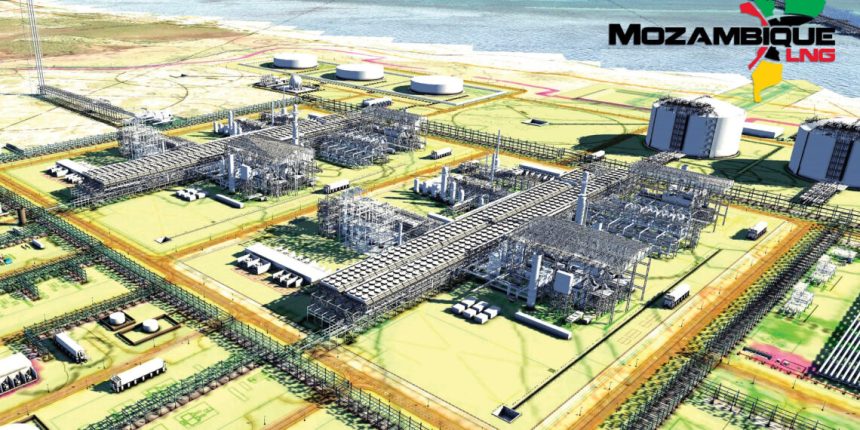
Mozambique and French energy giant TotalEnergies have formally restarted construction of the long-delayed Mozambique LNG project, a $20bn development that had been frozen since 2021 following a surge in Islamist militant violence in the country’s northern Cabo Delgado province.
The announcement marks one of the most significant energy investment revivals in Africa in recent years, reopening a project widely seen as central to Mozambique’s economic future and to global liquefied natural gas supply diversification.
Speaking at a relaunch ceremony at the Afungi site on Thursday, Mozambique’s President Daniel Chapo said the decision reflected renewed confidence in the country’s security environment and its commitment to protecting strategic investments.
TotalEnergies chief executive Patrick Pouyanne confirmed that the company had officially lifted the force majeure it declared nearly four years ago, allowing full construction activities to resume.
The restart of the Mozambique LNG project signals a turning point for one of Africa’s largest gas developments, stalled after extremist attacks forced thousands of workers to evacuate. With security conditions stabilising and international partners re-engaged, the project’s revival could reshape Mozambique’s economy while strengthening Africa’s role in global gas markets.
Project suspended after deadly insurgent attack
Construction was halted in 2021 after militants linked to Islamic State launched a deadly assault near the Afungi peninsula, close to the project site. The attack killed dozens of civilians and triggered the evacuation of staff, forcing TotalEnergies and its partners to suspend operations indefinitely.
The project’s shutdown sent shockwaves through energy markets at the time, given its scale and strategic importance. With an expected capacity of around 13 million tonnes of LNG per year, Mozambique LNG was designed to position the country among the world’s leading gas exporters.
Since then, security in Cabo Delgado has gradually improved, supported by the deployment of Rwandan forces and regional troops from the Southern African Development Community.
Costs rise during prolonged delay
TotalEnergies said preparatory work is already under way, including the arrival of offshore vessels and the mobilisation of equipment needed to restart construction.
However, the long suspension has not been without cost. The company has previously estimated that the delay added roughly $4.5bn to the project’s overall price tag, reflecting inflation, remobilisation expenses and contract revisions.
Mozambican authorities and project partners are continuing negotiations over cost recovery mechanisms and timelines, though both sides have stressed that the restart will proceed without further delay.
Pouyanne said the goal remains to deliver the first LNG exports by 2029, assuming construction progresses as planned.
Workforce training and flood support pledged
As part of the relaunch, TotalEnergies said more than 4,500 Mozambicans have now received technical training to support construction and long-term operations.
The company also announced financial support for communities affected by recent flooding, pledging 200 million meticals ($3.2 million) — towards emergency response and recovery efforts.
Government officials said the renewed investment would help restore economic momentum in Cabo Delgado, where expectations surrounding gas development were severely disrupted by years of insecurity.
Strategic importance for Mozambique and partners
TotalEnergies holds a 26.5 percent stake in the LNG venture, alongside partners including Japan’s Mitsui, Mozambique’s state energy firm ENH, India’s ONGC Videsh, Bharat Petroleum and Oil India, as well as Thailand’s PTTEP.
For Mozambique, the project represents a cornerstone of long-term development planning, with LNG revenues expected to support public finances, infrastructure expansion and job creation over several decades.
For global markets, the project’s return adds future supply at a time when Europe and Asia continue seeking alternatives to Russian gas and long-term energy security remains a priority.
While some civil society groups have renewed concerns over environmental and community impacts, the government insists the project will move forward under strengthened oversight and security guarantees.