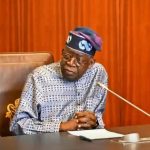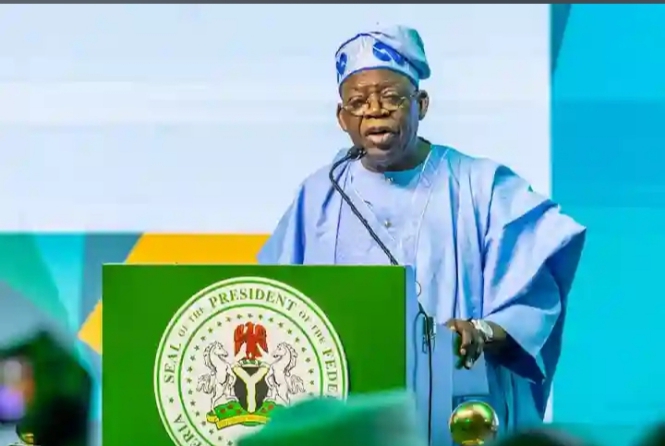
President Bola Ahmed Tinubu has declared that Nigeria has passed through its “own Red Sea” and entered a new era focused on prosperity, production and improved living standards.
Tinubu made the declaration on Thursday in his Independence Day address to Nigerians as the country marked its 66th anniversary of independence.
Speaking under the theme, “From Reforms to Prosperity,” the President said his administration had spent the past three years tackling what he described as deep-rooted distortions in the Nigerian economy.
He acknowledged that the reforms had imposed significant hardship on citizens but argued that difficult measures were necessary to address problems that successive governments had deferred.
Tinubu compared the pre-2023 economy to a cancer patient requiring painful treatment, saying his administration chose to “excise the cancer” rather than continue with policies that merely concealed the underlying problems.
According to the President, the reforms did not create Nigeria’s economic challenges but confronted structural weaknesses that had accumulated over time.
He said the focus would now shift from economic reforms to ensuring that Nigerians begin to feel their benefits through lower living costs, job creation, industrial expansion and improved infrastructure.
Tinubu said the government would intensify investment in mechanised agriculture, irrigation, improved seeds, fertiliser, storage and transportation to increase food production and reduce post-harvest losses.
He also pledged continued investment in roads, railways and ports to facilitate the movement of agricultural and industrial goods across the country.
The President said Nigeria’s gas resources would be deployed to power industries, revive factories, expand digital connectivity and provide businesses with infrastructure and financing.
On employment, Tinubu said greater attention would be given to skills development, particularly for young Nigerians entering the labour market.
He said the objective was to transform the country’s growing youth population into a productive economic force rather than a source of frustration.
The President acknowledged that millions of Nigerians still face difficulties meeting the costs of food, education, healthcare and transportation.
He promised to strengthen social intervention programmes and improve the National Social Register to ensure that government assistance reaches vulnerable households.
Tinubu also cited the Nigerian Education Loan Fund and CREDICORP as initiatives aimed at expanding access to higher education and consumer credit.
He said the Federal Government would continue to work with state and local governments to improve primary healthcare, basic education and other essential services.
On the economy, Tinubu said Nigeria recorded more than four per cent growth in 2026, with both the oil and non-oil sectors contributing to the expansion.
He also said inflation had declined from its peak, foreign reserves had been rebuilt, the foreign exchange market had stabilised and oil theft had reduced.
Tinubu further stated that Nigeria generated more than $6 billion in non-oil export revenue in 2025, describing it as the highest figure recorded by the country.
He said the administration’s goal was no longer simply to stabilise the economy but to create widespread prosperity and millions of productive opportunities.
Acknowledging that the benefits of the reforms would take time to fully materialise, the President urged Nigerians to remain focused on the country’s new direction.
“Nigeria has corrected its course. We have passed through our own Red Sea. This is not the time to look back,” Tinubu said.
He declared that the “age of reform” had completed its task and that Nigeria had entered an “age of prosperity,” which he described as the country’s pathway towards abundance and opportunity.