By Francis Xavier
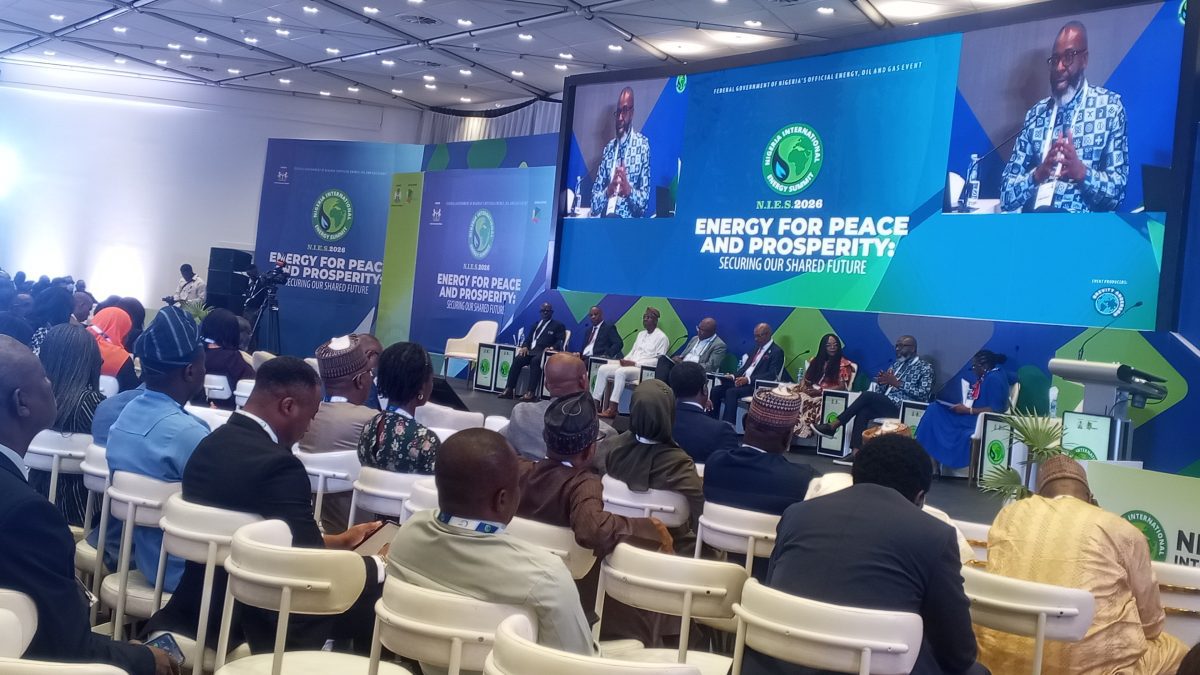
Nigeria’s resolve to build a resilient, self-sustaining, and value-driven energy industry took centre stage at the opening ceremony of the 2026 Nigeria International Energy Summit (NIES) in Abuja, as the Chairman of the Independent Petroleum Producers Group (IPPG), Mr. Adegbite Falade, outlined a bold vision for the sector’s future.
Making his first public appearance as IPPG Chairman, Falade addressed an array of top-level participants, including heads of state, lawmakers, ministers, diplomats, international partners, and industry leaders. He warmly welcomed His Excellency, President Adama Barrow of The Gambia, alongside global energy stakeholders such as the Secretary-General of the Gas Exporting Countries Forum (GECF), Dr. Philip Mshelbila, and the Secretary-General of the African Petroleum Producers’ Organisation (APPO), Mr. Farid Ghezali.
Falade commended President Bola Ahmed Tinubu, GCFR, for sustaining and deepening far-reaching reforms within Nigeria’s oil and gas industry, noting that early gains from the administration’s energy policies are already visible. He expressed optimism that the reforms would usher in a more competitive, transparent, and investor-friendly sector.
He also praised the Honourable Ministers of State for Petroleum Resources, Senator Heineken Lokpobiri (Oil) and Rt. Hon. Ekperikpe Ekpo (Gas), as well as the Special Adviser to the President on Energy, Mrs. Olu Verheijen, and the leadership of key regulatory and industry institutions, including NUPRC, NMDPRA, NCDMB, and NNPCL, for their pragmatic execution of government policies.
Speaking against the backdrop of a rapidly evolving global energy landscape shaped by geopolitical tensions, energy security concerns, and shifting alliances, Falade described the summit’s theme, “Energy for Peace and Prosperity: Securing Our Shared Future”, as both timely and instructive. He stressed that Africa, and Nigeria in particular, must take ownership of its energy destiny by responsibly harnessing its abundant resources to drive economic growth, peace, and long-term prosperity.
At the core of his address was a clear call for Nigeria to move beyond the traditional export-driven hydrocarbon model toward in-country value creation, collaboration, and industrial consolidation. According to him, a sustainable energy future must be anchored on efficiency, competitiveness, good governance, and strong partnerships across the value chain.
Highlighting sectoral progress since the 2025 edition of NIES, Falade disclosed that Nigeria’s average liquids production rose to 1.64 million barrels per day in 2025, from 1.56 million barrels per day in 2024, peaking at 1.77 million barrels per day. He attributed the gains to improved pipeline availability, reduced crude losses, and increased indigenous participation, noting that local producers now account for over 50 percent of national output following strategic mergers and acquisitions.
He reported significant strides in the midstream segment, where over 16 companies accessed the Midstream and Downstream Gas Infrastructure Fund, supporting CNG, mini-LNG, and LPG projects nationwide. Domestic gas utilisation expanded through the rollout of CNG refuelling stations and gas-powered transport systems, while critical infrastructure projects such as the AKK and OB3 pipelines continued to advance. The NLNG Train 7 project, he added, had reached about 80 percent completion, moving steadily toward commissioning.
In the downstream sector, Falade described the operational ramp-up of the 650,000 barrels-per-day Dangote Refinery as a game-changer, significantly reducing fuel import dependence and strengthening Nigeria’s local refining capacity.
On the regulatory front, he welcomed reforms such as the Upstream Petroleum Operations Cost Efficiency Incentives Order 2025, which offers performance-based tax credits to cost-efficient operators, as well as the appointment of experienced professionals to lead NUPRC and NMDPRA—developments he said would further restore investor confidence.
Despite the progress, Falade identified lingering challenges, including high operating costs, bureaucratic bottlenecks, and security concerns in the Niger Delta. He called for streamlined fees, enhanced security, innovative public-private partnerships, and improved access to long-term financing. He also urged effective utilisation of the newly established African Energy Bank and full, transparent implementation of the Petroleum Industry Act (PIA) to ensure policy stability and regulatory predictability.
Concluding his remarks, Falade emphasized that building a self-reliant oil and gas industry capable of delivering lasting benefits to Nigerians would require bold decisions and sustained collaboration across the energy ecosystem. He reaffirmed IPPG’s commitment to working closely with government and stakeholders to secure a prosperous energy future for the country.
The 2026 NIES, he noted, promises to be a solution-driven platform for shaping Africa’s energy trajectory in an increasingly interconnected world.