By 9News Nigeria Editorial Board
In the theater of international relations, the presence of a world leader is the ultimate “hard currency” of diplomatic value. A state visit from a G7 head of government or a global economic powerhouse is not merely a photo opportunity; it is a calculated endorsement of a nation’s stability, relevance, and future potential.
However, a longitudinal analysis of high-level state visits to Nigeria since 2010 reveals a sobering trend. There is a gradual but noticeable decline in high-level global engagement, particularly from Western powers and leading global economies. As Nigeria grapples with systemic insecurity, a “bastardised” economy, and a deepening crisis of leadership credibility, the world’s most influential players are increasingly keeping their distance. What we are witnessing is a “Diplomatic Recession”—a visible indicator of Nigeria’s dwindling relevance on the global stage.
The Era of Engagement: 2010 – 2015
The early 2010s marked a period where Nigeria was still viewed as the “frontier of hope.” Despite emerging internal fissures, global powers sought active engagement with the Jonathan administration.
- July 2011: David Cameron (Prime Minister, UK) visited, signalling strong post-colonial and economic ties.
- July 2012: Hillary Clinton (U.S. Secretary of State) arrived, representing the peak of U.S. diplomatic investment in Nigerian democratic stability.
- February 2014: François Hollande (President, France) visited during Nigeria’s centenary, a time when Nigeria’s GDP was rebased to become the largest in Africa.
- May 2014: Li Keqiang (Premier, China) attended the World Economic Forum on Africa in Abuja, underscoring Nigeria’s status as an emerging great economy.
During this window, Foreign Direct Investment (FDI) remained robust, peaking at $8.91 billion in 2011. The world wanted in because Nigeria appeared to be a partner that mattered.
The Great Cooling: 2016 – 2023
The transition to the Buhari administration was initially met with international curiosity, but as the “Change” mantra gave way to economic stagnation and widespread insecurity, the caliber of visits began to shift from strategic partnership to crisis management.
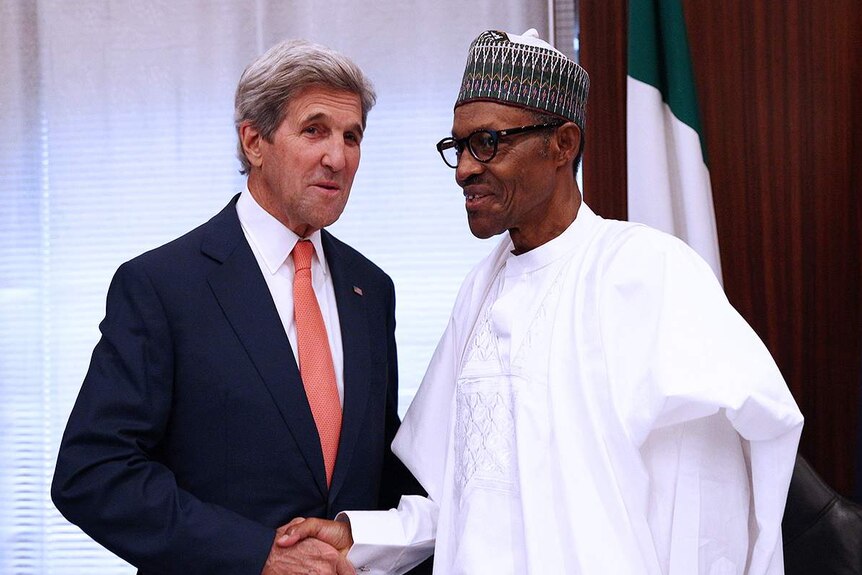
- August 2016: John Kerry (U.S. Secretary of State) visited, but the focus had shifted heavily toward counter-terrorism rather than economic expansion.
- August 2018: A brief flurry of activity saw Theresa May (UK), Angela Merkel (Germany), and Emmanuel Macron (France) visit within a single month. While appearing positive, these visits were largely transactional, focusing on migration control and regional security as Boko Haram and banditry began to spiral.
- 2019 – 2022: A notable “diplomatic drought” ensued. While the pandemic played a role, FDI plummeted to just $894 million in 2022. The world was no longer knocking; it was withdrawing.
The Credibility Gap: 2024 – 2025
Under the current administration of President Bola Tinubu, the diplomatic isolation has taken on a more pointed character. Despite the government’s aggressive “Foreign Policy” branding, the quality of engagement suggests a deep-seated lack of trust.
- January 2024: Antony Blinken (U.S. Secretary of State) visited, but the optics were shadowed by ongoing international scrutiny regarding the President’s historical legal entanglements in the U.S. and a widely contested election.
- May 2024: The visit of Prince Harry and Meghan Markle—while high-profile—was a cultural tour, not an official state visit, highlighting a shift toward “celebrity diplomacy” in the absence of substantive political engagement by the UK government.
- 2025 Trends: While lower-level ministers like Annalena Baerbock (Germany) continue to visit for security consultations, the absence of G7 Heads of State is deafening.
Analysis: Why the World is Distancing
The data suggests a direct correlation between internal decay and external distancing. Nigeria’s relevance is dwindling because:
- Economic Bastardisation: FDI into Nigeria crashed by 70% in Q1 2025 alone, falling to a mere $126 million. Capital is fleeing toward more transparent markets like Egypt, which attracted over $46 billion in the same period.
- Systemic Insecurity: Sporadic killings and widespread banditry have made Nigeria a “high-risk” zone. International observers now view Nigeria not as an investment hub, but as a security liability.
- The Leadership Brand: The lack of credibility reposed in the current leadership—exacerbated by allegations of corruption and a lack of transparency—has made high-level bilateral meetings “politically expensive” for Western leaders.
CROSS-PERIOD COMPARATIVE ANALYSIS (9News Nigeria)
| Period | Nature of Visitors | Dominant Purpose | Diplomatic Signal |
|---|---|---|---|
| 2010–2015 | Presidents, PMs, UN leaders | Strategic partnership | High global confidence |
| 2016–2023 | Ministers, IMF, selective presidents | Security & crisis management | Cautious engagement |
| 2024–2026 | Limited high-level, emerging partners | Transactions & targeted deals | Reduced strategic priority |
Conclusion
A country is judged by the company it keeps. In 2010, Nigeria was a mandatory stop for any leader serious about Africa. By 2025, it has become a destination for “reactive” diplomacy—visits meant to contain fires rather than build futures. Until Nigeria addresses the “excruciating suffering” of its people and restores the integrity of its leadership, the global community will continue its quiet withdrawal, leaving the “Giant of Africa” to stand increasingly alone in a rapidly advancing world.
Nigeria’s size, resources, and human capital remain undeniable advantages. However, global engagement trends suggest that potential alone is no longer sufficient.
To restore its position as a key global player, Nigeria may need to:
- Strengthen internal security
- Rebuild institutional trust
- Stabilize its economic environment
- Reinforce credibility in governance
Ultimately, the trajectory of foreign leaders’ visits is not just about diplomacy—it is a reflection of how the world sees Nigeria, and how Nigeria positions itself in return.
Report compiled and edited by Obinna Ejianya (9News Nigeria – Melbourne, Australia)
© 9News Nigeria Editorial – Research & Analysis Desk