By Chinedum Anayo
There was once a time where a university degree symbolized stability. It meant a near-guaranteed pathway to financial security and professional identity.
However, today, for many young lawyers, doctors, engineers and other professionals, it feels more like a starting line than a finish line.
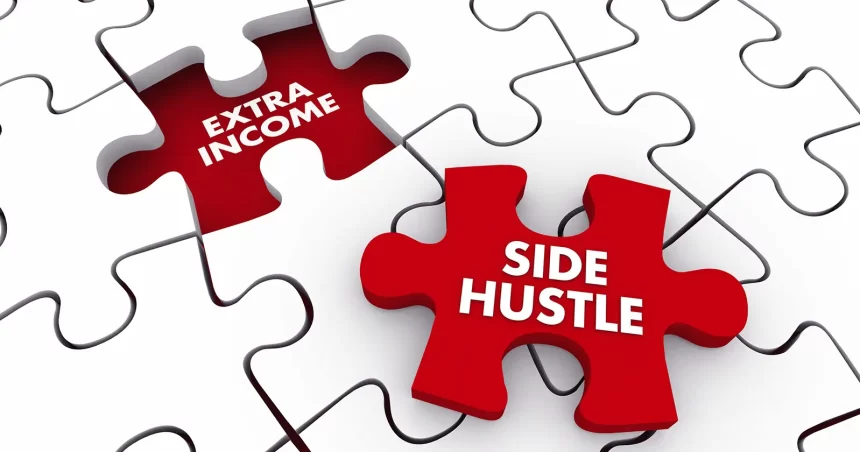
Across various sectors, a growing number of highly trained professionals are embracing side hustles, not out of ambition alone, but out of necessity.
From Prestige to Pressure
Studying law, medicine, or engineering once carried an unspoken assurance: graduate, secure a respectable job, and build a stable life. That social contract now appears to be steadily weakening.
Economic volatility, rising living costs, currency instability, and competitive labor markets have combined to erode the once-stable foundation of single-income households.
For many youngsters, one job no longer guarantees security.
“You study law, you still need a skill. You study medicine, you still need a side hustle.”
That sentiment, increasingly echoed across social media and professional circles, captures the mood of a generation grappling with high uncertainty.
Medicine: A “Jealous Profession” Meets Economic Reality
Medicine, long regarded as one of the most demanding and noble professions, is now caught in the same web of economic pressure.
Traditionally described as a “jealous profession” requiring full devotion to mastering life-saving expertise, it is increasingly intersecting with entrepreneurial survival.
Medical professionals now run small businesses, manage online brands, trade investments, and create digital content, sometimes spending hours on platforms like X and TikTok to supplement income.
Critics argue that such trends risk diluting professional focus.
Supporters and advocates counter that financial insecurity itself undermines performance and well-being.
In a strained economy, professionals are seeking multiple streams of income not from greed, but from fear of instability.
A Generation Under Strain
Mental health advocates warn that the pressure to constantly “do more” is taking a huge toll on the lives of individuals.
The narrative that a single job is no longer enough contributes to anxiety, burnout, and a pervasive sense of racing against time.
For young graduates entering the workforce, a degree now feels less like a guarantee and more like a license to compete in an unforgiving marketplace.
The promise of linear career progression has given way to portfolio careers, gig work, and parallel income streams.
“It’s like relying on one source of water during a dry season.
“If it slows down, panic sets in. So people dig extra wells — not because they are greedy, but because they are trying to survive.” Professionals said.
Structural Shifts, Not Moral Failure
Experts emphasize that this shift indicates broader systemic changes rather than individual shortcomings.
Globalization, technological disruption, inflationary pressures, and evolving labor markets have fundamentally altered the meaning of employment security.
The older model, a graceful system, one profession, one employer, one stable income is now increasingly rare.
In its place is a dynamic, skills-driven economy that rewards adaptability.
Faith leaders have also weighed in, noting that societal change is not new.
As referenced in 1 Corinthians 7:31, “the scene of this world is changing” — a reminder that economic systems evolve, sometimes abruptly.
Is this Adaptation or Alarm?
While some observers lament that “this generation is cooked,” others argue that it is simply adapting.
Side hustles, digital platforms, and skill diversification may represent resilience rather than collapse.
The challenge, lies in balance, which is ensuring that professionals, particularly in high-stakes fields like medicine, are not stretched beyond safe limits.
The deeper concern remains structural: Should a full-time doctor, lawyer, or engineer struggle to rely on one income? For many, the answer highlights the widening gap between professional expectations and economic reality.
While the global economy shifts, one truth is emerging: education remains vital, but adaptability has become essential.
The question facing policymakers and institutions is no longer whether the system has changed.
It is whether it will evolve fast enough to protect those it once promised stability.