Russia has signalled plans to mine uranium in Niger, in a move that strengthens ties between the Kremlin and the West African country’s ruling junta while further straining relations with France.
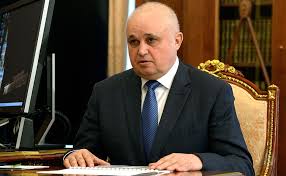
During an official visit to Niamey on Monday, Russian Energy Minister Sergei Tsivilev met Niger’s junta leader, General Abdourahamane Tiani, for talks on expanding economic cooperation. Speaking after the meeting, Tsivilev said: ‘Our main goal is to mine uranium… our task is not only to participate in uranium mining, but to create an entire system for the development of civil nuclear power in Niger,’ according to an official Russian statement cited by AFP.
Niger pivots away from France
Since a 2023 coup brought the junta to power, Niger has increasingly relied on Moscow’s support in its long-running battle against jihadist insurgents. The country, the world’s seventh-largest uranium producer, has sought greater control over its natural resources, creating tensions with former colonial ruler France, which depends heavily on Nigerien uranium for its nuclear energy needs.
The new deal marks another shift in Niger’s alliances. Russia’s state nuclear agency Rosatom signed a memorandum of understanding with Niger’s energy ministry on civilian nuclear projects, including atomic power plant construction, nuclear medicine development and specialist training.
A contested uranium sector
In recent years, Niger has pushed to reclaim management of its uranium industry from foreign operators. In 2024, authorities revoked French nuclear group Orano’s operational control over its three main mines—Somair, Cominak and Imouraren. Orano, which is 90 percent owned by the French state, has challenged the decision through arbitration. The Imouraren deposit is one of the world’s largest untapped uranium reserves.
In June, the junta announced it would nationalise the Somair mine, a move that Orano condemned as ‘asset stripping’. AFP reports that there was no indication on Monday that any of Orano’s sites would be handed to Russia under the new arrangement.
Strategic stakes rise
Uranium was first discovered in Niger in 1957, and commercial mining began in 1971 while the country was under French rule. Niger produced 3,527 tonnes of uranium in 2023, equivalent to 6.3 percent of global output, according to industry data.
Russia’s growing interest could alter the balance of power over Niger’s resources. The Kremlin sees an opportunity to expand its reach in Africa’s nuclear energy sector, while Niger seeks a larger share of profits and advanced technology for domestic nuclear development.
For now, the agreement stops short of granting Moscow control of existing mines, but it underscores a decisive pivot away from France and towards Russia—reshaping Niger’s uranium industry and adding a new front to global competition for strategic minerals.