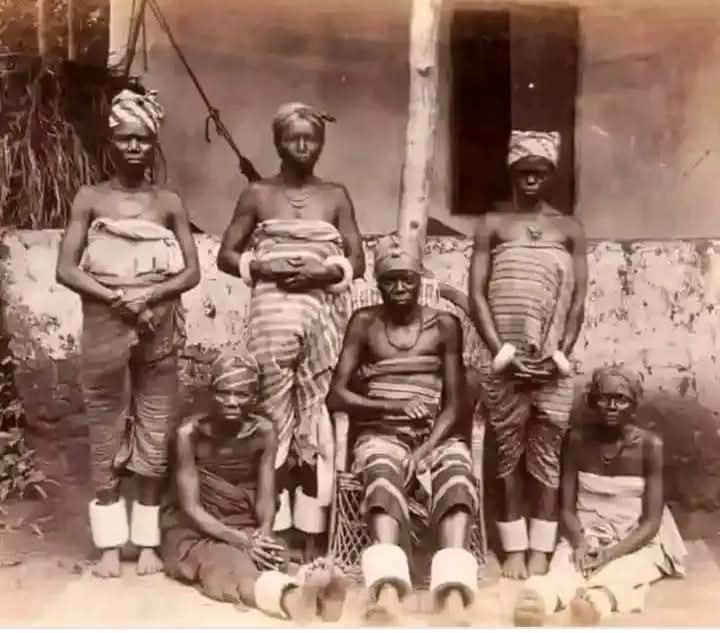
Among the Igbo people of southeastern Nigeria, family lineage and inheritance are deeply valued aspects of social life. Every family strives to maintain its ancestral line through procreation, especially the birth of male heirs who will carry on the family name and perform ancestral rites. Within this context evolved a unique cultural practice female-female marriage, a socially accepted but non-sexual form of union between two women. This practice is not about romantic or sexual orientation, but rather about social, economic, and lineage preservation.
Purpose and Context
In traditional Igbo society, a woman’s worth and legacy are often tied to her role in perpetuating her husband’s lineage. When a widow, especially one past childbearing age and without a male child, finds herself without an heir to inherit her husband’s name or property, she may take the culturally sanctioned step of marrying another woman.
This arrangement ensures that:
The name and lineage of her deceased husband continue.
The widow retains her social standing and inheritance rights within her husband’s family.
The property of the deceased husband does not revert to distant relatives or the umunna (extended family).
Procedure and Cultural Process
1. Consultation with the Umunna (Kinsmen):
The widow informs her husband’s kinsmen (the umunna) of her intention to marry another woman on behalf of her late husband.
2. Approval and Support:
The umunna, understanding the lineage purpose behind the decision, grants permission and often assists in the process.
3. Bride Price Payment:
The widow pays the bride price (dowry) to the family of the young woman she wishes to marry.
By paying the bride price, she assumes the social and legal role of a husband.
The marriage is publicly recognized, and the younger woman becomes her “wife.”
4. Choice of a Male Partner:
The younger wife is permitted to choose a man from the community or the umunna for the sole purpose of procreation.
This union is not romantic but strictly functional — to bear children.
The man has no paternal claim over the children; they are considered the legitimate offspring of the late husband.
Social Recognition and Status
Once this marriage is established:
The senior woman (widow) gains honorary male status in the community.
She participates in male-only gatherings and is regarded as the “father” of the children born to her wife.
In some communities, she is expected to live a chaste life thereafter, refraining from relations with men.
Nature of the Relationship
The relationship is non-sexual — it is an economic and social contract, not a romantic or sexual one.
Homosexuality or sexual relations between the two women is considered taboo (aru) in Igbo culture.
The younger woman’s relationship with a man for procreation is purely customary and reproductive.
Legal and Inheritance Implications
The children born from this arrangement belong to the lineage of the deceased husband.
They inherit his name, land, and titles as if they were his biological offspring.
This ensures that no lineage dies out due to infertility, death, or the absence of a male heir.
Cultural Significance
This practice reflects the flexibility and pragmatism of Igbo customary law.
It highlights how:
Gender roles could be socially reassigned for functional reasons.
Marriage was more about social stability, property, and lineage than romantic companionship.
The community placed collective continuity above individual desire.
Modern Perspective
While the practice is still known in some rural Igbo communities, it has largely declined due to:
The influence of Christianity, which redefined marriage in moral and religious terms.
Colonial legal systems, which did not recognize customary female-female marriages.
Urbanization and modernization, which have weakened extended family systems.
However, scholars and anthropologists still regard it as a powerful example of precolonial African gender flexibility and social innovation.
Conclusion
The Igbo same-sex marriage system was a customary institution of survival, not a challenge to traditional gender or sexual norms.
It served to preserve family names, property, and social balance in a society where lineage continuity was paramount.
It stands today as a testament to the ingenuity of indigenous African societies in addressing social and economic challenges through culturally appropriate mechanisms.