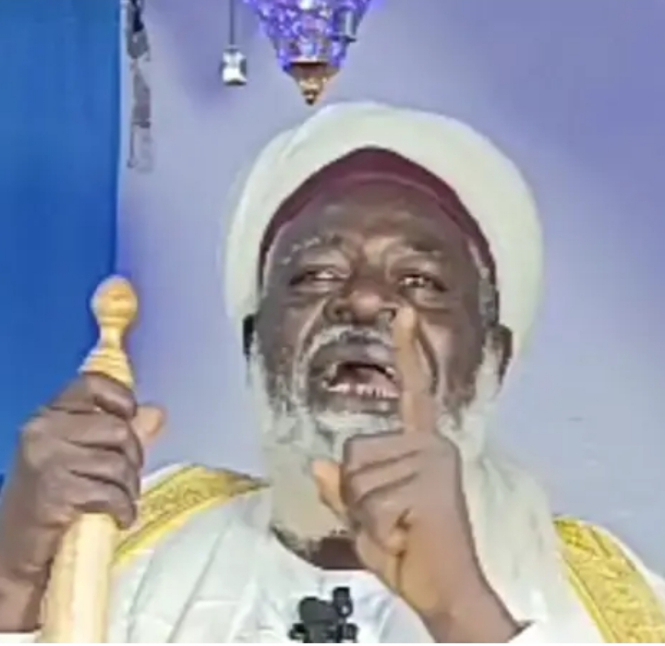
A Kaduna-based Islamic cleric, Sheikh Sunusi Khalil, has warned President Bola Tinubu against campaigning for his re-election in northern Nigeria without first addressing widespread public anger over economic hardship.
Khalil, in a recorded sermon circulating on social media, cautioned that campaigners would encounter the reality of popular discontent if they ventured into the region to canvass support for the president.
He argued that even personal loyalty to Tinubu would not shield his supporters from the anger of ordinary Nigerians struggling with rising living costs.
The cleric’s warning comes as the ruling All Progressives Congress (APC) intensifies preparations for the 2027 presidential election.
President Tinubu inaugurated the party’s Presidential Campaign Council in Abuja on October 14, charging members to work together and mobilise voters across their respective wards.
The campaign council’s inauguration signals the ruling party’s move to strengthen its grassroots mobilisation ahead of the election.
Khalil has previously criticised the administration’s policies and expressed concerns about efforts to secure the support of Islamic scholars and traditional rulers for Tinubu’s second term.
According to the account accompanying his latest remarks, the cleric had earlier alleged that money was being earmarked to mobilise influential religious and traditional leaders for the president’s re-election campaign. He reportedly said he declined an approach to participate in the effort.
These allegations have not been independently verified.
The cleric has also questioned the administration’s handling of electricity supply and insecurity, issues that remain politically sensitive in parts of northern Nigeria.
His latest intervention comes amid continuing public debate over the effects of the federal government’s economic reforms, particularly the removal of petrol subsidies and the naira’s depreciation.
Although official figures indicate that inflation is slowing, many households continue to face pressure from food and transport costs.
Nigeria’s headline inflation rate fell to 14.63 per cent in September 2026, from 15.39 per cent in August. However, food inflation remained high at 19.59 per cent, according to data from the National Bureau of Statistics.
Fuel prices have also remained a major concern. A September report by Reuters noted that petrol prices had reached about ₦1,400 per litre in Lagos and Abuja, and as much as ₦1,500 in parts of northern Nigeria.
The economic pressures could become a major issue in the 2027 campaign, as opposition parties and critics challenge the administration’s record while the APC seeks another mandate.
Khalil’s warning underscores the political challenge facing Tinubu’s campaign team: persuading voters to support the president’s re-election while many households remain concerned about the cost of living, insecurity and access to essential services.
However, the cleric’s comments should not be taken as proof that northern voters hold a uniform position on Tinubu. The region is politically diverse, and voters’ views may differ across states, communities and socioeconomic groups.