By using this site, you agree to the Privacy Policy and Terms of Use.
Accept
Thursday, Apr 2, 2026
9News Nigeria
  • HOME
  • EDITORIAL
  • POLITICS
  • NATIONAL
  • SPORTS
  • WORLD
  • BUSINESS
  • ABOUT US
  • CONTACT US
  • PRIVACY POLICY
9News Nigeria9News Nigeria
Font ResizerAa
Search
  • Editorial
    • OPINION
  • Politics
  • National
    • Breaking News
    • Boko Haram
    • Crime and Investigation
    • Ohanaeze Ndigbo
  • Business
    • Nigerian economy
    • Investment
    • Finance
  • Sports
  • Entertainment
    • Celebrity
    • Entertainment and lifestyle
    • Hollywood
  • World
    • Africa
    • Asia News
    • Australia
    • Europe
  • About Us
    • About Us
    • Privacy Policy
    • Terms And Conditions
    • Contact Us
Follow US
AfricaAfrican EconomyBusinessEditorialGlobal EconomyNigerian economyOPINION

Why the US–Iran War Should Be a Blessing for Nigeria, Not a Curse

9News Nigeria
Last updated: April 2, 2026 2:03 pm
By 9News Nigeria
Share
6 Min Read
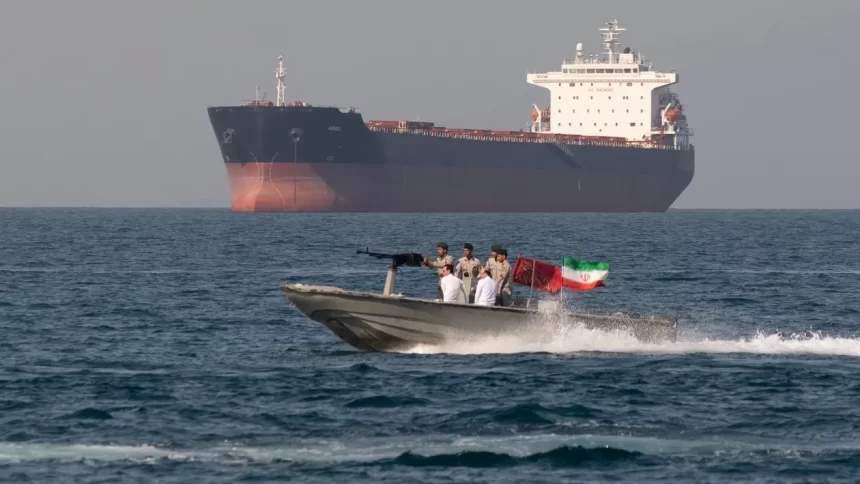
Iranian Navy soldiers at an armed speed boat in Persian Gulf near the strait of Hormuz about 1320km 820 miles south of Tehran April 30 2019
Iranian Navy soldiers at an armed speed boat in Persian Gulf near the strait of Hormuz about 1320km (820 miles) south of Tehran, April 30, 2019. Morteza Nikoubazl | Nurphoto | Getty Images
SHARE

By Obinna Ejianya (9News Nigeria – Melbourne, Australia)

There is no denying that the ongoing confrontation involving the United States, Israel, and Iran has shaken the global economy to its core. The disruption of shipping through the Strait of Hormuz—through which nearly 20% of the world’s oil supply flows daily—has triggered what experts now describe as the largest energy shock in modern history.

Oil tankers have vanished from that route. Prices have surged. Markets have panicked. Economies that depend on imported fuel are bracing for recession.

But here is the uncomfortable truth many are avoiding:
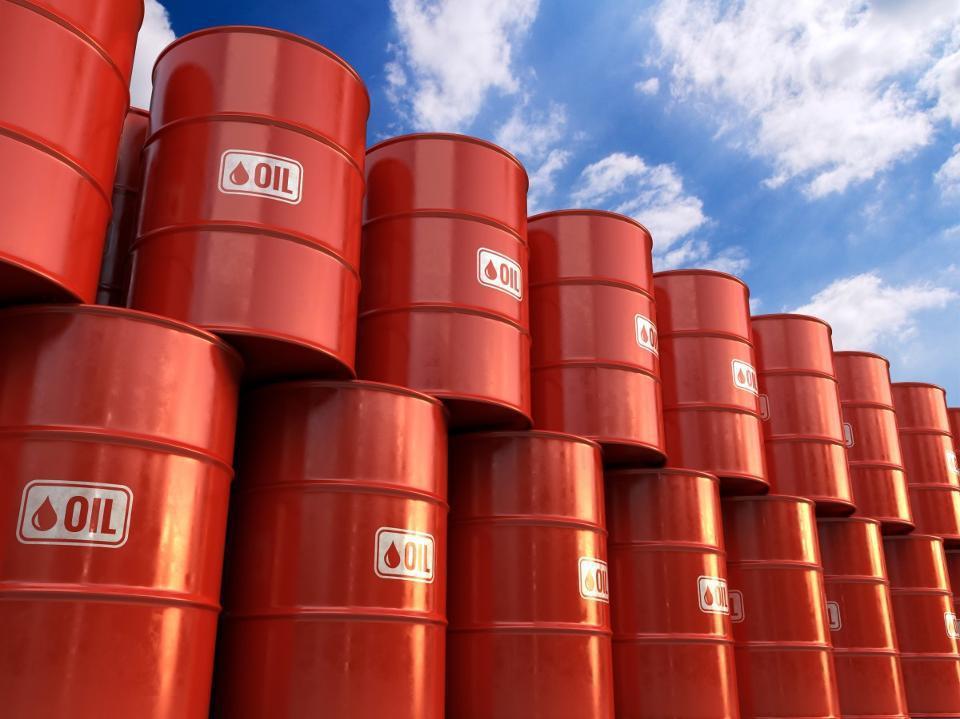
13 billion barrels reserve of oil in Nigerias deepwater DPR
Barrels of oilSource Nigeria upstream petroleum regulatory commission

For Nigeria, this crisis should have been a blessing.

Instead, it has become another chapter in the country’s long story of missed opportunities.

Northern Group Fumes At “Political Persecution” Ask FG to Stop Using State Institutions to Hunt Opposition
Why Okigwe Must Stand by Truth and Not Propaganda
Nigeria’s Diplomatic Recession: Tracking the Dwindling Global Interest (2010–2025)
WACEE 2026: Oyo Seeks German Partnership to Boost Environmental Sustainability

Before the war escalated, crude oil traded around $70 per barrel. Within weeks of the conflict and the effective shutdown of Hormuz shipping routes, prices surged past $100, at times rising by over 50%, with projections in extreme scenarios climbing toward $150–$200 per barrel.

Even in the present volatility, prices remain elevated above $100 per barrel, levels that historically translate into windfall revenues for oil-producing nations.

Nigeria produces roughly 1.3 to 1.5 million barrels of crude oil per day. At $100 per barrel, that is well over $130 million daily in crude value alone—before accounting for gas and other exports. In times like this, countries with oil do not struggle; they expand.

Look at Russia. Look at Iran itself. Even under sanctions and conflict, they are quietly making more money from oil because of the same crisis shaking the world.

So why is Nigeria different?

Why are Nigerians experiencing deeper hardship at a time when their country should be earning more?

The answer is not in Tehran. It is not in Washington. It is not even in the Strait of Hormuz.

The answer is at home.

A surge in oil prices should, in a functioning system, ease economic pressure. It should strengthen the naira, boost government revenues, fund infrastructure, and most importantly, reduce the burden on citizens. Fuel, which is the backbone of Nigeria’s economy, should become more stable—not more expensive.

Yet, what Nigerians are seeing is the opposite.

Fuel prices remain painfully high. Transportation costs have surged. Food prices continue to climb. Inflation bites harder by the day. And now, the same global crisis that should be an economic advantage is being presented as justification for further hardship.

It raises a fundamental question of leadership.

Because elsewhere, governments are not folding their hands.

Even in countries that do not produce oil, leaders are responding with urgency. In Australia, for example, authorities have explored fuel relief policies, supply diversification, and negotiations with alternative suppliers to cushion the impact of rising global prices. There have been efforts to ease pressure on households through policy adjustments, including transport support and engagement with financial institutions to make credit more accessible, especially for farmers and small businesses whose survival depends heavily on fuel.

Across parts of Europe and Asia, governments have released strategic oil reserves, reduced fuel taxes, and intervened in energy markets to prevent economic shock from translating into social collapse.

These are not miracles. They are decisions.

Nigeria, however, stands in a far more advantageous position than all of them combined. It is not scrambling for oil—it has oil. It is not dependent on imports alone—it now has refining capacity, including the massive Dangote Refinery, which should, by all logic, insulate the country from global supply disruptions.

And yet, Nigerians are told to endure.

Endure higher fuel prices.
Endure rising food costs.
Endure worsening living conditions.

At the same time, insecurity continues to tear through communities—from Plateau to Benue and across parts of Northern Nigeria—while citizens are left to navigate both economic and physical uncertainty. Groups like Boko Haram and ISWAP remain active threats, compounding an already fragile situation.

What should have been a moment of economic leverage has instead exposed a deeper problem: the inability—or unwillingness—to translate national wealth into national wellbeing.

The tragedy is not the war.

The tragedy is that even in a moment when the world is paying more for oil—Nigeria’s oil—ordinary Nigerians are not feeling any relief.

The tragedy is that a country positioned to benefit from global disruption is instead weighed down by internal dysfunction.

The tragedy is that leadership has not risen to meet opportunity.

Because the reality remains simple:
When oil prices rise globally, oil-producing countries are supposed to smile.

Nigeria is not smiling.

And that is not because of Iran, (QED).

Obinna Ejianya writes from Melbourne Australia

author avatar
9News Nigeria
9News Nigeria is Nigeria's favourite news source. For Authentic, Unbiased News on Politics, Business, Sports, Technology, Entertainment and Lifestyles, Health, Nollywood, Crime and Investigations, Family and Relationships, Inspirations .. and much more. For Latest News from Africa and around the world, 9News Nigeria is your best source. WhatsApp +2348115805632 Email: [email protected] Facebook: www.facebook.com/9NewsNG | Twitter/Instagram: @9newsng
See Full Bio
TAGGED:National NewsOpinion
Share This Article
Facebook Whatsapp Whatsapp Copy Link
What do you think?
Love0
Sad0
Happy0
Surprise0
Angry0
By9News Nigeria
Follow:
9News Nigeria is Nigeria's favourite news source. For Authentic, Unbiased News on Politics, Business, Sports, Technology, Entertainment and Lifestyles, Health, Nollywood, Crime and Investigations, Family and Relationships, Inspirations .. and much more. For Latest News from Africa and around the world, 9News Nigeria is your best source. WhatsApp +2348115805632 Email: [email protected] Facebook: www.facebook.com/9NewsNG | Twitter/Instagram: @9newsng
Previous Article US President Donald Trump Trump says U.S “Will Bring Iran Back To Stone Ages,” in coming weeks
Search
– Advertisement –
Latest News
  • Why the US–Iran War Should Be a Blessing for Nigeria, Not a Curse April 2, 2026
  • Trump says U.S “Will Bring Iran Back To Stone Ages,” in coming weeks April 2, 2026
  • Tijani inaugurates USPF board, Unveils plan to connect 4,000 rural communities April 2, 2026
  • How social media feud with VeryDarkMan landed B-Lord in prison April 2, 2026
  • Iranian President Writes Americans, Questions U.S. Policy Toward Tehran April 2, 2026
  • 2027: Why Okigwe Zone Seeks Longers Anyanwu   April 1, 2026
  • APC Chairman meets Bala Mohammed as PDP crisis worsens April 1, 2026
  • Deputy Speaker Kalu throws support for Anioma State April 1, 2026
  • Indian Police arrest Nigerian, 10 others in drug crackdown April 1, 2026
  • BREAKING: UNIBUJA Law student, Ayebanoa arrested over the alleged rape of a 100-level student April 1, 2026
– Advertisement –
9News Nigeria
  • Editorial
  • OPINION
  • Inspiration
  • Investigative Reports
  • Featured
  • Interviews
  • About Us
  • Terms And Conditions
  • Privacy Policy
  • Contact Us
World News
  • Africa
  • African Politics
  • Aviation News
  • Australia
  • Global Economy
  • Europe
  • Global Economy
  • Asia News
  • Middle East
  • World
  • World Politics
  • USA
  • USA Politics
News Categories
  • Breaking News
  • National
  • Politics
  • Business
  • Sports
  • Health
  • Crime and Investigation
  • Nigeria Police
  • Nigerian Military
  • Biafra
  • ODUDUWA
  • Ohanaeze
  • Boko Haram
  • National Assembly
  • National History
  • Sober House
  • National Security
Entertainment and Lifestyle
  • Entertainment
  • Entertainment and lifestyle
  • Nollywood
  • Lifestyle
  • Hollywood
  • Celebrity
  • Celebrity Gist
  • Celebrity Gossip
  • Events
  • Family & Relationships
  • Relationship Extra
  • Relationships

You May also Like

BornoBusiness

Against the Odds, Borno Women Thrives to Build Businesses, Creating Change

March 19, 2026
Latest NewsNigeria News

FG Launches ‘Fly Now, Pay Later’ Scheme for Air Travel

March 18, 2026
Irans new Supreme leader Mojtaba Khamenei Israeli Prime Minister Benjamin Netanyahu and Israel US President Donald Trump
EditorialLatest News

EXCLUSIVE: After Iran, What Next ?

March 18, 2026
NationalNigeria News

Tinubu Appoints Fola Adeola to Chair Petroleum Reform, Value Optimisation Taskforce

March 13, 2026
Irans new Supreme leader Mojtaba Khamenei Israeli Prime Minister Benjamin Netanyahu and Israel US President Donald Trump
EditorialGlobal Economy

Iran Poised to Cripple Global Economy as Strait of Hormuz Crisis Deepens

March 13, 2026
NationalNigeria News

FG Flags Off Food and Nutrition Programme in Plateau

March 10, 2026
Show More
  • More News:
  • Europe News
  • National News
  • Politics
  • 9News Nigeria - Nigeria Breaking News
  • Nigeria Politics
  • Sports
  • Imo state
  • Opinion
  • Events
  • National Security
  • Editorial
  • Inspiration
  • Trending news
  • Bible Messages
  • Religion
  • Jesus Christ the saviour
  • The Love of God
  • World News
  • Business
  • Crime and Investigation

9NEWS NIGERIA

  • Editorial
  • OPINION
  • Inspiration
  • Investigative Reports
  • Featured
  • Interviews
  • About Us
  • Terms And Conditions
  • Privacy Policy
  • Contact Us

NEWS CATEGORIES

  • Breaking News
  • National
  • Politics
  • Business
  • Sports
  • Health
  • Crime and Investigation
  • Nigeria Police
  • Nigerian Military
  • Biafra
  • ODUDUWA
  • Ohanaeze
  • Boko Haram
  • National Assembly
  • National History
  • National Security

WORLD NEWS

  • Africa
  • African Politics
  • Aviation News
  • Australia
  • Global Economy
  • Europe
  • Asia News
  • Middle East
  • World
  • World Politics
  • USA
  • USA Politics

ENTERTAINMENT AND LIFESTYLE

  • Entertainment
  • Entertainment and lifestyle
  • Nollywood
  • Lifestyle
  • Hollywood
  • Celebrity
  • Celebrity Gist
  • Celebrity Gossip
  • Events
  • Family & Relationships
  • Relationship Extra
  • Relationships
Welcome Back!

Sign in to your account

Username or Email Address
Password

Lost your password?