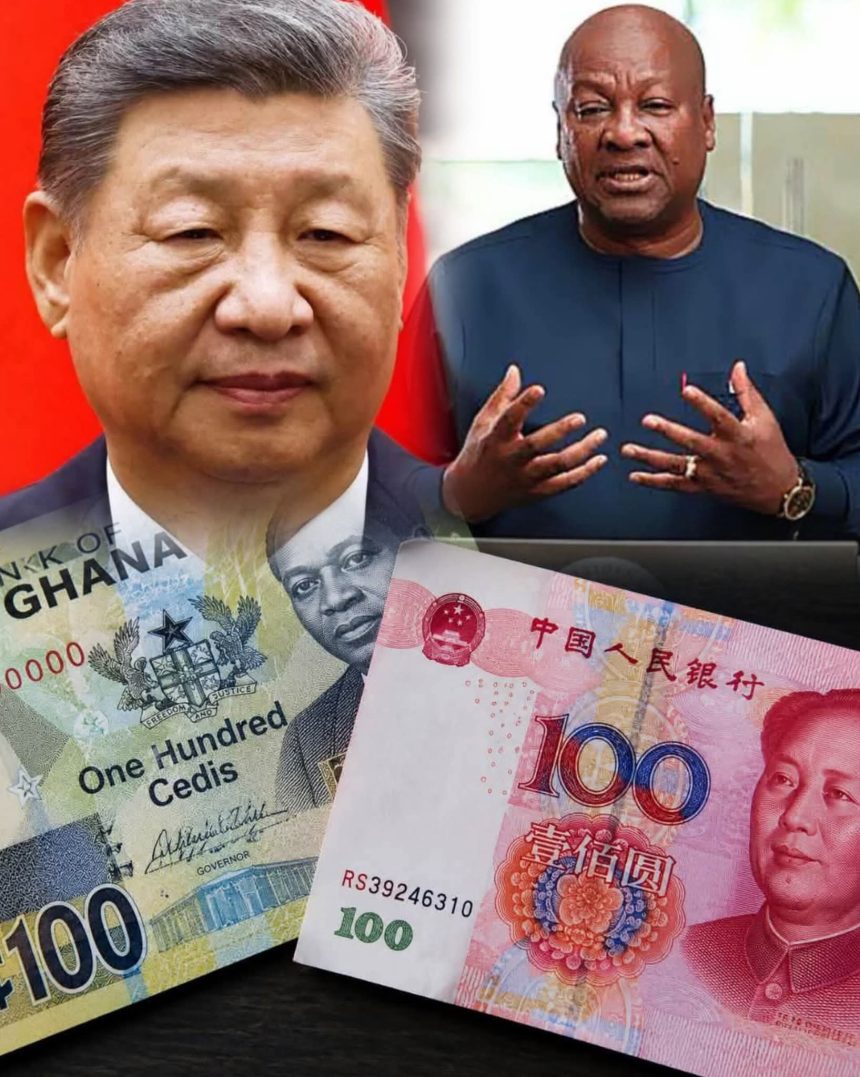
Ghana has begun piloting a new payment arrangement that allows importers to pay Chinese suppliers from Ghanaian cedi accounts without first sourcing US dollars.
The initiative, being piloted by Stanbic Bank Ghana, is designed to make Ghana-China trade payments faster, more direct and potentially cheaper. Ghana Commercial Bank (GCB) is also developing a similar service.
Under the arrangement, a Ghanaian importer pays in cedis while the Chinese supplier receives the equivalent amount in Chinese yuan, or renminbi.
The system uses China’s Cross-Border Interbank Payment System (CIPS), which provides a direct channel for eligible cross-border yuan transactions.
The Bank of Ghana Governor, Dr Johnson Pandit Asiama, disclosed the pilot programme during the central bank’s 132nd Monetary Policy Committee briefing.
He said the arrangement would enable Ghanaian businesses importing from China to make payments in cedis instead of first obtaining US dollars.
Stanbic Bank said its CIPS service can reduce the need for intermediary and correspondent banks, potentially lowering transaction costs and shortening payment processing times.
The bank’s service does not require customers to maintain a yuan-denominated account. Eligible yuan payments can be initiated from existing Ghana cedi accounts, subject to regulatory and documentation requirements.
Stanbic says eligible transactions submitted with complete documentation by 2 p.m. GMT can be processed for settlement by the next business day.
The development comes as Ghana seeks to deepen its financial and commercial relationship with China while reducing exposure to dollar-based settlement arrangements.
China accounted for 22.3 per cent of Ghana’s imports in 2024, according to Stanbic Bank, underscoring the importance of efficient payment channels between the two economies.
The initiative is also part of a wider expansion of yuan-based payment infrastructure across Africa.
Standard Bank, Stanbic’s parent group, said in July that it had processed more than 8 billion yuan through CIPS and expanded access to the system to Ghana, Angola, Kenya, Lesotho and Tanzania.
CIPS itself reported 210 direct participants and 1,619 indirect participants globally as of June 2026, including 103 indirect participants in Africa.
The new arrangement, however, does not mean Ghanaian suppliers are being paid in cedis by Chinese businesses. The cedi is the funding currency on the Ghanaian side, while the settlement with the Chinese beneficiary is made in yuan.
Stanbic also clarified that CIPS is not replacing SWIFT. Rather, it provides an additional payment route specifically for eligible transactions denominated in Chinese yuan.
If expanded successfully, the arrangement could give Ghanaian importers another option for managing China-related foreign exchange payments while reducing the number of currency conversions and intermediary institutions involved in some transactions.