By Suzy Chukwuechedom | Anambra
ANAMBRA – Fifty young people drawn from the 21 Local Government Areas of Anambra State are set to monitor and document at least 100 public infrastructure projects across the state under a new initiative aimed at strengthening transparency, accountability and citizen participation in governance.
The initiative, known as the Anambra Youth Accountability Hub (AYAH), is being implemented by the Creative Minds Centre for Youth and Community Development (CYCD), with support from the Nigeria Youth Futures Fund (NYFF).
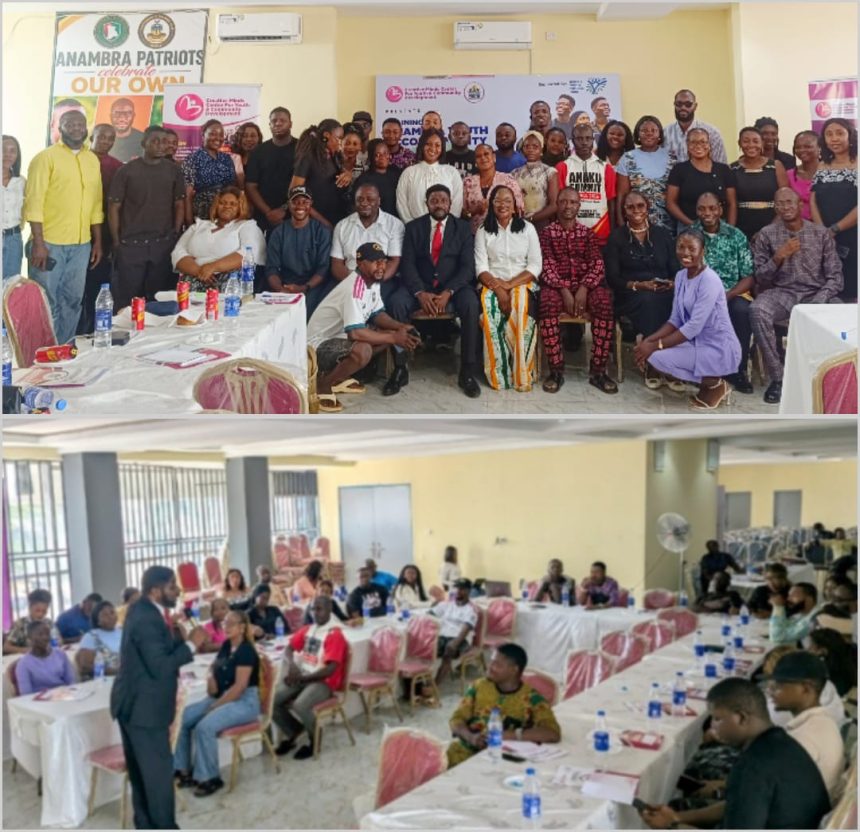
Speaking during a two-day technical capacity-building training in Awka, the Executive Director of CYCD and AYAH Project Lead, Mrs Ugochi Freeman, said the six-month programme was designed to equip young people with practical knowledge and skills to track public projects and promote accountability through evidence-based engagement.
“Young people are not just leaders of tomorrow; they are active citizens and accountability champions of today,” Freeman said.
She explained that the training covered public budget tracking, procurement monitoring, infrastructure assessment, the Freedom of Information Act, data collection, documentation, verification and evidence-based advocacy.
Emphasising the importance of constructive engagement, Freeman told participants that demanding accountability should not be mistaken for hostility towards government or public officials.
“Accountability is not about fighting government or embarrassing public officials. It is about asking the right questions, seeking accurate information, identifying gaps, presenting credible evidence, and engaging constructively with relevant authorities to encourage improvements,” she stated.
She urged the fellows to prioritise evidence over rumours and dialogue over confrontation, while maintaining integrity, impartiality and confidentiality throughout the monitoring exercise.
Freeman also disclosed that transport reimbursement had been provided for the training, while field monitoring activities would be supported through stipends and structured templates for community engagement.
Providing institutional backing for the initiative, the Director of the Anambra State Project Evaluation, Monitoring and Supervision Unit (PEMSU), Prof. Ebuka Nwankwo, described the fellows as additional eyes and voices within their communities whose findings could help government identify implementation gaps in public projects.
He explained that PEMSU’s mandate includes tracking, assessing, evaluating and supervising public projects to ensure quality, value for money and timely delivery.
Nwankwo assured the hub of collaboration and technical support to strengthen the credibility of reports generated by the young monitors.
Also speaking, the Commissioner for Budget and Economic Planning, Mr Chukwukadibia Okoye, represented by Rev. Dr Jude Nwadavid, said citizen oversight was essential to ensuring that public expenditure translated into measurable development outcomes.
“Policy design and resource allocation are only half of the equation. True accountability happens when citizens, especially the youth, have the capacity, tools, and courage to track implementation, evaluate results, and ask the right questions,” he said.
He noted that the state’s development priorities were guided by citizens’ needs, Vision 2070 and participatory budgeting, stressing that public budgeting must be connected to effective development planning and citizen involvement.
“Public budgeting without proper development planning is wasteful. Development planning without citizen participation is blind. And citizen participation without accountability is fruitless,” he added.
On the fight against corruption, the Resident Anti-Corruption Commissioner of the Independent Corrupt Practices and Other Related Offences Commission (ICPC), Anambra State, Mr Dio Emmanuel, represented by Superintendent Sanni Ohiare Samson, described integrity and accountability as essential foundations of good governance.
He maintained that corruption thrives where transparency and accountability are weak, urging the young participants to become active partners in promoting ethical leadership.
Similarly, Barr. Lilian Osakwe of the Anambra State Ministry of Justice, who also serves as Secretary of the Anambra State Anti-Corruption Strategy (ANSACS), enlightened participants on the roles of ANSACS and the Rule of Law and Anti-Corruption (RoLAC) programme in strengthening institutional accountability.
The President-General of the Anambra State Town Union Council (ASTUC) Youth Wing, Comrade Ken Okoli, also stressed the importance of broad-based citizen participation in governance.
He argued that meaningful public participation strengthens accountability, while limited involvement of citizens weakens democratic oversight.
Okoli further unveiled ASTUC’s roadmap, tagged “Progressives Walking Together Project” (Operation Follow Your Leader), ahead of the 2027 political season, urging youth leaders to openly declare their political alignment and take responsibility for their choices.
He encouraged residents to pay closer attention to how government policies at the grassroots affect employment, economic opportunities and community development.
Calling on young people to move beyond political passivity, he urged them to participate actively in governance and sustained efforts towards institutional reforms.
“Anambra is our own, everyone of us,” he said.
The training opened with a session on “Self-Awareness, Values and Civil Leadership,” facilitated by Dr Kelvin Freeman, which focused on developing ethical, responsible and citizen-centred leadership among the selected fellows.
The six-month initiative is expected to strengthen grassroots monitoring of public infrastructure, improve citizens’ access to governance processes and encourage constructive engagement between communities and government institutions.