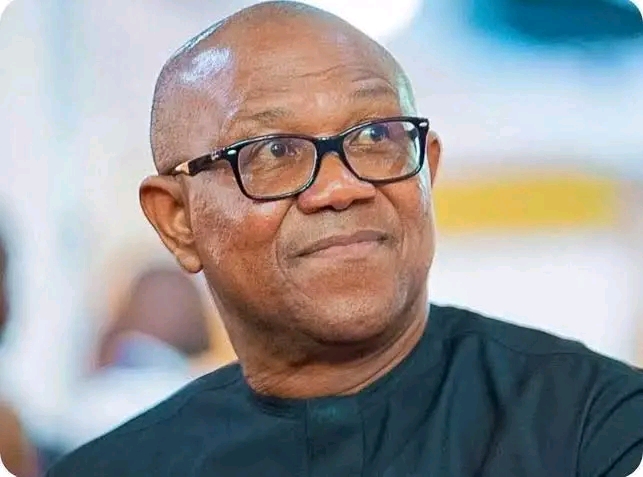
Former Anambra State Governor and Nigeria Democratic Congress (NDC) presidential candidate, Peter Obi, has accused officials of the Nigeria Football Federation (NFF) of preventing him from greeting Nigeria’s victorious Under-17 women’s football team, the Flamingos, at an airport in Abuja.
Obi alleged that the officials stopped him from approaching the players despite his desire to congratulate them following their historic triumph at the 2026 FIFA U-17 Women’s World Cup in Morocco.
The former governor disclosed the incident on Monday, November 9, in a statement shared on his official X account titled “A New Dimension of Toxic Politics in Nigeria.”
According to Obi, he arrived at the airport around 7 a.m. to board a flight to Enugu when he sighted the Flamingos, who had just returned to Nigeria after winning the tournament.
He said he was excited to see the young footballers and subsequently instructed his Protocol Officer, Jackie Wayas, to find out whether he could approach the team to congratulate and welcome them.
However, Obi claimed he was informed that NFF officials had rejected his request and warned that they could lose their jobs if they allowed him to interact with the players.
“I was informed that officials of the Nigerian Football Federation (NFF) had refused and had requested that I not approach them because, if I did, they would all lose their jobs,” he stated.
Obi Recalls Similar Incident In Uyo
The NDC presidential candidate said the airport incident was not the first time he had allegedly been prevented from interacting with members of Nigeria’s national football teams.
He recalled an incident on March 25, 2025, when he travelled to Uyo, Akwa Ibom State, to watch a World Cup qualifying match.
Obi said the state governor warmly received him at the VIP stand before the match.
However, he alleged that after the game, when other government officials approached the players to congratulate them, he was prevented from doing the same.
According to him, officials again warned that they could lose their jobs if he proceeded to greet the footballers.
Obi Condemns Growing Political Intolerance
Reacting to the two incidents, Obi expressed concern over what he described as the growing culture of political hostility, intimidation and discrimination in Nigeria.
He argued that political differences should not prevent Nigerians from interacting freely, particularly when celebrating national achievements.
“It is deeply troubling to witness the extent of toxic politics into which our nation has descended since 2025. Each year appears to bring further deterioration. This reflects how deeply Nigeria has been affected,” he said.
He maintained that Nigeria must become a country where national unity, mutual respect and shared humanity take precedence over political affiliations.
“The new Nigeria we aspire to build must have no room for hostility, intimidation, or discrimination, regardless of political affiliation,” Obi added.
Flamingos Make African Football History
Meanwhile, the controversy comes shortly after the Flamingos recorded a historic achievement at the 2026 FIFA U-17 Women’s World Cup in Morocco.
Nigeria defeated Japan 2-1 in Saturday’s final, November 7, to win the competition for the first time.
The victory also made Nigeria the first African country to win the FIFA U-17 Women’s World Cup.
Goals from Awawu Bashiru and Oluebube Umejiaku secured the historic victory for the Nigerian team.
The Flamingos returned to Abuja on Monday to a reception following their outstanding performance at the tournament.
President Bola Tinubu had earlier congratulated the players, describing their achievement as a landmark moment for Nigerian and African women’s football.
As of Monday, November 9, the NFF had not publicly issued a response to Obi’s allegation.
The circumstances surrounding the alleged restriction, including who authorised the decision, remain unclear.
The development has introduced a fresh political dimension to the celebration of Nigeria’s historic football achievement, with questions emerging over whether political differences should affect access to national sporting personalities and events.