By Haruna Bello (9News Nigeria Yobe)
For generations, the residents of Babugda village in Fune Local Government Area of Yobe State in northeastern Nigeria have found it difficult to live peacefully. Their struggle is not caused by conflict or famine, but by the inability to access sufficient safe and clean drinking water for both human and animal use.
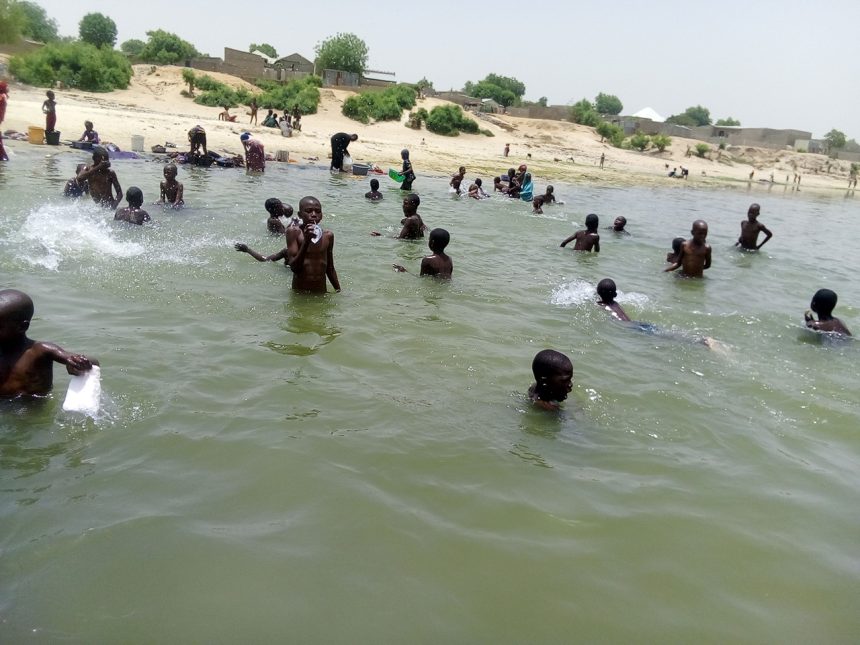
The scarcity of contaminated water in Babugda village makes it a daily struggle for survival. Residents rely on muddy, murky, and contaminated water sources from wide and unsafe wells. Ironically, the wells are not very deep. They are shallow and easy to draw water from, but in many cases, they dry up after two or three buckets are drawn.
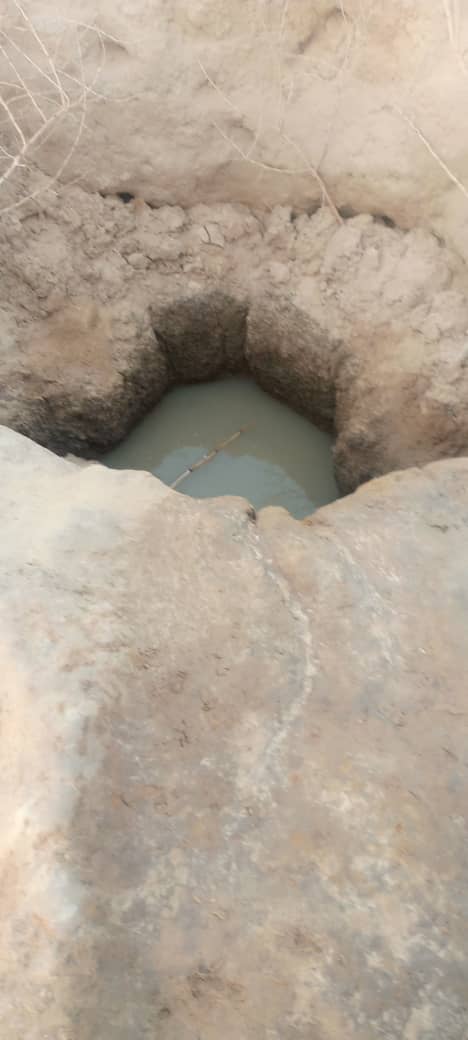
A shallow well at Babugda community
For several years and up to them present moment, the residents of the village have relied heavily on the alum coagulation process to clean their muddy water. This method involves collecting the clearer water at the top and pouring off the clumps, a practice that has been passed down through generations.
However, Dr. Yakubu Muhammad of Yobe State University Teaching Hospital (YSUTH) explained that this method is not a solution. He explicitly stated that the alum coagulation process only improves the water’s appearance and taste but does not kill bacteria, viruses, or parasites. To ensure safety, he emphasized that boiling, filtration, or the use of chlorine tablets as disinfectants is necessary.
Despite the medical advice, the residents hold a different belief. Hajara Garba, a mother of six who has lived in the village since childhood, maintains that the water used for cooking, washing, and drinking is not harmful to their health. “We have been using it from time immemorial, and no one has ever died or been hospitalized as a result,” she said. Hajara believes the water is harmful only to their clothes, noting that “our clothes fade from their original colour due to regular washing,” but not to their health.
Babuga, another resident from Babugda reflected this sentiment, claiming the water is unclean to the eye but safe in terms of spreading diseases. “We have been using this water for a long time, and we have never recorded any outbreak. Perhaps our bodies have developed immunity to water-borne diseases,” he added.
This local belief stands in stark contrast to national data. The Federal Ministry of Water Resources and Sanitation reports that about 68-70% of water sources in the country are contaminated at the source. Furthermore, a national survey by the Ministry reveals that contaminated water spreads diseases such as cholera, dysentery, and typhoid, which claim countless lives, especially among young children.
In July 2010, the United Nations officially recognized access to safe and clean drinking water and sanitation as a human right—one that is essential for the full enjoyment of life and all other human rights. Yet, millions of people, including those in Babugda, still live without it.
There has been an attempt to bridge this gap. The Village Head, Alhaji Adamu, expressed his appreciation to the Yobe State Governor, Hon. (Dr.) Mai Mala Buni, and the Speaker of the State House of Assembly, Hon. Chiroma A. Buba Mashio, for facilitating the installation of the only borehole in the village.
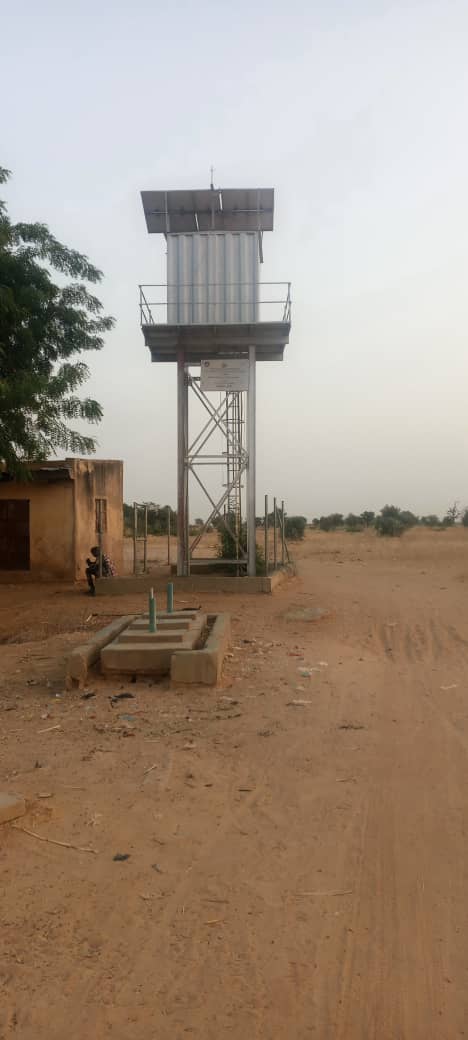
However, this solution has proven unreliable. Alhaji Usman lamented that the borehole operates on a generator, and the government stopped providing fuel a long time ago. “We used to contribute money for the fuel before, but it is no longer sustainable because of how expensive it has become,” he said. “When the borehole is damaged, we have to wait a long time—sometimes over two months—before it is repaired.”
The burden of this scarcity falls on the community in a unique way. Unlike in many communities where women and girls bear the greatest burden of fetching water, in Babugda village, men and young boys are responsible for the task. They fetch water at night, usually after returning from the market, the farm, or grazing animals, adding another layer of hardship to their daily lives.
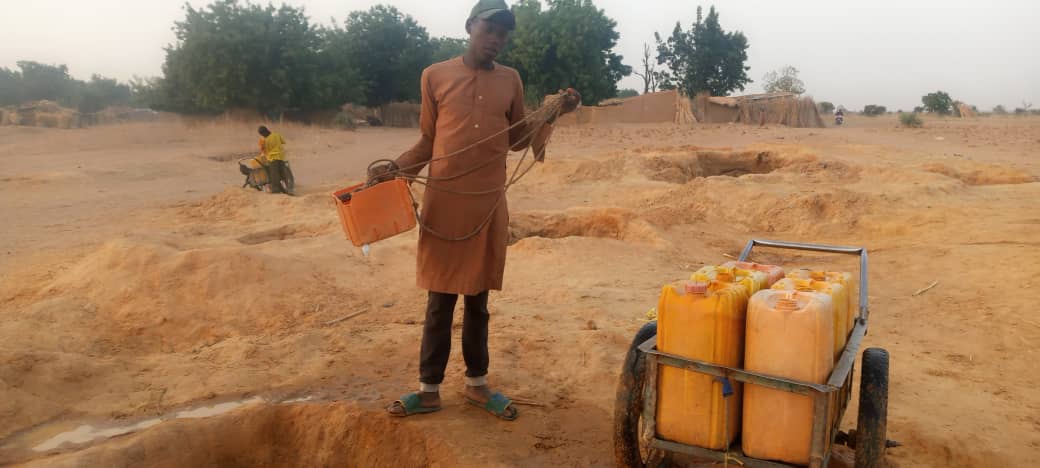
In a contrary opinion, Kawuwa, the only person with a Higher National Diploma (HND) certificate in the entire village, pointed out that the water they use is highly contaminated. He explained that they rely only on alum to treat the muddy water in order to make it clearer and safer for drinking, washing, bathing, and other domestic uses.
“During the dry season, the wells produce limited water due to drought. In such situations, we do not collect water until late at night or early in the morning. During those times, the water is more plentiful in the wells,” he said. He added that another major challenge is the imbalance between the number of wells and the village population.
“The wells are not enough to meet the needs of both the people and our animals. Consequently, we resort to digging one or two shallow wells for each household because it is not difficult to find water underground. This idea has helped to mitigate scarcity and reduce overcrowding at the few wells that produce more water,” he said.
Kawuwa believes that the government has neglected their village in terms of developmental projects. He noted, “Our only borehole, which once brought relief to our suffering people, has been abandoned for years after it was damaged. I doubt it will ever work again.”
Clean water, which is supposed to be an inalienable right of the people, remains a matter of survival for countless villages. “Water is life. It is essential for our hygiene and agriculture. Our land is fertile, but we cannot utilize it after the rainy season due to water scarcity. Sadly, even when water is available, it is contaminated with muddy sand,” Kawuwa said.
The village head, Alhaji Adamu, has called on the government, relevant authorities, non-governmental organizations (NGOs), and philanthropists to come to their rescue. “If we have sufficient clean water that is not contaminated, I can assure you that we would contribute significantly to the growth and development of agriculture and animal husbandry,” he said.
The planet Earth is 70% covered with water, but only a small percentage is fresh and easily accessible for human use. Across the globe, billions of people face a similar reality. Although the United Nations officially recognized access to clean and safe drinking water as a human right in 2010, millions of people still live without it.
This story was produced under the HumAngle Foundation’s Strengthening Community Journalism and Advocacy (SCOJA) Fellowship, supported by the Embassy of the Kingdom of the Netherlands in Nigeria, Abuja.