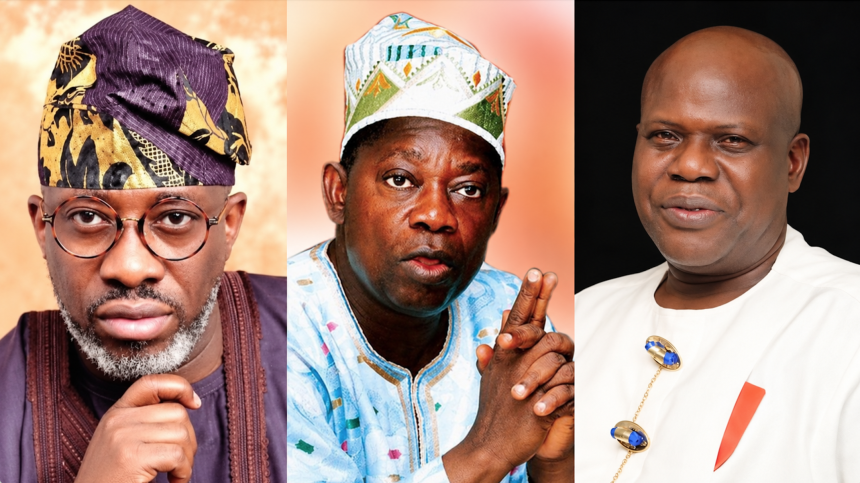
Social reform advocate Richard Olanrewaju Odusanya has challenged Segun Sowunmi over a remark he attributed to the politician about the late Chief Moshood Kashimawo Olawale Abiola, saying the June 12 democracy icon sacrificed his freedom and life in defence of the Nigerian people’s mandate.
In a statement submitted to 9News Nigeria, Odusanya, Convener of the Africa Covenant Rescue Initiative (ACRI)/WITNESS 2026/2036, described the alleged remark as insensitive and called on Sowunmi to reflect on the significance of Abiola’s struggle and publicly apologise.
Odusanya’s criticism centred on a statement he attributed to Sowunmi: “Of course MKO Abiola was thrown in jail for doing something that stupid.” The submission did not identify the occasion or provide a recording of the remark.
Rejecting that characterisation, Odusanya argued that Abiola’s declaration of himself as president at Epetedo, Lagos, on June 11, 1994, must be understood against the annulment of the June 12, 1993 presidential election and the struggle to reclaim his mandate.
According to him, reducing that decision to an act of stupidity disregards the courage required to confront military rule and the sacrifices that helped shape Nigeria’s democratic journey.
“Segun Sowunmi, have you considered the weight of the name you invoked?” he asked.
Abiola, widely regarded as the winner of the annulled election, was arrested in June 1994 after declaring himself president. He remained in detention until his death on July 7, 1998. His Epetedo declaration became a defining moment in the confrontation between the military government and the pro-democracy movement.
Odusanya maintained that Abiola’s refusal to abandon the mandate represented an act of democratic resistance whose significance should neither be trivialised nor judged merely by the personal consequences he suffered.
He pointed to the recognition of June 12 as Nigeria’s Democracy Day as an enduring acknowledgement of that struggle. The change from May 29 was announced by then-President Muhammadu Buhari in 2018, while the Abuja National Stadium was renamed after Abiola in 2019.
For Odusanya, honouring Abiola requires more than official ceremonies and monuments. It demands respect for the principles of electoral justice, courage and public accountability for which he stood.
He also invoked the legacy of the late human rights lawyer, Chief Gani Fawehinmi, whom he described as an example of principled resistance and courage in the service of ordinary Nigerians.
Odusanya argued that political actors should learn from those who confronted injustice despite the personal cost, rather than dismiss their sacrifices from the relative comfort of civilian rule.
Extending his criticism to the political legacy of President Bola Tinubu, he argued that Tinubu’s involvement in the June 12 struggle and the National Democratic Coalition made respect for Abiola’s sacrifice particularly important.
In Odusanya’s view, dismissing Abiola’s declaration also diminishes the wider struggle in which other pro-democracy campaigners participated.
“If you call MKO’s declaration stupid, you call Tinubu’s own struggle stupid,” he said.
The reform advocate said his intervention arose from a longstanding concern that Nigeria had failed to translate the sacrifices of its democratic campaigners into fairness, effective institutions and accountable leadership.
Recalling his experience around the early years of the civilian administration inaugurated in 1999, Odusanya said his initial hopes for a more equitable country gave way to disappointment over what he described as political intolerance, corruption and failures of governance.
He identified a sermon delivered by Pastor Enoch Adejare Adeboye at a Democracy Day church service at the Villa Chapel on May 29, 2001, as a significant moment in his decision to pursue social reform outside that political environment.
“Until we become better citizens, we won’t produce better leaders,” he stated.
Odusanya argued that the country’s democratic promise would remain unfulfilled unless Nigerians, irrespective of ethnic background, enjoyed equal treatment and institutions consistently enforced accountability.
He linked that position to his WITNESS 2026/2036 initiative, which promotes citizen participation through witnessing events, capturing facts, cataloguing verifiable evidence, preserving records digitally and confronting wrongdoing through lawful action and public accountability.
According to him, meaningful reform requires citizens to take responsibility for documenting injustice and defending the public interest, while political leaders must see themselves as servants of the people.
Returning to Sowunmi, Odusanya said his demand for an apology was intended to encourage reflection and correction, rather than silence political disagreement. He urged younger politicians to weigh their words carefully when discussing people whose sacrifices helped secure the freedoms exercised today.
“May MKO rest. May Dele Giwa rest. May Gani rest. May June 12 live,” he said.
“This is certainly not the democracy that our heroes envisioned.”