Analysis by Chinedum Anayo | Abuja Publisher, 9News Nigeria
For much of the past year, Nigeria found itself at the centre of an intense international argument over whether the country’s security crisis should be described as a “Christian genocide.”
That narrative gained international prominence in late 2025 after U.S. President Donald Trump designated Nigeria a Country of Particular Concern (CPC) over religious freedom concerns, accusing the Nigerian government of failing to protect Christians from extremist violence.
Trump also threatened sanctions, aid restrictions and possible military action if the situation did not improve.
The Tinubu administration responded, firmly rejecting those allegations.
President Bola Ahmed Tinubu insisted that while Christian communities had indeed suffered horrific attacks, Nigeria’s security crisis was far more complex than a campaign of religious extermination.
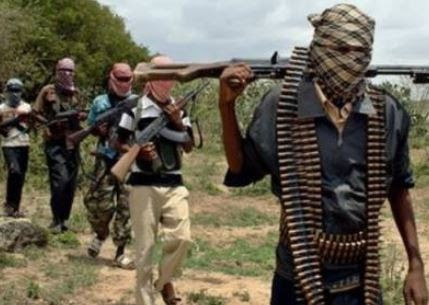
The government maintained that Boko Haram, ISWAP, Lakurawa, armed bandits and criminal gangs had killed both Christians and Muslims, with many of the dead in the North-East and North-West being Muslims themselves.
Officials repeatedly argued that reducing Nigeria’s insecurity to a single religious narrative ignored the realities of terrorism, banditry, farmer-herder conflicts and organized crime.
Months later, the diplomatic tone from Washington has changed significantly.
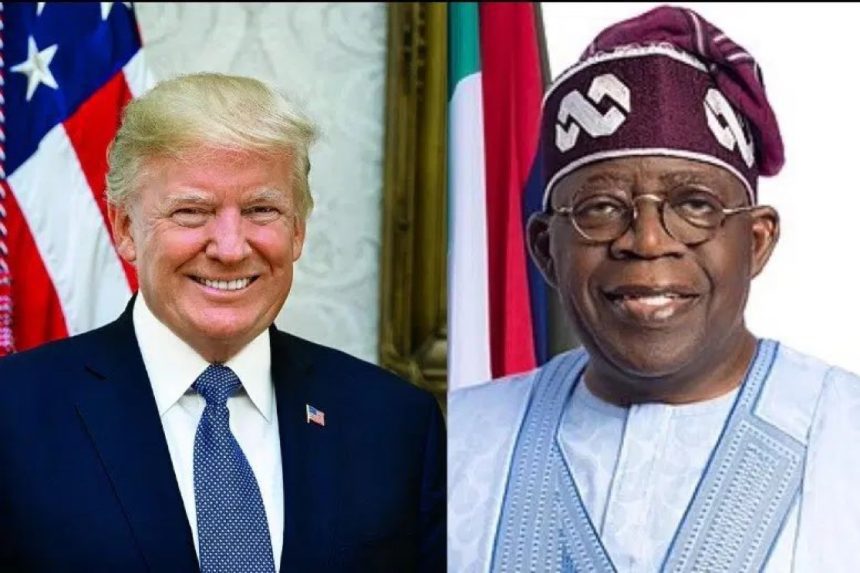
In a letter dated July 6, 2026, but released by the Presidency this week, President Trump praised Tinubu’s “decisive leadership” and commended his administration’s efforts against terrorism.
“I applaud your resolve to tackle the issues plaguing your nation, especially the violence affecting Christian communities… It is a true honour to stand with you in the fight against terrorists,” Trump wrote.
Perhaps the most striking aspect of Trump’s letter is not merely the praise, but the language it employs.
Trump framed the crisis within the context of counter-terrorism rather than describing the violence as genocide or accusing the Nigerian government of complicity.
While acknowledging attacks on Christian communities, he repeatedly emphasized cooperation against terrorist organizations.
For Abuja, this represents an important diplomatic victory.
The Tinubu administration has consistently argued before foreign governments that the conflict should be understood primarily as a fight against terrorism rather than a state-sponsored religious campaign.
The latest correspondence suggests that Washington is increasingly viewing Nigeria’s security challenges through that broader lens.
The letter also highlights how security cooperation has expanded between both countries.
Trump referenced the U.S.–Nigeria 2026 Defence Cooperation Roadmap, describing it as a framework for confronting terrorism across the whole West Africa.
He further disclosed that U.S. Special Operations Forces have been deployed to train and support Nigerian Armed Forces with intelligence, operational skills and equipment aimed at improving counter-terrorism operations.
The correspondence comes shortly after U.S. Assistant Secretary of State for Africa Frank Garcia visited Abuja for discussions focused on expanding intelligence sharing, military training and joint security operations between both countries.
What’s Nigeria’s Diplomatic Campaign ?
Since late 2025, Nigerian officials have mounted an extensive diplomatic effort to counter claims that Christians were being singled out for extermination.
The Presidency, Ministry of Foreign Affairs and National Security Adviser repeatedly argued that insurgent groups attack communities irrespective of religion and that government military operations have been directed against terrorist organizations rather than along religious lines.
Nigerian authorities also pointed to joint operations against Boko Haram and ISWAP, as well as new military deployments to emerging terrorist hotspots, including the launch of Operation Savanna Shield following attacks in Kwara State earlier this year.
Despite the apparent shift in Washington’s rhetoric, the controversy is unlikely to disappear.
International religious freedom advocates continue to argue that Christians remain disproportionately affected in parts of Nigeria’s Middle Belt and North-Central region.
Human rights organizations have also continued to document attacks on churches and Christian communities while simultaneously noting that Muslims have also been victims of jihadist violence, banditry and communal conflicts.
Consequently, many analysts believe the debate has evolved rather than ended.
Nevertheless, Trump’s latest letter marks one of the clearest acknowledgements yet from the White House that the United States sees Nigeria primarily as a counter-terrorism partner rather than a government accused of orchestrating or enabling a religious genocide.
For the Tinubu administration, that represents a significant diplomatic achievement.
While concerns over attacks on Christian communities remain part of bilateral discussions, Washington’s latest messaging places greater emphasis on defeating terrorist organizations, strengthening intelligence cooperation and improving Nigeria’s security capacity than on advancing the “Christian genocide” narrative.
Whether that position endures will depend on security developments on the ground, but for now, Abuja appears to have succeeded in persuading one of its most influential international partners.