The Government and people of Nigeria have been called upon to prioritise support for inclusive campaigns against gender based violence and inequality.
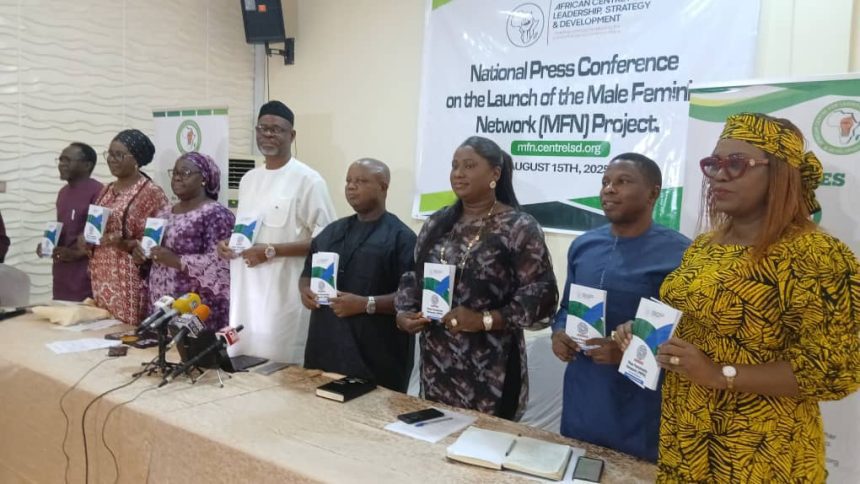
The African Centre for Leadership, Strategy&Development (Centre LSD) made the call at a press briefing of the Inception Meeting of the Male Feminist Network (MFN) with Zonal Partners in Abuja, on Friday.
Welcoming participants to the Inception Meeting, the centre’s founding executive director, Dr Otive Igbuzor, said: “At Centre LSD, we believe it is time for a shift. We can not keep expecting women alone to bear the burden of this fight. Men hold influence in homes, workplaces, religious communities, politics, and traditional institutions—and when that influence is aligned with feminist values, the change is profound.
“As indicated above, the statistics remain sobering: one in three women in Nigeria experiences gender-based violence. Harmful norms persist, often cloaked in culture or religion, while survivors face silence and stigma. For too long, the responsibility for change has been placed solely on women and women’s movements.
“But we know – and history affirms – that true transformation requires the engagement of everyone, especially men who are willing to challenge privilege, unlearn harmful masculinities, and live out feminist values.
“This work is not about replacing women’s leadership; it is about amplifying it. It is about standing in solidarity – shoulder to shoulder – with those who have led the fight for generations.
“Let this inception meeting serve as both a launchpad and a pledge. A launchpad for the coordinated, strategic, and visible work we must do over the next two years. And a pledge – that we will be accountable to the communities we serve, to the women’s movements we partner with, and to the values we profess.
“To achieve the Nigeria we envision, we need collective action.
“To the Nigerian government – We call on you to prioritise funding and policy reforms that institutionalize male engagement in GBV prevention and gender equality work.
“To donors and development partners – Join the Ford Foundation in funding this critical work. With more resources, we can scale this model not just in Nigeria but across Africa.
“To the private sector – Partner with us to integrate male allyship into workplace policies and corporate social responsibility initiatives.”
According to him, “the benefits extend to men as well: stronger, healthier relationships; safer communities; reduced crime; and a society where every citizen can thrive without fear or exclusion.
“To make this vision a reality, the MFN Project will deliver an Online Training & Certification Course – Hosted at mfn.centrelsd.org. This structured, interactive course will train and certify men as male feminists. It includes modules on feminist principles, GBV prevention, advocacy strategies, and movement organising.
Speaking in the same vein during the press briefing on the Male Feminist Network Project, the chairman of the board, Centre LSD, ………., said, “This project is rooted in a simple but radical idea: that men must be allies, advocates, and active participants in the movement for gender justice. Feminism is not just a women’s issue it is a human issue.
“This network brings together men from diverse sectors and backgrounds who are committed to dismantling patriarchy, challenging gender stereotypes, and advancing the rights of women, girls, and gender-diverse persons.
“We aim to create safe spaces for reflection, education, and collective action. We are not here to speak over women’s voices, but to amplify them. Not to lead, but to walk alongside in solidarity.”
On the imperative of inclusive action against GBV and gender inequality he stressed that “progress cannot happen in silos. For far too long, gender work has been seen as the responsibility of women alone. Yet, many of the systems that perpetuate inequality are upheld often unconsciously by men. It is therefore essential that men become part of the solution”.
The Male Feminist Network, he said, is a platform to nurture a new kind of masculinity one that is rooted in empathy, accountability, and equity. A masculinity that rejects violence, domination, and silence. A masculinity that supports inclusive leadership and builds stronger communities.
He expressed profound gratitude to the project founder, Ford Foundation, and called on all well-meaning individuals, groups, and corporate bodies to “support this growing movement”.