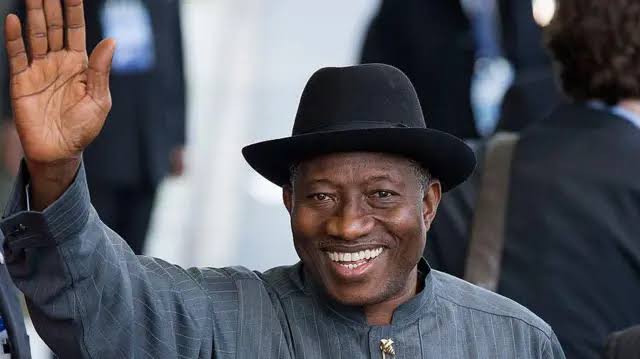
The name of former President Goodluck Jonathan has resurfaced in Nigeria’s political discourse ahead of the 2027 elections.
Speculation intensified after Jonathan’s cousin, Mr. Azibaola Robert, issued a statement via his verified Facebook page dismissing reports that the former president had abandoned plans of returning to politics.
Notably, Robert declined to confirm whether Jonathan is preparing for the 2027 race, a silence that has only fueled intrigue.
Jonathan, who assumed office in 2010 following the death of President Umaru Musa Yar’Adua and later won the 2011 election, lost his re-election bid to Muhammadu Buhari in 2015.
Since then, his name has continued to emerge in conversations about potential consensus candidates capable of bridging Nigeria’s deep political and regional divides.
Constitutionally, Jonathan remains eligible.
The 2018 amendment to the 1999 Constitution stipulates that a president who completes more than two years of another’s tenure may seek election only once more.
Jonathan’s completion of Yar’Adua’s term lasted less than two years, meaning he has only been elected once in 2011 and therefore retains the legal right to contest again.
Yet, the bigger question is political, not legal. Within the ruling All Progressives Congress (APC), there were already whispers ahead of 2023 that Jonathan might be considered as a compromise candidate, though those plans never materialized.
In the opposition Peoples Democratic Party (PDP), where Jonathan remains a towering figure, his potential return could deepen internal rivalries or galvanize support, depending on the dynamics at play.
Jonathan’s political capital is both an asset and a burden.
His calm demeanor and reputation as a democrat, particularly for conceding defeat in 2015, a first in Nigeria’s history, still resonate with many.
As 2027 approaches, Jonathan’s silence may be strategic, allowing him to gauge the political temperature while leaving all options open.