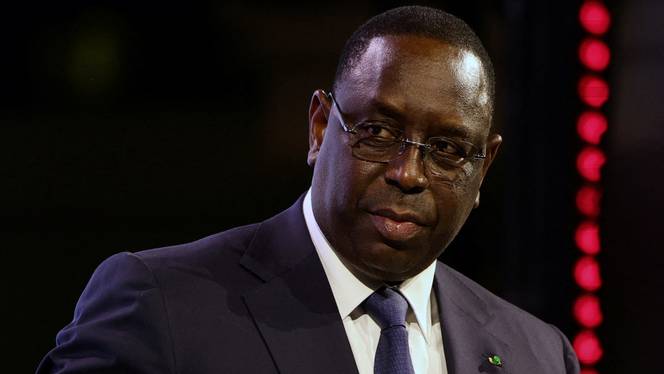
Former Senegalese president Macky Sall has formally entered the race to become the next secretary-general of the United Nations, after Burundi submitted his candidacy, UN officials confirmed on Monday.
Sall, who led Senegal from 2012 until 2024, is seeking to succeed António Guterres, whose second five-year term ends on December 31, 2026. The next secretary-general will begin a new mandate on January 1, 2027.
Regional rotation debate returns
The leadership transition has revived longstanding discussions about geographic balance at the helm of the United Nations. Although no formal rule governs rotation among regions, diplomatic precedent has traditionally influenced the process.
When Guterres, a Portuguese national, was elected in 2016, several diplomats argued that Eastern Europe was due to hold the post under the informal rotation pattern. Attention has since shifted towards Latin America, widely viewed as next in line, adding a regional dimension to Sall’s West African candidacy.
Security Council deliberations are expected to reflect these geopolitical considerations during early straw polls.
Field of candidates expands
Sall joins two officially declared contenders. They include former Chilean president Michelle Bachelet, who previously served as UN High Commissioner for Human Rights, and Argentine diplomat Rafael Grossi, head of the International Atomic Energy Agency.
Costa Rica has also indicated plans to nominate former vice president Rebeca Grynspan, though her formal letter of candidacy has not yet been officially submitted.
The expanding list highlights growing global interest in the post at a time of mounting geopolitical tensions, budgetary constraints and renewed calls for institutional reform within the UN system.
Domestic legacy under scrutiny
During his 12 years in office, Sall oversaw major infrastructure projects and positioned Senegal as one of West Africa’s more stable democracies. His administration advanced energy development plans, including offshore oil and gas production intended to boost long-term growth.
However, his domestic record remains contested. Critics in Senegal have alleged that his government did not fully disclose the extent of fiscal pressures during the 2024 political transition. Opposition figures have argued that public debt and budgetary challenges were deeper than officially acknowledged.
Supporters counter that Sall strengthened macroeconomic management, improved investor confidence and elevated Senegal’s diplomatic profile — credentials they say reinforce his suitability for multilateral leadership.
Push for historic first
The 2026 selection process is unfolding amid renewed advocacy for the appointment of the first woman to lead the United Nations in its 80-year history. Civil society organisations and several member states have intensified calls for gender parity at the top of the global body.
Bachelet’s candidacy has attracted particular attention in that context, given her leadership experience both nationally and within the UN system.
The Security Council is expected to begin formal consideration of candidates by the end of July. Through a series of confidential straw polls, Council members will narrow the field before recommending a single nominee to the General Assembly for final approval.
Each of the five permanent members of the Security Council holds veto power, making closed-door diplomacy decisive in determining the eventual outcome.
With multiple high-profile candidates now in contention and debates over regional representation and gender balance intensifying, the race to shape the United Nations’ leadership beyond 2026 is poised to become one of the year’s most closely watched diplomatic contests.
Credit: Africabriefing.com