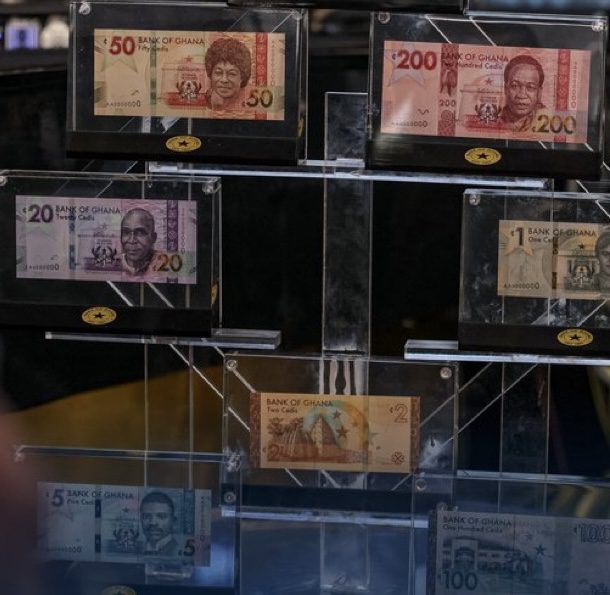
Ghana has unveiled a redesigned series of banknotes featuring enhanced anti-counterfeiting safeguards and designs celebrating the country’s national heritage.
President John Dramani Mahama officially launched the new Ghana Cedi Heritage Series on Thursday, 12 November 2026, at the Bank of Ghana headquarters in Accra.
The redesigned banknotes are smaller, more portable and printed on reinforced cotton paper to withstand frequent handling and Ghana’s tropical climate, thereby extending their lifespan and reducing the cost of replacing damaged currency.
The Bank of Ghana said the redesign became necessary because some of the existing banknote designs had been in circulation for more than two decades, while counterfeiting technology and international security standards had continued to evolve.
The new notes feature upgraded security measures to make counterfeiting more difficult, alongside improved tactile features to help visually impaired persons identify different denominations.
According to the central bank, the redesigned currency retains the country’s eight denominations: GH¢1, GH¢2, GH¢5, GH¢10, GH¢20, GH¢50, GH¢100 and GH¢200.
Beyond the security improvements, the Heritage Series celebrates Ghana’s history and cultural identity through images of prominent national figures, historic landmarks, monuments and traditional Adinkra symbols.
Speaking at the launch, President Mahama described the cedi as more than a means of payment, noting that it represents Ghana’s shared history, national identity and economic sovereignty.
He traced the origin of the word ‘cedi’ to the Akan word for cowrie shells, which served as a medium of exchange in traditional Ghanaian markets before the introduction of modern currency.
The President also urged citizens to protect and value the redesigned notes, stressing that confidence in the national currency must be supported by increased local production, expanded exports, disciplined public spending and credible monetary policies.
The Bank of Ghana Governor, Dr Johnson Pandit Asiama, said the new currency was designed to strengthen public confidence, improve security and ensure that physical cash remained reliable despite the growing adoption of digital payment systems.
He maintained that physical currency remained essential to the country’s monetary resilience, particularly during cyberattacks, technical failures, natural disasters and other disruptions to electronic payment networks.
The Governor also announced the introduction of a Cedi mobile application designed to educate the public on identifying the security features of the new notes, with additional assistance for persons living with visual impairments.
The Bank of Ghana further revealed that it was working with relevant stakeholders on a new Currency Act to replace the existing Currency Act of 1964, with proposed provisions to strengthen penalties against counterfeiting and the deliberate mutilation and abuse of banknotes.
The new Ghana Cedi Heritage Series is scheduled to enter circulation on 1 December 2026, and will circulate alongside the existing banknotes, which will remain legal tender during a gradual transition.