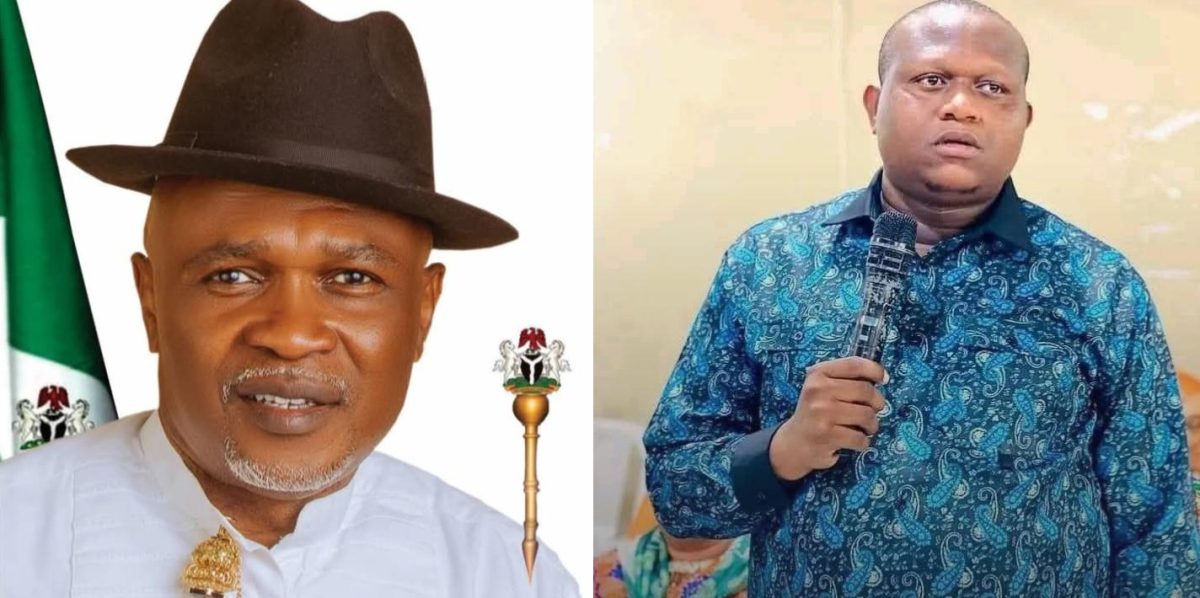
A political disagreement over who should be regarded as the leader of Rivers State has sparked a heated confrontation between Chijioke Ihunwo, popularly known as Dimgba, and Representative Kingsley Chinda during an Obio/Akpor reconciliation meeting.
The clash, which reportedly occurred in the presence of political stakeholders and supporters, exposed the continuing political tension surrounding the leadership structure of the state ahead of the 2027 general elections.
Trouble started when Ihunwo took the microphone during the reconciliation gathering and openly recognized Governor Siminalayi Fubara as his political leader.
Ihunwo’s declaration immediately drew a strong reaction from Chinda, who appeared visibly displeased by the statement and rejected the microphone before launching into an unscripted response.
Chinda reportedly made his position clear, insisting that Governor Fubara should not be described as the leader of Rivers politics.
According to Chinda, former Governor Nyesom Wike remains the state’s political leader, and he challenged Ihunwo over his understanding of the political reality.
“Is Fubara the leader?” Chinda was said to have questioned, insisting that Wike remains the only person who should be addressed as the political leader of Rivers State.
The exchange quickly became one of the major talking points from the reconciliation meeting, highlighting the big political differences that continue to exist within the state’s political family despite efforts to promote unity ahead of 2027.
The confrontation is significant because both Fubara and Wike remain influential figures in Rivers politics, while their political differences have continued to shape alliances and alignments across the state.
Ihunwo has been identified with the camp loyal to Governor Fubara, while Chinda has remained politically associated with the structure linked to former Governor Wike.
The disagreement therefore goes beyond a personal exchange, as the question of who controls the political structure and who should be recognized as the ultimate leader could become increasingly important as political parties and aspirants position themselves for the 2027 elections.
The Obio/Akpor meeting was reportedly convened as part of efforts to reconcile political interests and strengthen unity among stakeholders. However, the public disagreement demonstrated that significant differences remain unresolved.
With preparations for the 2027 elections gradually intensifying, the confrontation has further exposed the competing political loyalties within Rivers State.
The situation is particularly noteworthy given the political significance of Obio/Akpor, one of the state’s most politically influential local government areas and a major battleground for competing political interests.
Observers are likely to interpret the confrontation as another indication that the battle for political influence in Rivers State will not only involve political parties but also competing structures and personalities within the state’s political establishment.
While reconciliation meetings are being organized to promote unity, the exchange between Ihunwo and Chinda suggests that questions surrounding loyalty, leadership, and political control remain highly sensitive.
As the 2027 elections draw closer, the question of whether the Rivers political structure will rally around Governor Fubara, continue to recognize Wike’s influence, or develop a new centre of political authority is expected to remain a major issue.
For now, the heated exchange at the Obio/Akpor reconciliation meeting has brought that leadership question into the open, providing a glimpse into the political battles that could define Rivers State’s road to 2027.