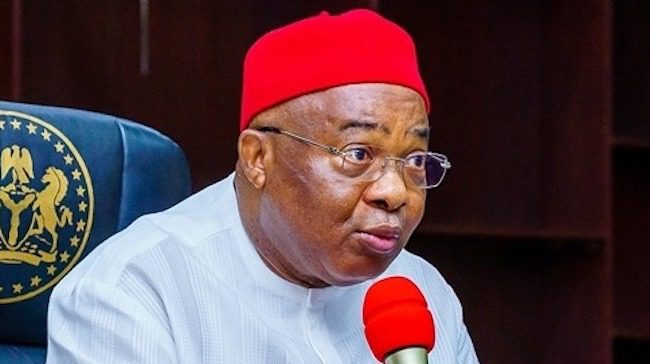
Gov. Hope Uzodinma of Imo has approved a new minimum wage of N104,000 for civil servants in the state.
Uzodimma made this known during a meeting with various labour union leaders on Tuesday night at the Government House in Owerri.
9news Nigeria reports that the governor increased the minimum wage from N76,000 to N104,000.
Similarly, the minimum wage of doctors was raised from N215,000 to N503,000, while that of tertiary institution teachers increased from N119,000 to N222,000, among others.
He said Imo citizens had faced numerous challenges since his government took office, including insecurity, the COVID-19 pandemic, economic hardship from reform policies, and disputes over minimum wage and subsidy removal.
“There is no way any government will do well if it doesn’t have a friendly and cordial relationship with the organised labour.
“When workers are paid well, productivity rises, families are happier, and the local economy grows.
“This is our way of investing in Imo people. Government believes in stimulating political and economic activities, carrying bureaucrats along, and making sure that workers’ welfare was highly respected,” he said.
Uzodimma said that the state Internally Generated Revenue (IGR) had grown from N400 million to over N3 billion monthly.
According to him, in 2020, we were receiving allocations between N5 billion to N7 billion, but has increased to N14 billion.
“In 2020, the state recorded a debt profile of over N280 billion but has reduced to less than N100 billion,” he added.
The governor recalled that when he assumed office in 2020, the major infrastructure in all sectors were totally collapsed.
He said a lot had been expended to rebuild the collapsed infrastructure especially roads and combating the insecurity challenges.
He stressed that the removal of fuel subsidy had equally raised the cost of living in Nigeria as much as it had its own advantages.
“It is a thing of joy that we have started seeing the dividends of that bold decision of President Bola Tinubu to remove fuel subsidy.
“What government is confronted with now is how to ensure that the dividends of that policy trickles down to the common man on the street.
“Cognisant of the fact that our effort has started yielding dividends and that our IGR had improved and that reform policies of the President has also increased our allocations to sub-national governments, every responsible government must be transparent about it,” he said.