-Dr Etofolam Felix Osuji mni
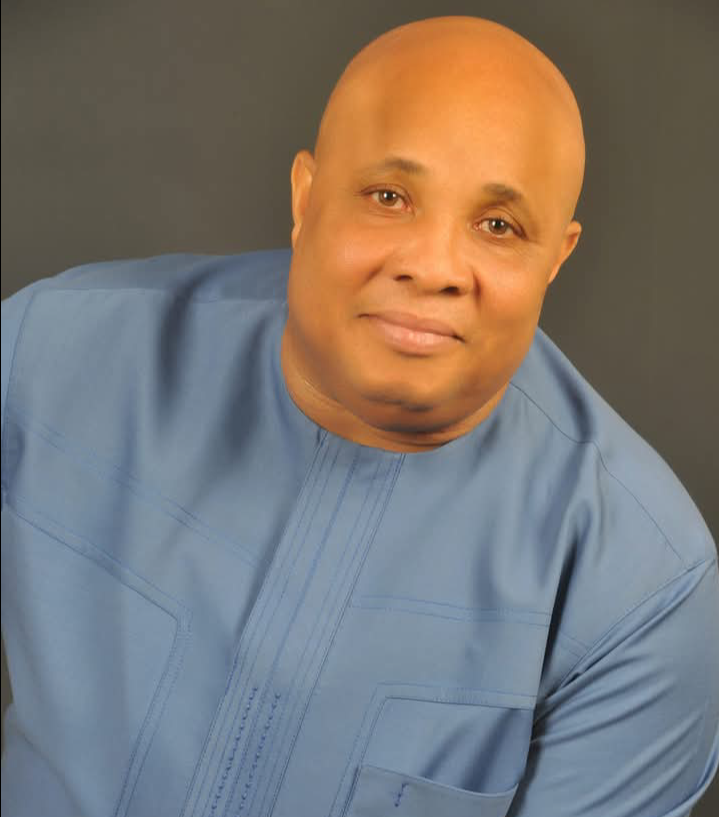
The evolving political narrative surrounding Chief Martin Agbaso in Imo State is one defined by a paradox: a leader widely acknowledged for his capacity, yet shadowed by a recurring critique of his strategic endurance. For many observers, the events of 2007 and 2011 created a blueprint of “the candidate who stops short,” leading to a persistent perception that his campaigns are subject to negotiation rather than completion.
While the political circumstances surrounding those elections remain subject to varying interpretations, the perception they created continues to influence political discourse and shape expectations ahead of 2027.
Chief Martin Agbaso remains one of the most experienced political figures from Owerri Zone. His long-standing involvement in governance, development initiatives, and state-level politics places him among the few individuals with both institutional knowledge and political maturity.
His resilience over the years, sustained relevance in political conversations, and enduring grassroots connections continue to position him as a credible figure within the Owerri Zone’s quest for the governorship. However, experience alone may not be decisive in 2027. Credibility of commitment will likely matter just as much as capacity.
If he intends to contest the 2027 gubernatorial election, he faces a dual challenge. He must not only present a superior and convincing developmental manifesto, but also undertake a process of political clarification, a transparent accounting for past decisions that critics interpret as strategic withdrawals. This is not merely about revisiting history; it is about addressing perception, rebuilding confidence, and demonstrating that 2027 represents a departure from earlier narratives.
In the high-stakes environment of Owerri Zone’s quest for the governorship, the electorate is increasingly seeking a standard-bearer whose resolve is as formidable as their credentials. Supporting a candidate of his stature remains a logical choice for those who value experience, institutional knowledge, and intellectual depth, provided that such support is anchored in an ironclad assurance of commitment.
The question before the electorate is therefore not whether Chief Martin Agbaso has the capacity to govern, but whether he is prepared to redefine the narrative surrounding his political journey. If he does so, it may require a very public commitment to pursue the race to its constitutional conclusion, regardless of pressure. In Imo politics, being the “best” on paper is rarely enough; the electorate in 2027 will likely be looking for someone who will not blink when the heat is on.
Beyond personal resolve, the 2027 contest will also require a formidable political structure, one capable of mobilization, negotiation, and sustained engagement. Chief Martin Agbaso’s pathway to emergence will therefore depend not only on his personal credibility, but also on the strength of the coalition he is able to build and sustain across the Owerri Zone and beyond.
For Agbaso to emerge as the preeminent choice from the Owerri Zone, he must therefore demonstrate that 2027 represents a genuine departure from the past, a race that will be run to its definitive conclusion, devoid of the transactional shadows that have historically colored his political journey.
This reflection is offered in good faith. Chief Martin Agbaso remains a respected figure with considerable capacity. However, in the evolving political climate of 2027, credibility of commitment will matter as much as experience. The electorate, particularly in Owerri Zone, will be seeking not only competence, but conviction. And in politics, conviction is ultimately measured not by words, but by endurance.
THE ETOFOLAM OSUJI ECONOMIC AND ACCOUNTABILITY TEAM WRITES, 03/04/2026