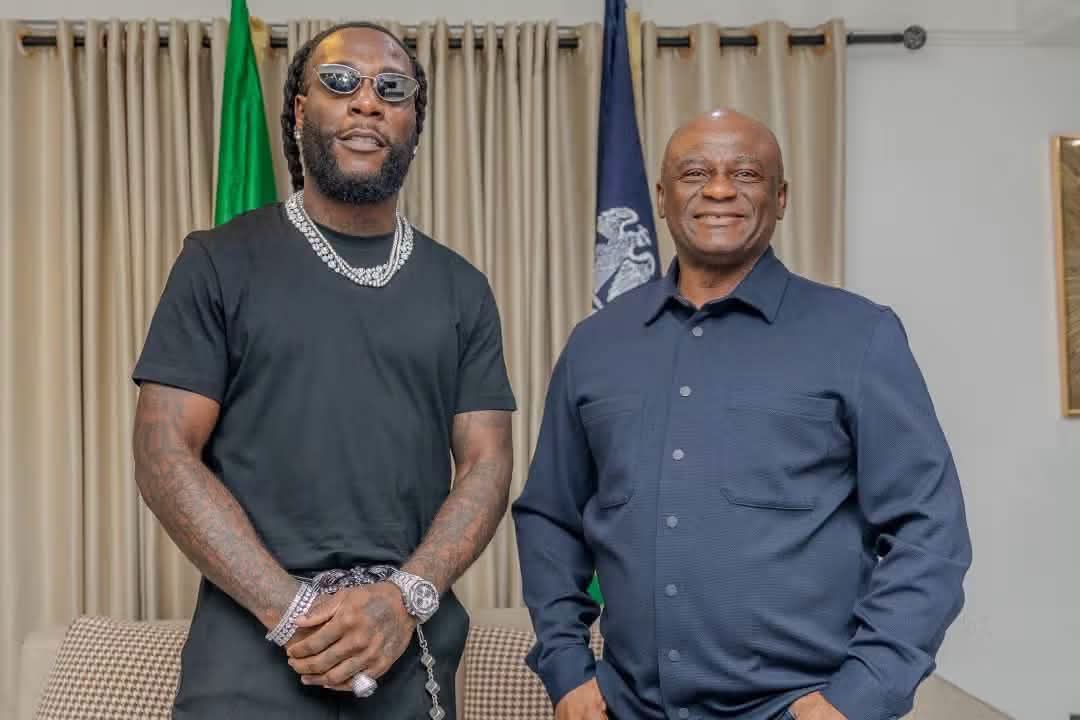
The Inspector-General of Police, IGP Olatunji Rilwan Disu, has held discussions with Grammy-winning Nigerian music star Damini Ogulu, popularly known as Burna Boy, on how Nigeria’s creative industry can help rebuild public confidence in the Nigeria Police Force, particularly among young Nigerians.
The meeting, which took place on Saturday at the Police House in Lagos, focused on strengthening collaboration between the police and the entertainment industry and exploring how popular culture can help bridge the gap between law enforcement agencies and the citizens they serve.
The engagement comes as the police leadership continues to place greater emphasis on public trust, community partnerships, and improved relations with Nigerians. Disu has previously stressed that effective policing depends significantly on cooperation and confidence between the police and the public.
During the meeting, Disu highlighted the enormous influence of Nigeria’s creative industry, particularly its reach among young people.
According to reports from the meeting, the IGP said the creative sector has the ability to shape public conversations, influence attitudes and create platforms for dialogue between young Nigerians and security institutions.
He also pointed to the country’s Orange Economy, which encompasses sectors including music, film, fashion, digital content and other creative enterprises, describing its enormous value chain and potential for national development.
The police leadership believes that working with influential figures within the creative industry could provide an additional avenue for communicating with younger Nigerians and addressing misconceptions, concerns and tensions surrounding policing.
Burna Boy reportedly expressed enthusiasm about the direction being pursued by the IGP and indicated his willingness to support initiatives aimed at improving the relationship between the police and Nigerians, especially members of the younger generation.
His involvement has attracted particular attention because of his significant influence among Nigerian and African youths and his previous public engagement with issues concerning police conduct and the experiences of young Nigerians.
The meeting therefore represents an unusual but potentially significant engagement between the country’s top police leadership and one of its most internationally recognised entertainers.
The discussion was not presented simply as an entertainment-industry engagement but as part of a broader approach to rebuilding public confidence in policing.
The Nigeria Police Force has increasingly spoken about partnerships with stakeholders outside traditional security structures, including the media, civil society, young people and the private sector.
Disu has also been pursuing initiatives around the protection of Nigeria’s creative economy. In September, he advocated the creation of an Orange Economy Security and Intellectual Property Coordination Desk within the police structure to strengthen the fight against piracy, counterfeiting, cyber-enabled crimes and other offences affecting creative businesses.
The latest engagement comes against the background of longstanding concerns about relations between the police and sections of the Nigerian public, particularly young people.
While partnerships with celebrities and influential voices can help open channels of communication, rebuilding confidence in a security institution ultimately depends on how citizens experience policing in their communities.
The Police have therefore continued to emphasise professionalism, accountability, human-rights compliance, community engagement and accessible complaint mechanisms as part of broader reform efforts.
The Force recently reiterated its commitment to holding officers accountable for unprofessional conduct, including directing an investigation into a viral stop-and-search incident on the Lagos-Benin Expressway.
The meeting signals an attempt by the police leadership to engage young Nigerians not only through conventional public relations channels but also through the cultural figures and platforms that command their attention.
For Burna Boy, whose music and public profile give him substantial influence among young Nigerians, participation in such an initiative could provide an avenue for dialogue around policing, accountability and the relationship between citizens and law-enforcement authorities.
However, the success of the initiative will likely depend on whether the engagement develops into concrete programmes capable of improving police-community interactions beyond the meeting itself.
For now, the Disu-Burna Boy meeting marks a notable effort to bring Nigeria’s security establishment and creative industry together in pursuit of a common objective: building greater trust, understanding and cooperation between the police and the Nigerian people.