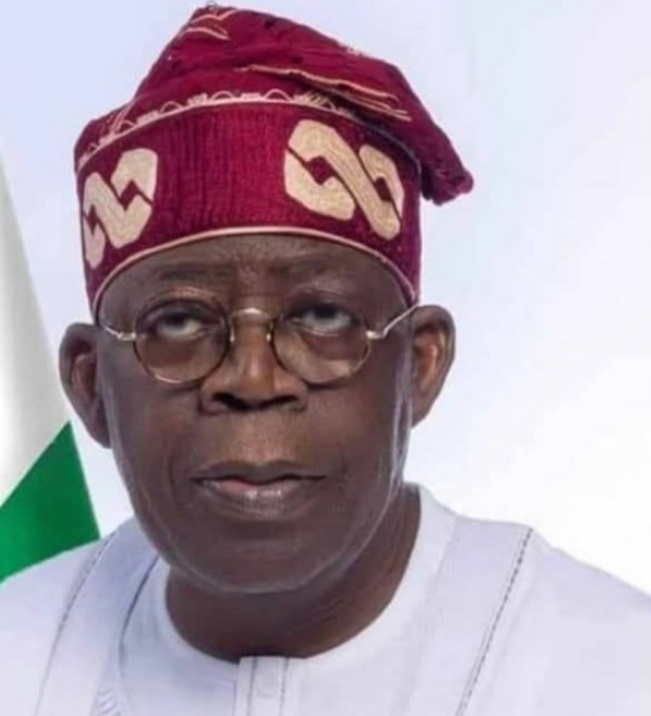
President Bola Ahmed Tinubu has declared that Nigeria has “passed through its own Red Sea” and is now entering an era of prosperity.
Tinubu made the declaration in his Independence Day address to Nigerians on Thursday, 1 October 2026, delivered under the theme, “From Reforms to Prosperity.”
The President said his administration had spent the past three years confronting what he described as longstanding economic distortions, arguing that the difficult reforms implemented since 2023 had laid the foundation for sustainable growth.
According to him, Nigeria’s economic outlook has improved, with the economy growing by more than four per cent in 2026, while both the oil and non-oil sectors contributed to the growth.
“Three and a half years later, the evidence that Nigeria’s economic outlook has improved is undeniable,” Tinubu said.
He also claimed that oil theft had declined, inflation had fallen substantially from its peak, foreign reserves had been rebuilt and the foreign exchange market had stabilised.
The President further said Nigeria recorded its highest-ever non-oil export revenue in 2025, exceeding $6 billion.
“These are not idle claims. International observers, journalists, NGOs and multilateral institutions can see the change,” he said.
Tinubu also said that the government’s economic priorities had shifted from emergency reforms to delivering broad-based prosperity.
“The emergency treatment is over. The foundation has been repaired. The central economic task before us has changed.
“For three years, our overriding purpose was to correct our nation’s course. Now, our purpose is simple: shared and widespread prosperity.” He said.
The President said the next phase of his administration would focus on reducing the cost of living by lowering the cost of production and transportation.
He listed increased mechanised irrigation and dry-season farming, improved access to seeds and fertiliser, greater agricultural mechanisation, storage infrastructure and transportation among the government’s priorities.
He also highlighted investments in roads, railways and ports aimed at connecting farms and factories to markets.
Tinubu said reducing production and logistics costs would ultimately help bring down the prices of goods and services.
The President identified job creation, enterprise and industrial expansion as central to the next phase of his administration.
He said the government would deploy Nigeria’s gas resources to power industries, support the revival of factories, expand digital connectivity and invest in skills required by employers.
“I want to see more Nigerians making things. I want to see more Nigerian farms feeding our cities and supplying our factories.
“I want to see Nigerian businesses selling Nigerian goods to the whole world. I want young Nigerians building unicorns and creating opportunities for others here at home.” Tinubu said.
The President, despite highlighting the improvements in the economy, acknowledged that millions of Nigerians continue to face difficulties with food, education, healthcare and transportation costs.
He said the hardship experienced by many Nigerians predates his administration and reflects the cumulative effects of decades of low productivity, inadequate infrastructure and limited opportunities.
“We cannot erase in four years what accumulated over generations. But we can change its course,” he said.
Tinubu said the government was therefore strengthening social interventions targeted at vulnerable Nigerians.
He cited efforts to improve the National Social Register, expand support for low-income households and strengthen access to education through the Nigerian Education Loan Fund.
He also highlighted the Consumer Credit Corporation (CREDICORP), which he said was providing working Nigerians with access to credit for vehicles, solar systems, digital devices and other essential assets.
The President said his administration would also continue working with state and local governments to strengthen primary healthcare, basic education and other essential public services.
Tinubu said government intervention programmes should serve as a bridge towards prosperity rather than become permanent substitutes for economic opportunity.
“Our objective is not to manage poverty more efficiently. We will defeat it,” he declared.
He acknowledged that achieving that objective would require sustained economic growth, discipline and the creation of millions of productive opportunities.
“But for the first time in decades, we embark on this task from a position of strength; with an economy whose fundamental direction has been corrected,” he said.
In reflection on Nigeria’s 66 years as an independent nation, Tinubu acknowledged the country’s history of civil war, military rule, economic crises, insecurity and political upheaval.
He said Nigerians had nevertheless continued to demonstrate resilience and faith in the country.
The President urged Nigerians to look forward rather than return to the economic conditions that preceded his administration’s reforms.
“Nigeria has corrected its course. We have passed through our own Red Sea. This is not the time to look back,” Tinubu said.
He described the “Promised Land” ahead as a Nigeria of abundance and opportunity, where prosperity is broadly shared and children can aspire beyond the circumstances of their birth.
“Our destination is in sight. Our foundations are strong. Our direction is clear. So let us go forward. No looking back,” he said.
Tinubu concluded his address by congratulating Nigerians on the 66th Independence anniversary and calling for continued faith in the country’s future.
“Happy Independence Day, my fellow Nigerians. God bless you all, and God bless the Federal Republic of Nigeria,” the President said.