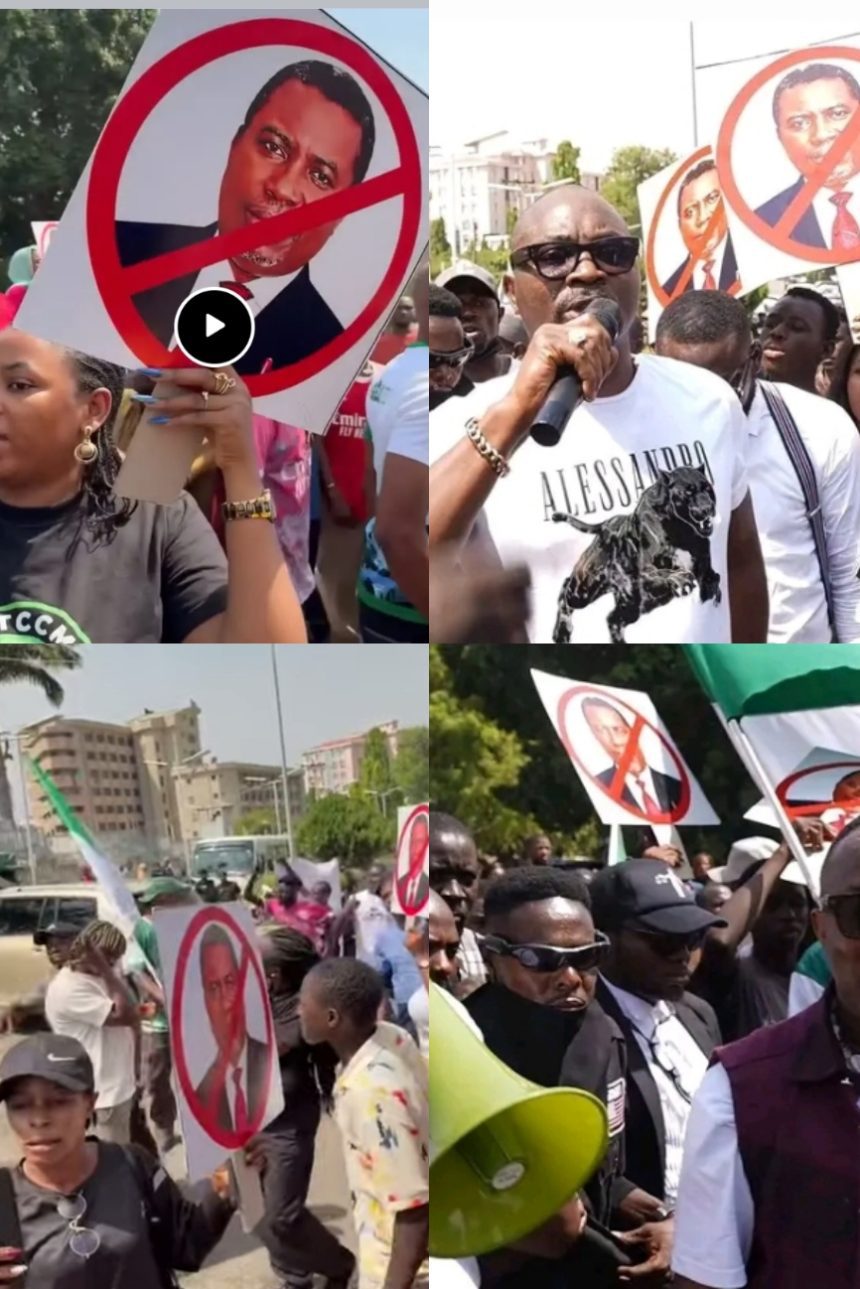
Nigerian youths, including supporters of opposition politicians, on Monday staged a protest in Abuja, demanding greater transparency and accountability from the Independent National Electoral Commission (INEC) ahead of the 2027 general elections.
The demonstrators converged at Unity Fountain before marching towards INEC’s national headquarters in the Federal Capital Territory (FCT).
During the demonstration, the protesters displayed placards bearing different messages and chanted, “Rig and Die,” warning against any attempt to manipulate the outcome of the forthcoming elections.
The protesters accused INEC of taking actions they believe could undermine its independence and create an unfair advantage for President Bola Tinubu and the ruling All Progressives Congress (APC) ahead of the presidential election.
One of the demonstrators questioned the commission’s transparency and demanded that it explain its electoral preparations to Nigerians.
“INEC wants to conduct an election that we know nothing about. INEC must be held accountable and responsible,” the protester said.
Some demonstrators also raised concerns about the distribution of Permanent Voter Cards (PVCs) and the use of artificial intelligence (AI) in managing electoral information.
They demanded greater public access to information about the voters’ register, polling units, electoral technology and other preparations for the 2027 polls.
The demonstration reflects growing public scrutiny of INEC as political activities intensify ahead of the next general elections.
INEC Chairman Reaffirms Commitment to Credible Elections
The protest comes amid growing concerns about INEC’s neutrality and preparedness under its chairman, Professor Joash Amupitan.
On November 12, 2026, Amupitan addressed concerns about the commission’s impartiality during a discussion at Chatham House in London, organised in partnership with the Kimpact Development Initiative.
He insisted that his loyalty was to the Nigerian Constitution and the Electoral Act, rather than any political party or individual.
The INEC chairman also dismissed suggestions that his previous professional engagements in political disputes could compromise his neutrality.
Amupitan further addressed controversy surrounding an X account allegedly linked to him, which reportedly expressed support for the APC during the 2023 general elections.
He denied operating the account and disclosed that an independent forensic review had been obtained, with the matter referred to the Department of State Services (DSS) and the Inspector-General of Police for investigation.
2023 Election Controversy Continues to Affect Public Confidence
Amupitan acknowledged that controversies surrounding the 2023 presidential election had significantly damaged public confidence in INEC.
He admitted that the commission had yet to fully recover from the trust deficit generated by the disputed election.
He, however, maintained that INEC had learnt lessons from subsequent off-cycle elections and introduced technical safeguards to improve electoral credibility.
The chairman identified insecurity, logistics and election result management as major priorities requiring attention ahead of the 2027 elections.
2027 Election Dates and Preparations
Under INEC’s revised electoral timetable, the presidential and National Assembly elections are scheduled for January 16, 2027.
Governorship and State Houses of Assembly elections will follow on February 6, 2027.
Campaigns for presidential and National Assembly candidates commenced on August 19, 2026, while governorship and state assembly campaigns began on September 9, 2026.
The commission is expected to conduct the elections in accordance with the Electoral Act 2026 and its published timetable.
Growing Pressure on INEC
The Abuja demonstration highlights the increasing pressure on the electoral commission to establish public confidence well before the 2027 elections.
The allegations raised by protesters, particularly those concerning PVC distribution, artificial intelligence and the integrity of electoral information, require clear explanations and verifiable responses from INEC.
However, the protesters’ allegations that the commission is working to secure President Tinubu’s re-election have not been independently established.
Similarly, claims concerning the manipulation of polling-unit information through artificial intelligence should be investigated and supported by verifiable evidence rather than treated as established facts.
The reported security concerns surrounding Monday’s demonstration also underline the importance of protecting the right to peaceful assembly while maintaining public order.
As political activities gather momentum, the credibility of the 2027 elections will depend not only on INEC’s assurances but also on the transparency, accountability and impartiality demonstrated throughout the electoral process.
Ultimately, Nigerians expect an election in which every eligible voter’s ballot is protected and the outcome reflects the genuine choice of the electorate.