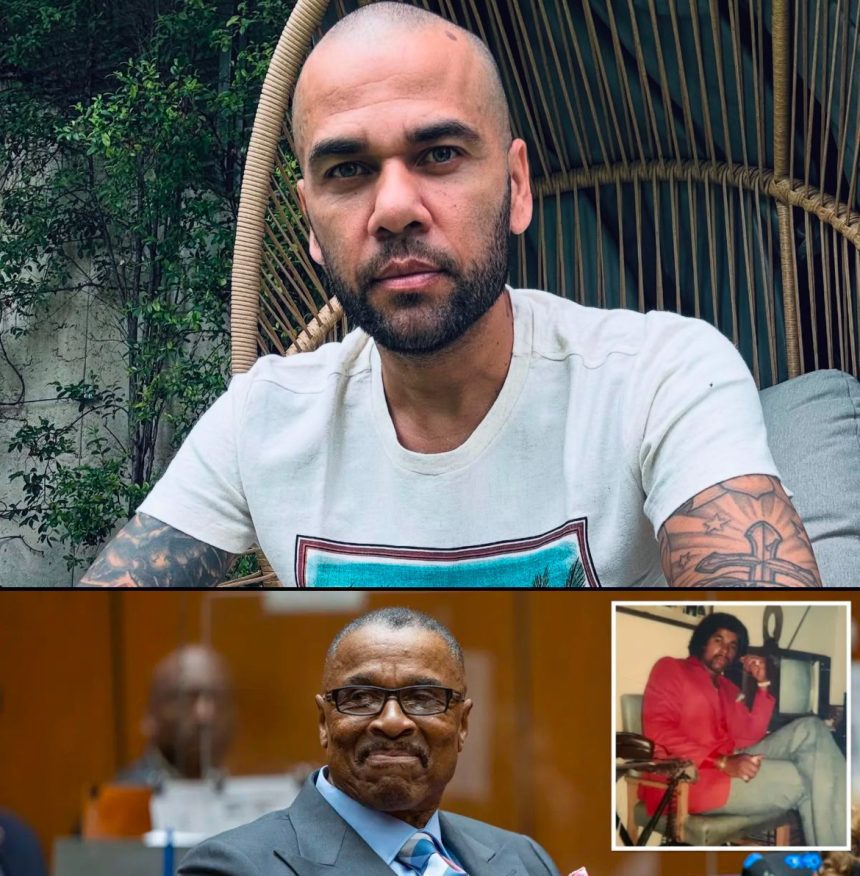
African-American, Maurice Hastings who spent nearly four decades behind bars for a crime he did not commit, has been awarded $25 million by the City of Los Angeles.
Hastings was wrongfully convicted in 1988 of sexual assault and murder, only to be exonerated through DNA evidence 38 years later.
His case has reignited debate over wrongful convictions and the devastating impact of false accusations, particularly in sexual assault cases where the stakes are profoundly high.
Meanwhile, the conversation extends beyond the United States.
In Spain, former Barcelona and Brazil footballer Dani Alves was recently released on bail after serving part of a sentence for sexual assault.
A Spanish court overturned his 2024 conviction, citing insufficient evidence and inconsistencies in the accuser’s testimony.
Alves had been sentenced to four and a half years in prison and ordered to pay €150,000 in compensation to the victim.
His case has been steeped in controversy, with supporters claiming he was a victim of hasty judgment and public pressure, further fueling global discussions on the consequences of false or questionable accusations against men.
Observers argue that while it is essential to protect and uphold justice for genuine victims of sexual violence, cases like Hastings’ wrongful conviction and Alves’ contested trial highlight the urgent need for fair trials, thorough investigations and safeguards against miscarriages of justice.
The wave of such incidents strongly indicates a broader concern: that false accusations and flawed prosecutions not only destroy lives but also risk undermining the credibility of genuine survivors seeking justice.