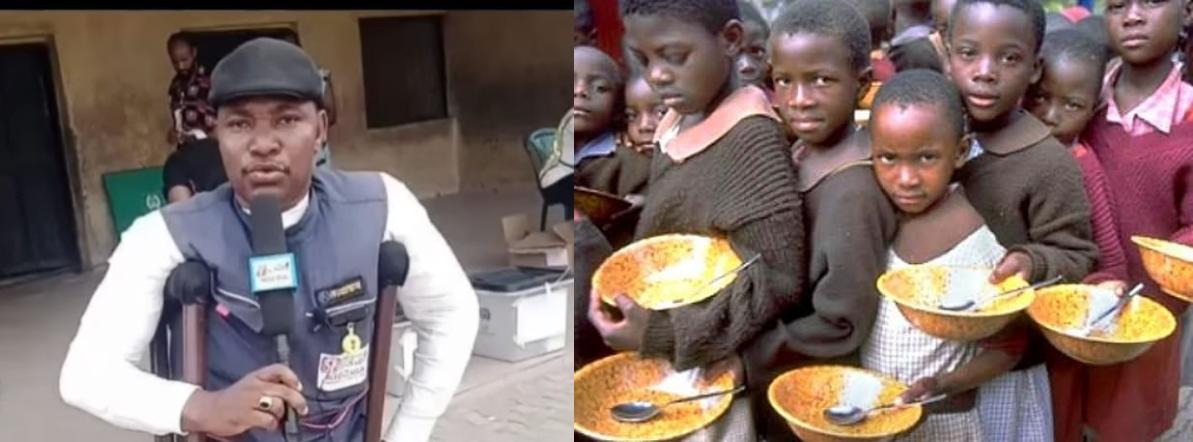
The worsening economic hardship and rising cost of living in Nigeria have continued to generate public concern, with 9News Nigeria Bureau Chief, South-South, Amb. Emmalex David Atseyinku, expressing deep concern over the growing difficulties confronting ordinary Nigerians.
Atseyinku has questioned whether millions of Nigerians struggling to afford basic necessities can withstand another four years of the current economic realities, particularly as families continue to grapple with rising food prices, unemployment, poverty and declining purchasing power.
According to the journalist, the economic situation has become increasingly difficult for many households since President Bola Ahmed Tinubu assumed office in May 2023, with the cost of food, transportation, accommodation, healthcare and other essential services placing enormous pressure on ordinary citizens.
He lamented that many Nigerians who previously struggled to manage their daily expenses are now finding it increasingly difficult to provide even basic meals for their families.
The journalist expressed particular concern over the plight of vulnerable households, especially children, nursing mothers, persons with disabilities, unemployed youths and low-income earners who are disproportionately affected by the rising cost of living.
He noted that hunger is no longer merely an economic discussion but a daily reality for families struggling to secure food and meet their most basic needs.
Atseyinku further raised concerns about children facing malnutrition, parents skipping meals to feed their children and households increasingly relying on limited resources to survive.
He argued that a country blessed with enormous human and natural resources should not have its citizens struggling to afford ordinary meals.
The 9News Nigeria Bureau Chief questioned the widening perception of a disconnect between political leaders and ordinary Nigerians.
He observed that while millions of citizens are battling economic pressures, public confidence in the ability of government policies to provide immediate relief remains a major concern.
According to him, the central question Nigerians deserve answers to is: How long must ordinary citizens continue to bear the burden of economic reforms without seeing meaningful improvements in their daily lives?
He maintained that government policies should ultimately be measured by their impact on the lives of ordinary people, rather than political speeches, promises and official economic statistics.
In a strongly worded political observation, Atseyinku questioned whether Nigerians can continue enduring the present economic difficulties until the next general election in 2027.
He said the suffering of ordinary citizens deserves urgent attention and should not be treated as a political talking point.
“Nigerians cannot continue to live under unbearable economic pressure in their own country. How long will families continue struggling to afford food, pay school fees, pay house rent and meet their basic responsibilities?
“People are crying out for relief. The government must understand that the patience of ordinary citizens should never be mistaken for an absence of suffering.
“We cannot continue discussing economic recovery while millions of families are worried about where their next meal will come from,” he stated.
Looking ahead to the 2027 general elections, Atseyinku urged Nigerians to take an active interest in the democratic process and pay close attention to the policies, performance and records of political office holders.
He encouraged eligible citizens to ensure their voter registration details are in order and to participate peacefully in the electoral process.
He stressed that elections provide citizens with an opportunity to assess leadership, demand accountability and make independent decisions about the country’s future.
According to him, Nigerians should not allow political affiliations, financial inducements or campaign promises to prevent them from asking important questions about economic performance, employment, security, education, healthcare and food affordability.
The journalist called on President Bola Ahmed Tinubu’s administration to intensify efforts towards addressing food insecurity, reducing the cost of essential commodities, creating employment opportunities and introducing practical measures that will provide relief to struggling households.
He argued that economic reforms must translate into tangible improvements in the lives of citizens, particularly the poorest and most vulnerable.
Atseyinku concluded that the greatest measure of governance should be the welfare and dignity of the people, insisting that Nigerians deserve an economy in which hardworking citizens can afford food, provide for their families and live without constant fear of hunger.
As the 2027 general elections approach, one question remains at the centre of the national conversation:
CAN NIGERIANS CONTINUE TO BEAR THE WEIGHT OF THE PRESENT ECONOMIC HARDSHIP, OR WILL THE GOVERNMENT DELIVER THE RELIEF MILLIONS ARE WAITING FOR?