By Olugbenga George
Lagos, Nigeria
The recent announcement of a U.S. military strike in Northwest Nigeria, conducted with the Nigerian government’s approval, appears on the surface to be a straightforward counter-terrorism victory.
Yet beneath this narrative lies a far more complex story: one that intertwines global power politics, domestic Nigerian struggles, and the enduring ghosts of interventions past.
There is undeniable visceral satisfaction in seeing a military operation strike at groups responsible for kidnapping schoolchildren, attacking communities, and spreading terror. For locals living under this shadow, any reprieve is welcome.
But as with all U.S. military engagements, the immediate tactical win must be viewed through the lens of long-term strategy.
Washington’s actions are never purely altruistic.
In the Sahel, U.S. interests include containing the spread of jihadist groups that threaten regional allies and energy interests, countering the growing influence of rivals like Russia’s Wagner Group, and maintaining intelligence footholds in a strategically vital continent.
This strike, while framed as assistance, advances these goals. The Nigerian government, in turn, gains access to unparalleled intelligence and strike capabilities it lacks; a transactional partnership where the “profit” for each side is measured in security and influence.
Legally, this operation is clean: Nigeria invited the U.S. The consent of a sovereign government distinguishes it from an invasion.
Yet ethically, a troubling asymmetry remains. Would the United States ever permit a foreign power; China or Russia, for instance, to conduct lethal strikes on American soil against a threat they designated, even at the invitation of a political faction? The historical answer is self-evident.
This highlights the power-weighted nature of the “rules-based international order,” where the sovereignty of some is more flexible than others.
No discussion of foreign intervention in Africa can escape the shadow of Libya.
The 2011 NATO intervention, launched under humanitarian pretences, devolved into regime change and state collapse.
The result was not freedom but a failed state, a decade of civil war, and regional destabilization that continues today.
Libya stands as a stark testament to the most dangerous phase of intervention: the day after.
For Nigeria, the critical question is whether this strike is part of a sustained, holistic effort to address the root causes of insurgency; poor governance, economic despair, and ethnic strife, or merely a sporadic tactic that momentarily disrupts terrorist groups, only for them to resurge or mutate.
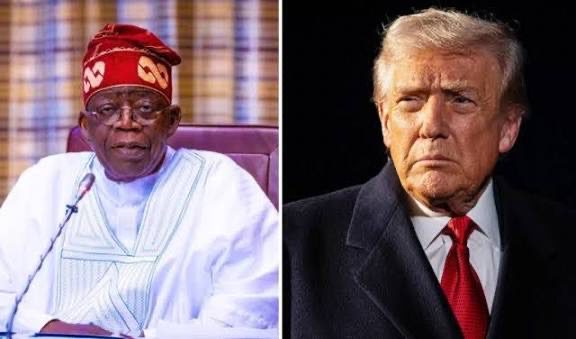
Beyond geopolitics, this strike serves a potent domestic purpose for President Bola Tinubu.
Facing economic turmoil from fuel subsidy removal and currency devaluation and governing with a contested mandate, Tinubu urgently needs a win.
Insecurity is the most visceral failure a Nigerian leader can own. A U.S.-backed strike offers a powerful narrative pivot: the image of a decisive leader taking immediate action to secure the nation, even as economic fixes take time.
Internationally, it bolsters his standing with Western allies and financial institutions, potentially framing him as a stable partner worthy of investment and debt relief.
But the deeper, more audacious play may lie in challenging Nigeria’s entrenched internal power structures.
Persistent allegations suggest that some elements within the northern political and business elite have profited from the chaos through ransom economies, illegal mining in destabilized areas, or using insecurity as leverage against the federal government.
• By aligning with a foreign, less-compromised actor to strike, Tinubu may be attempting to:
• Bypass potentially compromised domestic chains of command.
• Degrade the terrorist assets that give these alleged sponsors their bargaining power.
• Break the stranglehold that “Northern hegemony” has held on security policy, centralizing control in the presidency and dismantling what is now being called the “kidnapping economy.”
This political calculus is high-risk. Potential blowback is severe, but the gains may crystallize into;
1. Military reprisals against vulnerable communities could worsen security in the short term.
2. Nationalist backlash could frame reliance on the U.S. as a failure of sovereignty.
3. Alienating the North could ignite a political firestorm, uniting the region against the federal government.
4. The “day after” problem remains: Without parallel investments in governance, policing, and economic opportunity, the vacuum will be filled by new militant groups.
A Flash or a Turning Point?
The U.S. strike in Northwest Nigeria is more than a counter-terrorism report. It is a stress test for the ethics of modern intervention and a high-stakes gambit in Nigeria’s domestic politics.
It represents Tinubu’s attempt to kill two birds with one stone: hitting terrorists and weakening the alleged patrons within his own country’s elite.
However, the lessons of history are clear. Kinetic solutions without political and social groundwork are brittle.
The true measure of success will not be the precision of the missile, but the wisdom of what follows: courageous governance, regional reconciliation, and a genuine commitment to dismantling the systems that breed conflict.
If this strike is not followed by such sustained effort, it will be remembered as just another flash in a long, tragic cycle of violence.
If it catalyzes deeper change, it might become a true turning point. The world, and more importantly the people of Northwest Nigeria, are watching to see which path is taken.