Ukraine’s president says Washington has delayed weapons financed by allies as Russian missile attacks intensify and Kyiv’s air-defence supplies dwindle.
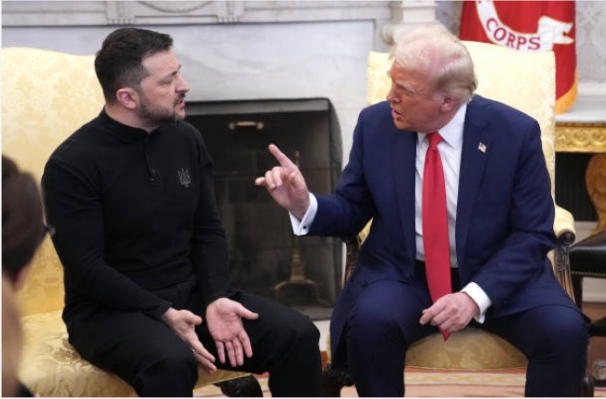
Ukrainian President Volodymyr Zelenskyy has accused the administration of US President Donald Trump of delaying the delivery of Patriot air-defence missiles purchased for Ukraine through a NATO-backed weapons programme.
Zelenskyy said Washington had authorised only part of the weapons package funded by Ukraine’s allies under the Prioritised Ukraine Requirements List (PURL), raising concerns over Kyiv’s ability to defend its cities against escalating Russian missile attacks.
In an interview with Bloomberg published on October 18, Zelenskyy reportedly said deliveries had fallen to approximately 12 Patriot interceptors per month, about one-quarter of the rate Ukraine received under former US President Joe Biden.
“This is not a technical issue,” Zelenskyy said, according to reports of the interview, suggesting that the delays involved decisions beyond routine logistical challenges.
The Ukrainian leader’s complaints were reinforced by reports published on October 19 and 20 indicating that some transfers were awaiting approval from US Defence Secretary Pete Hegseth. European countries have reportedly been prepared to fund or facilitate additional supplies, but Washington’s authorisation remains critical because the weapons are American-made.
The dispute comes as Ukraine faces renewed Russian missile and drone attacks. The Associated Press reported on October 20 that a large-scale Russian assault had killed at least seven people and caused power outages across 12 Ukrainian regions, highlighting the growing pressure on the country’s air-defence network.
Patriot systems are particularly important because their advanced interceptors can engage certain ballistic missiles that are difficult for other air-defence systems to stop. They help protect major cities, military facilities and critical infrastructure, including energy installations.
A shortage of interceptors could therefore leave Ukraine increasingly vulnerable, particularly during large-scale attacks involving combinations of ballistic missiles and drones designed to overwhelm its defences.
The supply crisis also reflects wider pressure on Western military stockpiles. In August, US and NATO officials told the Associated Press that Patriot missile inventories in Europe had fallen sharply during the war involving Iran, raising concerns about the alliance’s ability to replenish supplies while meeting competing defence requirements.
The Pentagon disputed claims that US ammunition reserves were critically inadequate, while NATO officials maintained that the alliance retained defensive capabilities. Nevertheless, the reported depletion of stocks has intensified debate over how quickly additional interceptors can be produced and delivered.
The PURL programme was launched in July 2025 to enable NATO allies and partner countries to finance the purchase of American weapons for Ukraine. NATO says participating countries have committed more than $6 billion in military equipment through the initiative, including urgently needed air-defence capabilities.
Under the arrangement, NATO coordinates requirements and deliveries, while participating countries provide the funding and the United States supplies the equipment. However, financing a weapons package does not necessarily mean that every item can be delivered immediately, particularly where inventories, production schedules and export approvals are involved.
Zelenskyy’s latest complaints have added to growing tensions between Kyiv and Washington over military assistance, intelligence-sharing arrangements and the direction of efforts to end the war.
The Ukrainian president has warned that delays in intelligence support have also affected his country’s ability to anticipate Russian attacks. Reuters reported on October 19 that he had expressed frustration over recent US decisions and indicated that a missile package remained pending approval.
The White House and Pentagon’s position on the specific allegations will be important in determining whether the delays reflect political decisions, shortages, operational priorities or a combination of factors.
For Ukraine, however, the immediate concern remains the availability of enough interceptors to protect its population and infrastructure as Russian attacks continue.
The dispute also raises broader questions about the reliability of Western military support and whether European governments can secure timely delivery of weapons even after committing funds to purchase them.