Political parties in Rivers State have called on the Independent National Electoral Commission (INEC) to fully comply with the recent judgment of the Supreme Court restoring key provisions of the Electoral Act 2026, particularly those governing party membership registers and the nomination of candidates ahead of the 2027 general elections.
The call followed the landmark judgment delivered on Thursday, September 24, 2026, by a seven-member panel of the Supreme Court, which upheld INEC’s appeal and restored Sections 77(5), 77(6), 77(7) and 84(2) of the Electoral Act 2026.
The apex court set aside the earlier decision of the Court of Appeal, which had declared the provisions unconstitutional, and restored the judgment of the Federal High Court that had dismissed the challenge brought by the Zenith Labour Party (ZLP).
The restored provisions have significant implications for political parties because Sections 77(5)–(7) deal with the submission and use of party membership registers for congresses, conventions and primaries, while Section 84(2) provides for direct primaries or consensus as methods of nominating candidates.
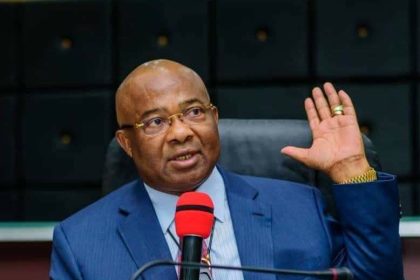
Reacting to the development, Rivers State Chairman of the Zenith Labour Party, Ben Ogbogbulam urged INEC to carefully study the judgment and ensure that its implementation is consistent with the decision of the Supreme Court.
Ogbogbulam said the judgment did not adversely affect the Zenith Labour Party, despite the fact that the party was the appellant in the legal dispute that produced the judgment.
He explained that although ZLP had challenged some provisions of INEC’s regulations and the Electoral Act, the party complied with the relevant requirements while awaiting the final determination of the courts.
According to him, the conclusion of the case should now provide a clear legal direction for INEC and political parties as preparations intensify for the 2027 elections.
His position comes against the backdrop of the Supreme Court’s finding that the disputed provisions of the Electoral Act are not inconsistent with the 1999 Constitution.
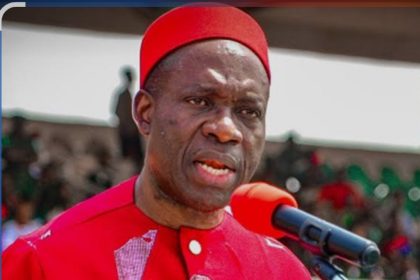
Similarly, the Democratic Leadership Alliance Party (ALDRAP) governorship candidate in Rivers State, Ezekiel Warigbani, called on INEC to implement the Supreme Court judgment wherever its provisions apply to political parties and candidates.
Warigbani said the ruling did not disturb his own candidacy, but stressed the need for political actors to respect the law and allow the electoral process to operate within its statutory framework.
He also cautioned candidates against depending excessively on political godfathers or compromising the electoral process, urging politicians to focus on securing their mandates through lawful and transparent procedures.
His comments come amid renewed debate over the possible implications of the Supreme Court judgment for candidates whose nominations, party membership or primary elections could be subjected to scrutiny under the restored provisions.
Under Section 77(5), only members whose names appear on a political party’s membership register submitted to INEC within the stipulated period can participate in the party’s primary, congress or convention.
Section 77(6) requires parties to use the membership register submitted to INEC for those exercises, while Section 77(7) provides consequences where a party fails to submit the required register.
Section 84(2), meanwhile, provides that political parties shall nominate candidates through direct primaries or consensus.
The restoration of the provisions has already triggered renewed legal and political discussions over the validity of some nomination processes conducted before the Supreme Court’s judgment.
However, legal analysis has stressed that the judgment itself does not automatically disqualify any named candidate. Questions surrounding an individual candidate’s nomination would depend on the specific facts, including the party’s membership register, the nomination process followed and compliance with applicable statutory and party requirements.
The judgment is expected to have particular significance in Rivers State, where political parties have already commenced preparations for the 2027 governorship and legislative elections.
Some candidates and political groups have begun examining whether the restored provisions have implications for particular nominations, while others have maintained that their candidates complied with the law.
For INEC, the immediate challenge is to translate the Supreme Court’s decision into clear administrative implementation while ensuring that all political parties are treated in accordance with the same statutory requirements.
The commission had previously indicated that it would study the Supreme Court’s certified judgment before determining how to implement the decision.
As political parties in Rivers State await further clarification from INEC, the latest development has effectively placed party membership registers, primary elections and candidate nomination procedures under renewed legal scrutiny ahead of the 2027 elections.
The Supreme Court’s decision therefore marks a significant development in the unfolding electoral process, with political parties and candidates now expected to align their activities with the provisions of the Electoral Act as restored by the nation’s highest court.