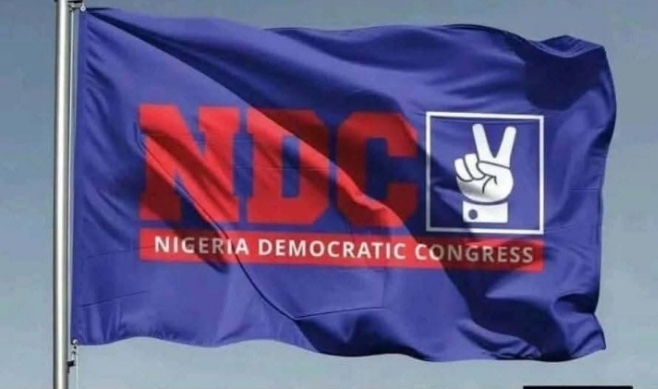
The All Democratic Alliance (ADA) has dragged the Independent National Electoral Commission (INEC) before the Federal High Court in Abuja, seeking the deregistration of the Nigeria Democratic Congress (NDC) over what it described as an unlawful and fraudulent registration process.
The suit, marked FHC/ABJ/CS/1115/2026, was filed by ADA and its Protem Director of Mobilization, Ahidjo Ibrahim Karlahi. The plaintiffs are asking the court to compel INEC to withdraw the registration certificate issued to the NDC, arguing that the party failed to meet constitutional and electoral requirements for registration.
According to court documents, ADA alleged that the NDC, a political party reportedly led by former Bayelsa State governor and ex-senator, Seriake Dickson, was registered in violation of several provisions of the 1999 Constitution and the Electoral Act. The plaintiffs contend that INEC exceeded its legal authority by granting recognition to the party without ensuring full compliance with the law.
Through their counsel, Senior Advocate of Nigeria (SAN) Bankole Joel Akomolafe, the plaintiffs argued that INEC’s powers to register political parties are not absolute and must be exercised within the limits prescribed by the Constitution and relevant electoral laws.
ADA is seeking a declaration that the registration of the NDC is null and void, as well as an order revoking the party’s certificate of registration. The plaintiffs further requested a perpetual injunction restraining INEC from recognizing, maintaining or accepting the NDC as a registered political party for any electoral activity in Nigeria.
The suit also seeks an order preventing the NDC from presenting itself to the public as a registered political party through any medium, including publications, broadcasts and campaign activities, pending the determination of the legal dispute.
The legal challenge comes amid renewed political realignments ahead of the 2027 general elections, with several new political associations seeking registration and positioning themselves as alternatives to the dominant political parties.
The Nigeria Democratic Congress emerged in recent months as one of the most prominent newly registered political parties. The party has attracted attention because of the involvement of notable political figures and its stated objective of providing a national platform focused on democratic reforms, institutional strengthening, economic diversification and improved governance. Supporters of the NDC argue that the party was created to expand democratic participation and offer voters additional choices beyond the traditional political establishment.
On the other hand, the All Democratic Alliance is among the political associations that have been seeking greater participation in Nigeria’s political landscape. The group has presented itself as a reform-oriented platform advocating electoral transparency, internal party democracy and broader citizen engagement. ADA’s decision to challenge the NDC’s registration has generated debate among political observers, with some viewing the lawsuit as a test case on INEC’s powers and procedures for registering political parties under Nigeria’s constitutional framework.
Political analysts note that the outcome of the case could have far-reaching implications for the registration of emerging political parties and the interpretation of constitutional provisions governing Nigeria’s multi-party system. The court’s eventual ruling may clarify the extent of INEC’s discretionary powers and establish important precedents for future political associations seeking recognition.
The suit, filed on June 2, 2026, is supported by a 25-paragraph affidavit sworn to by Karlahi. INEC and the Nigeria Democratic Congress have been named as defendants in the matter. As of the time of filing this report, no date had been fixed for the hearing of the case, and neither INEC nor the NDC had publicly responded to the allegations contained in the suit.