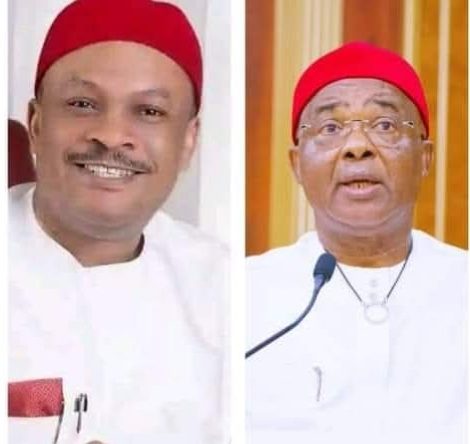
The political battle ahead of the 2027 Imo State governorship election has taken a sharper turn, following a war of words between Governor Hope Uzodimma of the All Progressives Congress (APC) and Samuel Anyanwu, National Secretary of the Peoples Democratic Party (PDP).
Anyanwu has dismissed Uzodimma’s warning against APC members associating with the emerging Rainbow Coalition, describing the governor and the APC leadership in Imo as “jittery” and allegedly afraid of the growing opposition alliance.
The PDP National Secretary said the alignment between the PDP and the Rainbow Coalition would play a decisive role in ending the APC’s hold on Imo State in the 2027 governorship election.
The latest confrontation followed remarks by Uzodimma on Tuesday, October 27, during the inauguration of the Imo chapter of the PBAT Door-to-Door Movement in Owerri.
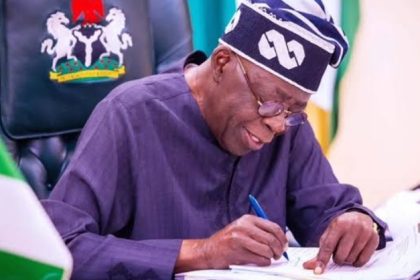
The governor told members of the movement, who are mobilising support for President Bola Ahmed Tinubu’s re-election, that they must remain loyal to the APC and should not participate in political activities outside the party.
Uzodimma declared that there was “no Rainbow Coalition in Imo State” and warned that campaign vehicles distributed to supporters would be withdrawn from anyone found working outside the APC.
He also urged APC members to support the party’s candidates across the various elective positions in the 2027 elections, insisting that the APC remained the dominant political platform in the state.
Anyanwu Fires Back
Reacting to the governor’s position, Anyanwu, through his media adviser, Ikenna Onuoha, accused the APC leadership in Imo of being worried about the growing opposition alliance.
According to Anyanwu, the rejection of the Rainbow Coalition by Uzodimma during the unveiling of the door-to-door mobilisation initiative was evidence that the APC was concerned about the potential impact of the coalition on the 2027 elections.
“The APC in Imo State and its leaders are afraid of PDP and the Rainbow Coalition,” Anyanwu said, according to the statement.
He argued that the coalition represented an opportunity for opposition forces to work together to challenge the APC’s dominance in the state.
Anyanwu further alleged that Imo residents were dissatisfied with the APC-led administration and were looking for an alternative political platform ahead of the next governorship election.
He criticised the Uzodimma administration over infrastructure, healthcare, education and economic conditions in the state, while also calling for greater attention to the welfare of residents.
The PDP chieftain particularly raised concerns about the alleged prolonged strike involving lecturers at Imo State University (IMSU), calling on the state government to address the situation.
He accused the administration of making promises without adequately addressing what he described as the hardship confronting residents.
Uzodimma Insists: Face APC
Uzodimma, however, has maintained that APC members in Imo must remain within the party’s political structure.
During the PBAT Door-to-Door Movement event, the governor told campaign coordinators that they were empowered to work for President Tinubu and the APC.
“If I see you work outside APC, I will collect the vehicle from you,” he warned.
The governor’s position reflects the wider disagreement between APC governors and FCT Minister Nyesom Wike over the Rainbow Coalition.
Wike, a PDP member serving in the APC-led Federal Government, has defended the coalition as a multi-party arrangement designed primarily to mobilise support for President Tinubu’s re-election while allowing participating political parties to field candidates for other positions.
APC governors, however, have expressed concern that such an arrangement could weaken the party’s candidates in governorship and legislative elections.
Tinubu Support Versus State-Level Elections
The dispute has created an unusual political situation ahead of 2027.
While Wike and his allies say their support for Tinubu should not prevent the PDP from contesting other elective positions, APC leaders argue that supporting a presidential candidate while simultaneously campaigning against APC candidates at the state level could weaken the ruling party’s electoral structure.
Wike has repeatedly maintained that his support for Tinubu is separate from the contest for governorship and legislative seats.
The minister has also argued that Nigerian voters can vote for a presidential candidate from one political platform and candidates from another party in the same election, pointing to voting patterns recorded during the 2023 elections. ([Punch Newspapers][3])
A Fresh Political Battle in Imo State
The exchange between Anyanwu and Uzodimma is significant because both politicians have strong stakes in Imo’s political landscape.
Anyanwu was the PDP candidate in the 2023 Imo governorship election, while Uzodimma secured a second term under the APC.
According to results cited by TheCable, Uzodimma polled 540,308 votes against Anyanwu’s 71,503 votes and won across all 27 local government areas of the state.
The 2027 contest, however, is expected to present a different political landscape, particularly with new alliances and realignments taking shape across the country.
The emergence of the Rainbow Coalition has added another dimension to the contest, with its supporters seeking to bring together politicians from different parties around common political objectives.
For the APC, the challenge is to maintain party cohesion and protect its candidates at all levels while simultaneously pursuing President Tinubu’s re-election.
For the PDP and its allies, the objective is to convert the emerging political realignment into electoral gains and challenge the APC’s dominance in states such as Imo.
Battle Lines Drawn
With the 2027 elections approaching, the exchange between Anyanwu and Uzodimma suggests that the political contest in Imo could become increasingly intense.
While Uzodimma insists that APC members should “face APC” and reject the Rainbow Coalition, Anyanwu believes the governor’s opposition to the coalition is evidence of concern over its potential electoral impact.
The coming months are therefore likely to witness further political realignments, defections, coalition-building and intensified grassroots mobilisation as the major parties position themselves for the 2027 elections.
For now, the message from both camps is unmistakable: Uzodimma is determined to defend the APC’s dominance in Imo, while Anyanwu and his allies are promising to build a coalition capable of challenging and ultimately removing the ruling party from power in the state.