By Princely Onyenwe | News Desk
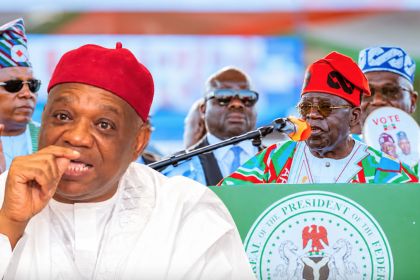
ABUJA, NIGERIA — President Bola Ahmed Tinubu is set to consider giving presidential assent to the Constitution (Sixth Alteration) Bill seeking to establish State Police in Nigeria, following its endorsement by all 36 State Houses of Assembly.
The development marks a significant milestone in the country’s long-running debate over decentralising its policing system, particularly amid persistent security challenges involving kidnapping, banditry, terrorism and other violent crimes across the federation.
The bill was formally transmitted to President Tinubu on Wednesday, November 18, 2026, by his Special Advisers on Senate and House of Representatives Matters, Senator Basheer Lado and Dr Wasiu Olanrewaju-Smart.
The President’s Chief of Staff, Femi Gbajabiamila, disclosed the development, confirming that the endorsement by all 36 state legislatures had exceeded the constitutional requirement of at least 24 states, representing two-thirds of the federation, under Section 9(2) of the 1999 Constitution.
The unanimous approval represents 100 per cent endorsement by the country’s state legislatures, exceeding the minimum constitutional threshold by 12 states.
According to Gbajabiamila, President Tinubu will review the constitutional amendment in consultation with the Attorney-General of the Federation and Minister of Justice, Lateef Fagbemi, SAN, ahead of a formal signing ceremony.
The development follows the passage of the proposed constitutional amendment by the Senate on June 24, 2026, and the House of Representatives on July 23, 2026, before its transmission to the 36 state legislatures for the constitutionally required concurrence.
With all state assemblies having endorsed the proposal, the constitutional amendment has crossed a critical legislative hurdle and is now before the President for the next stage of the process.
Meanwhile, the Presidential Working Group on State Police, chaired by Gbajabiamila, has concluded extensive stakeholder engagements and nationwide consultations towards developing a separate National Policing Bill to provide the operational and institutional framework for the proposed decentralised policing arrangement.
The draft legislation has been submitted to the Federal Ministry of Justice for legislative drafting validation. Upon completion, the Working Group is expected to review the validated document and present it, alongside its report, to the President for consideration.
The distinction between the two legislative processes is significant. While the Constitution (Sixth Alteration) Bill seeks to establish the constitutional foundation for State Police, the proposed National Policing Bill is expected to address the practical and operational arrangements necessary for implementing the new policing structure.
President Tinubu, through his Chief of Staff, expressed appreciation to the National Assembly, state governors, State Houses of Assembly and Nigerians for their support and commitment to addressing the country’s security challenges.
The proposed reform is expected to reshape Nigeria’s policing architecture by creating room for state-level policing structures alongside the existing federal policing system.
However, questions surrounding political interference, accountability, funding, human rights protection and the possible misuse of state-controlled security institutions remain important considerations as the country moves towards implementing the proposed reform.
With all 36 state legislatures having endorsed the amendment, attention has now shifted to President Tinubu’s consideration and the anticipated presidential assent.
For more inquiries on this news report contact 9News Nigeria on +234 08036856526