By Princely Onyenwe | News Desk
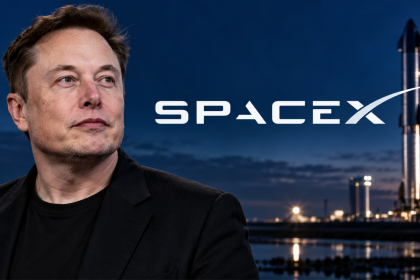
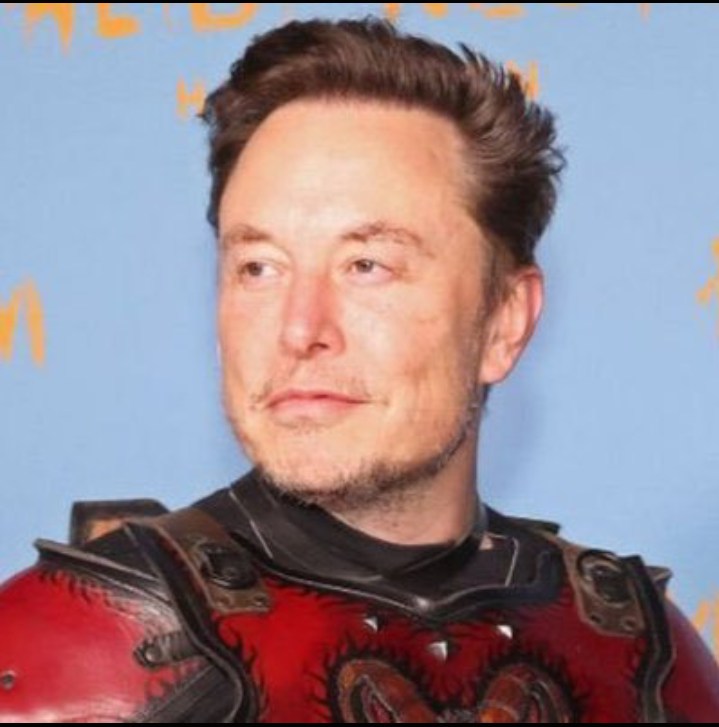
LAGOS, Nigeria — Billionaire entrepreneur Elon Musk has sparked fresh debate about the future of money, human employment and technological advancement after predicting that conventional currency could eventually lose much of its importance in a world dominated by artificial intelligence (AI), robotics and unprecedented economic abundance.
Musk, the chief executive of Tesla and SpaceX, made the remarks during a conversation with his biographer, Walter Isaacson, on The Builders podcast, released on October 20, 2026. He suggested that if technological progress allows machines to produce virtually everything humanity needs, society could eventually move beyond the economic system in which money plays a central role.
“There will still be a currency,” Musk said, suggesting that future currency could be measured through fundamental physical quantities, including power, wattage, mass and energy.
“Conventional currency will not matter in the future,” he added, describing his prediction as a possible consequence of an economy that expands far beyond the productive capacity of today’s world.
Musk argued that the combination of advanced AI, robotics and space-based industrial development could dramatically increase the quantity of goods and services available to humanity. He suggested that an economy operating at a scale several orders of magnitude greater than Earth’s present economy could make satisfying human needs comparatively easy.
However, his remarks represent a projection about a possible technological future, not an established economic reality. Money remains central to global trade, employment, investment and government finance, and there is no confirmed timeline for the kind of transformation Musk described.
BIBLICAL PROPHECY OR TECHNOLOGICAL REVOLUTION?
Musk’s prediction has also raised a profound question for religious observers: could the extraordinary advancement of technology be connected to biblical references to increasing knowledge in the last days?
Daniel 12:4, in the King James Version of the Bible, states: “Many shall run to and fro, and knowledge shall be increased.”
For Christians who interpret this passage as referring to the end times, the rapid development of artificial intelligence, robotics, space exploration and other advanced technologies may appear consistent with the extraordinary expansion of human knowledge witnessed in the modern era.
Nevertheless, whether the verse specifically predicts modern technological advancement remains a matter of theological interpretation. The passage’s meaning is understood differently across Christian traditions, and Musk’s comments cannot independently establish the fulfilment of biblical prophecy.
What is undeniable is that technological capabilities are advancing rapidly, forcing governments, religious institutions, economists and ordinary citizens to reconsider assumptions about work, wealth and humanity’s future.
IF MONEY BECOMES IRRELEVANT, WHAT HAPPENS TO WEALTH?
Another question emerging from Musk’s prediction concerns the future of billionaires and the concentration of economic power. Some observers may wonder why a man whose wealth is measured in hundreds of billions of dollars would predict a future in which conventional money becomes less important.
However, Musk’s argument is not that money has become irrelevant today because he already possesses enormous wealth. Rather, he is speculating that technological abundance could eventually reduce the importance of money as a means of accessing goods and services.
There is also an important distinction between a billionaire’s net worth and the cash available in a bank account. Much of the wealth associated with major entrepreneurs consists of ownership stakes in companies and other assets, rather than money held in readily spendable form.
Musk made a related argument during the interview, questioning whether an increase in someone’s wealth necessarily produces a corresponding increase in happiness. He used the example of a person whose net worth rises from $1 billion to $10 billion, arguing that such an increase would not make the individual ten times happier or provide ten times as much personal fulfilment.
His position challenges the assumption that accumulating more wealth necessarily translates into a proportionate improvement in the quality of life.
Yet critics may reasonably question whether a future of technological abundance would benefit everyone equally. Even if machines could produce goods at extraordinary scale, the ownership of those machines, access to resources and distribution of the benefits would remain important economic and political questions.
A society could conceivably produce more goods than ever before while still struggling with inequality if access to those goods remained concentrated in the hands of a few.
WILL ARTIFICIAL INTELLIGENCE MAKE HUMAN WORK OBSOLETE?
Musk also expressed the view that AI systems and robots could eventually perform virtually every task better than human beings, raising questions about the future of employment and the meaning of work.
He suggested that people might continue pursuing activities they enjoy even when those activities are no longer necessary for survival or earning an income.
Using gardening as an example, he explained that although people can buy fruits and vegetables, some still prefer to grow their own food because of the satisfaction the activity provides.
Similarly, artistic expression, cooking for friends and other creative pursuits could remain meaningful even in a highly automated society.
The prospect, however, presents significant challenges. Employment provides more than income: it can offer identity, social connection, structure and a sense of purpose. If AI and robotics substantially reduce the need for human labour, governments and societies may have to reconsider how income, opportunity and social security are organised.
Whether such a future produces widespread prosperity or deepens inequality will depend not only on technological breakthroughs but also on the decisions made about ownership, access and the distribution of wealth.
THE BIGGER QUESTION FOR HUMANITY
Musk’s vision ultimately raises a question that extends beyond economics: if machines can perform most productive tasks and material needs become easier to satisfy, what will give human life meaning?
His prediction remains speculative, and conventional money is unlikely to lose its importance simply because AI and robotics continue to improve. Scarcity, ownership, access to resources and the organisation of society will still matter, even in a highly productive economy.
Nevertheless, the debate is already challenging established ideas about money, work, prosperity and human purpose.
For religious observers, the discussion also invites renewed reflection on biblical interpretations of increasing knowledge. For economists, it raises questions about the future of markets and inequality. For ordinary people, it presents a more immediate concern: how will technological progress affect their livelihoods and opportunities?
If technology eventually makes producing goods and services extraordinarily cheap, will humanity enter an age of shared abundance, or will the benefits remain concentrated among those who control the machines?
For more inquiries on this news report contact 9News Nigeria on +23408036856526