By Princely Onyenwe | Editorial Desk
A nation’s identity is bigger than its political parties, candidates, ambitions and electoral calculations. Its national symbols belong to every citizen, irrespective of political affiliation, ethnic background, religious persuasion or ideological differences. This is why the national anthem should never become an instrument of partisan expression or political confrontation.
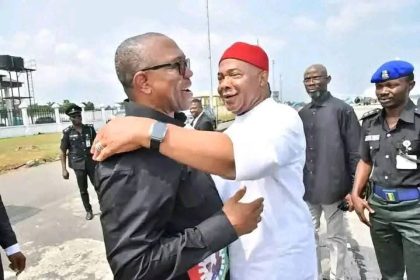
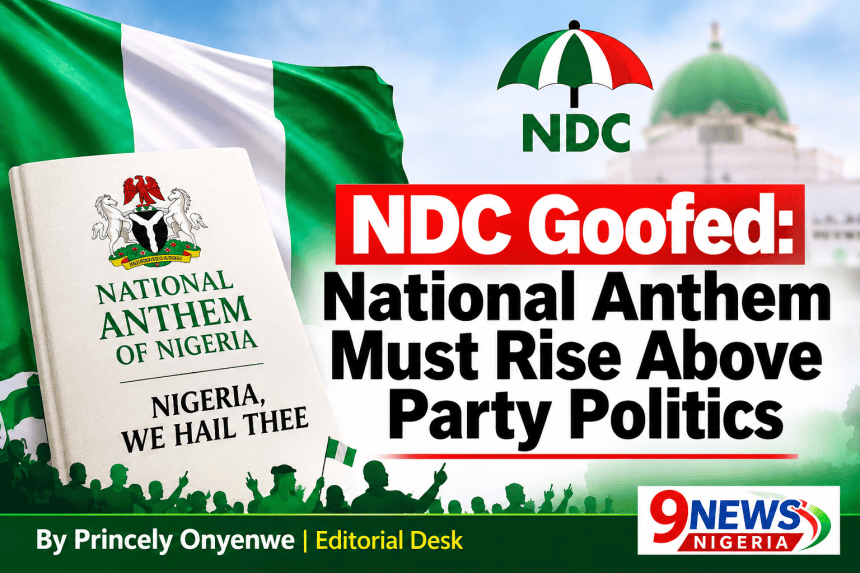
The recent incident at the Nigeria Democratic Congress (NDC) town hall meeting, where Peter Obi and some supporters reportedly opted to sing the former national anthem, “Arise, O Compatriots”, instead of the legally recognised anthem, “Nigeria, We Hail Thee”, raises important questions about political culture, national identity and respect for established national institutions.
Nigeria has a legally recognised national anthem. President Bola Tinubu signed the National Anthem Act into law on May 29, 2024, restoring “Nigeria, We Hail Thee”, the anthem used at independence in 1960, and replacing “Arise, O Compatriots”, which had been in use since 1978.
The decision to restore the original anthem generated considerable public debate. Many Nigerians expressed reservations about the timing, priorities and legislative process behind the change. Others preferred the former anthem because of its familiarity and the emotional attachment developed over several decades.
Those disagreements are legitimate in a democratic society. Citizens are entitled to question government decisions, criticise legislation and advocate for changes through constitutionally recognised processes. However, disagreement with a government decision does not automatically suspend the authority of an existing law.
This is where the NDC appears to have missed an important point.
A political party is not a sovereign entity operating outside the national framework. It is an organisation seeking political authority within an established constitutional order. Consequently, its activities, public conduct and leadership culture should reflect an understanding of the distinction between partisan interests and national obligations.
If the NDC or any other political organisation believes that “Arise, O Compatriots” better represents Nigeria’s national aspirations, it can advocate for its reinstatement through legitimate legislative and democratic channels. What should not happen is the creation of an impression that a political organisation can independently determine which national symbol deserves recognition at its public gatherings.
Political parties already have their identities, slogans, campaign songs, jingles and ideological expressions. They can compose inspiring musical pieces around their manifestoes, leadership aspirations, national development programmes and electoral campaigns. There is absolutely no shortage of creative possibilities.
But a national anthem should not become a political party’s protest song.
The National Anthem Act 2024 is particularly instructive. Section 1 recognises “Nigeria, We Hail Thee” as the country’s national anthem. Section 2 describes it as a national symbol and sign of authority, requiring individuals and corporate entities to respect it and preserve its dignity. Section 4 requires its performance to follow the lyrics prescribed by the Federal Government, while Section 5 addresses the respectful conduct expected when it is performed.
Although the circumstances of the NDC gathering deserve examination, it is equally important not to manufacture criminal liability where the law has not expressly established one. Singing the former anthem does not, by itself, establish that a criminal offence has been committed. The appropriate legal interpretation must come from the actual provisions of the law.
Nevertheless, the broader national question remains: should political disagreements be allowed to turn national symbols into instruments of partisan rivalry?
There is also an important distinction between exercising the freedom to express dissatisfaction with government policy and demonstrating respect for institutions that transcend the administration of the day. Nigeria’s national anthem is not the personal property of President Tinubu, the APC, the NDC, Peter Obi or any political officeholder. It belongs to the Nigerian people.
The anthem was restored through legislation, not through a private arrangement between political actors. If Nigerians want another change, the democratic process remains available. The National Assembly can consider the matter through the appropriate legislative procedure.
More importantly, political leaders aspiring to occupy the highest offices in the country must appreciate that national unity requires more than campaign promises. It also demands respect for institutions, national symbols and the constitutional processes through which collective decisions are made.
The NDC should therefore clarify its position on the incident, particularly following the controversy surrounding the conduct of participants at its Lagos town hall. Its explanation that the singing of the former anthem was spontaneous, and that the current anthem was eventually performed, is relevant to understanding what happened. However, clarity on the party’s institutional position would help prevent further speculation.
Nigeria has enough political divisions, ethnic suspicions and institutional distrust without turning the national anthem into another battlefield.
A political party can challenge an administration, criticise its policies and campaign for a different national direction. That is democracy. But the symbols representing the country must remain bigger than the political ambitions of those seeking to govern it.
Nigeria, We Hail Thee should unite Nigerians, not divide them along party lines. If political parties cannot distinguish their campaign identities from the identity of the Nigerian state, what kind of national culture are they preparing to build?
For more inquiries on this news report contact 9News Nigeria on +234 08036856526