By Princely Onyenwe | Editorial Desk
As Nigeria approaches the 2027 presidential election, the political atmosphere is heating up, alliances are taking shape, and millions of Nigerians are preparing to decide whether to retain the incumbent administration or entrust the country’s leadership to an alternative. Beneath the campaign slogans, political endorsements and promises of transformation lies a fundamental question: which presidential ticket can deliver a safer, fairer and more prosperous Nigeria?
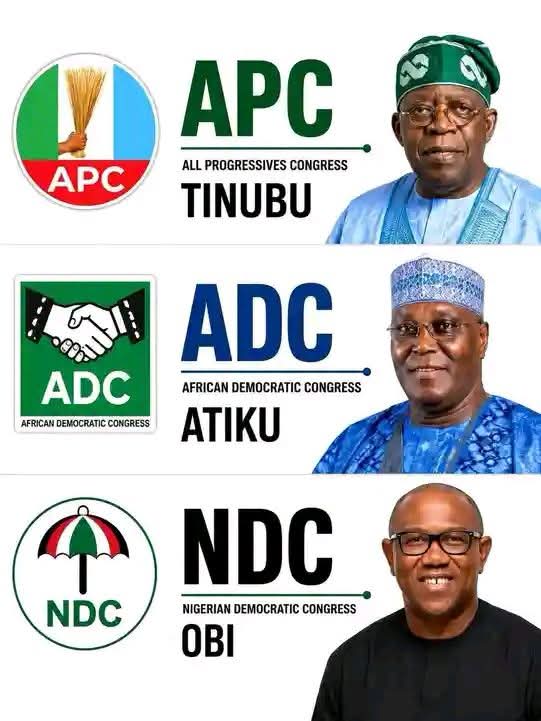
Three major political combinations have emerged at the centre of the contest: President Bola Ahmed Tinubu and Vice President Kashim Shettima of the All Progressives Congress (APC); former Vice President Atiku Abubakar and former Rivers State Governor Rotimi Amaechi of the African Democratic Congress (ADC); and former Anambra State Governor Peter Obi and former Kano State Governor Rabiu Kwankwaso of the Nigerian Democratic Congress (NDC).
These combinations represent competing political ambitions and different arguments about Nigeria’s future. Yet the election must be about more than personalities, party structures and regional calculations. It must be a referendum on economic management, national security, accountability, leadership competence and the quality of life of ordinary Nigerians.
TINUBU–SHETTIMA: THE INCUMBENCY TEST
For Tinubu and Shettima, the 2027 election represents a defining test of their administration. Having occupied the nation’s highest executive offices since May 2023, they cannot rely solely on promises of a better tomorrow. They must explain what their government has achieved, where it has fallen short and why Nigerians should grant it another mandate.
The removal of the petrol subsidy and changes to foreign-exchange management were presented as necessary reforms to improve public finances and stabilise the economy. However, the consequences for ordinary citizens have included severe pressure from rising living costs, expensive transportation, food inflation and declining purchasing power.
For millions of households, economic reform is not an abstract policy debate. It is a daily struggle to afford food, transportation, education, healthcare and accommodation. Citizens who have endured years of hardship are entitled to ask when the benefits of the government’s policies will become more visible in their lives.
The administration can point to its economic policy direction, revenue reforms and infrastructure investments as evidence of progress. Its supporters argue that difficult reforms require time to produce sustainable benefits. But no government should expect citizens to accept prolonged hardship without measurable improvements in living standards.
Insecurity presents another major test. Kidnappings, armed attacks, communal violence and threats to farming communities continue to generate public anxiety. The consequences reach far beyond the immediate victims: farmers abandon their fields, businesses suffer, families are displaced and food production is threatened.
A government seeking re-election must demonstrate more than security announcements. Nigerians need safer communities, effective intelligence, accountable security operations and justice for victims. Protecting lives and property is a fundamental responsibility of government, not a campaign favour.
The APC has the advantage of incumbency, an established national structure and substantial political machinery. Yet these advantages cannot automatically erase public dissatisfaction. In a democracy, the electorate has the final say on whether a government’s record deserves another four years.
ATIKU–AMAECHI: EXPERIENCE MUST DELIVER A BETTER ALTERNATIVE
Atiku Abubakar and Rotimi Amaechi bring extensive political experience to the opposition contest. Atiku’s tenure as vice president and Amaechi’s experience as a former governor and minister give them familiarity with executive government and national politics.
Their challenge is to persuade Nigerians that this experience can translate into better economic management, improved security, stronger institutions and greater opportunities for ordinary citizens.
Experience alone, however, is not proof of effective leadership. Voters must ask what this ticket would do differently, how it would address the cost of living, what practical measures it would introduce to tackle insecurity and how it would ensure that public spending produces tangible benefits.
Atiku must convince a younger generation of voters that his longstanding presidential ambition represents a credible pathway to national renewal. Amaechi must demonstrate how his executive experience would contribute to a coherent programme for governance.
Their partnership must offer more than an alliance of prominent political figures united by opposition to the incumbent. It must present clear economic priorities, a credible security strategy, a commitment to accountable government and a realistic plan for national development.
The opposition cannot win a convincing argument simply by exposing the weaknesses of the APC administration. It must demonstrate that it can govern better.
OBI–KWANKWASO: CAN THEIR ALLIANCE CHANGE THE POLITICAL EQUATION?
Peter Obi and Rabiu Kwankwaso present another significant political alternative. Obi has attracted considerable support among voters drawn to his emphasis on prudent public spending, accountability and productive economic management. Kwankwaso brings executive experience, a substantial political following in Kano and an established grassroots movement.
Their partnership combines different sources of political support and could broaden their appeal across regional and demographic boundaries. However, social media popularity, enthusiastic supporters and impressive rallies cannot independently determine the outcome of a presidential election.
The decisive question is whether their alliance can convert political enthusiasm into a credible national coalition capable of attracting votes across Nigeria’s diverse regions.
Obi and Kwankwaso must explain how they would manage competing interests, work together in government and implement a shared programme. Nigerians deserve specific proposals on employment, education, healthcare, food security, public finance and national security.
A political alliance is only as strong as its capacity to build trust, maintain cohesion and deliver results. The two leaders must prove that their combined political appeal can translate into effective national leadership.
Their supporters must also recognise that winning an election requires more than enthusiasm for individual candidates. It demands broad public confidence, effective political organisation and a compelling programme that addresses the concerns of Nigerians across the country.
VOTER APATHY: THE SILENT THREAT TO DEMOCRACY
As political parties intensify preparations for 2027, voter apathy remains a serious concern. Economic hardship, insecurity, political disappointment and declining trust in public institutions could discourage eligible citizens from participating.
The 2023 presidential election offers an important lesson. Tinubu received 8,794,726 votes, Atiku secured 6,984,520, while Obi polled 6,101,533. These figures demonstrate the scale of the contest among the leading candidates, but they also highlight the difference between votes cast for the leading contenders and the much larger population of eligible voters.
The lesson is that a candidate can win under the applicable electoral rules without securing the support of most eligible citizens. That makes participation important. When eligible voters stay away, they surrender an opportunity to influence the direction of their country.
Nevertheless, citizens cannot be blamed for their frustration without examining the reasons behind it. Many Nigerians have questioned whether elections produce meaningful improvements in governance. Others are discouraged by vote buying, electoral disputes, unfulfilled promises and the belief that political elites are more concerned about retaining power than improving living conditions.
Political parties and public institutions must work to restore confidence in the democratic process. Candidates must present credible programmes, electoral authorities must uphold the rules, and elected officials must demonstrate that public participation can produce meaningful change.
Nigerians should not assume that staying away from the polls will punish politicians. It may instead leave important decisions in the hands of a smaller, more organised voting population.
INSECURITY COULD KEEP VOTERS AWAY
Insecurity presents another serious threat to the inclusiveness and credibility of the 2027 election. Where violence, kidnapping and intimidation prevent citizens from reaching polling units, participation may decline and affected communities may struggle to exercise their democratic rights.
The protection of voters, electoral officials and election materials must therefore be a national priority. Electoral and security authorities must pay particular attention to communities affected by persistent attacks, displacement and threats to public safety.
Security agencies must operate professionally and remain politically neutral. No party should gain an unfair advantage through intimidation, and no citizen should have to choose between personal safety and exercising a constitutional right.
Political leaders also have a responsibility to discourage violence, reject inflammatory rhetoric and restrain supporters who threaten opponents. Election campaigns must not become an excuse for political hostility or the endangerment of innocent citizens.
A credible election requires more than arrangements for polling day. It depends on reliable institutions, responsible political conduct, accurate public information and the willingness of contestants to respect lawful outcomes.
The country must not allow insecurity and voter apathy to combine into a situation in which citizens lose both their safety and their voice in determining who governs them.
NIGERIANS MUST VOTE WITH THEIR EYES OPEN
The 2027 election must not become a contest in which ethnic loyalty, religious sentiment, regional calculations and political propaganda replace serious evaluation of candidates.
Every presidential ticket must answer the same fundamental questions. What is its plan to reduce hunger and the cost of living? How will it protect farmers, traders, students and workers? What practical measures will it introduce to tackle insecurity? How will it create productive employment, strengthen public institutions and reduce corruption? What safeguards will ensure that public resources serve the people rather than a privileged political class?
These questions apply equally to Tinubu–Shettima, Atiku–Amaechi and Obi–Kwankwaso. No candidate deserves a blank cheque, and no political party should be excused from accountability simply because it promises to replace the incumbent.
The APC must be judged by its record in office. The opposition must be judged by the credibility of its alternatives. Every candidate must demonstrate competence, character, policy clarity and the capacity to govern a diverse country.
Nigerians must also resist the temptation to treat political endorsements as substitutes for personal judgment. The decision of a prominent politician, traditional ruler, religious leader or celebrity to support a candidate does not remove the responsibility of citizens to examine the evidence and make independent choices.
Democracy is not strengthened by blind loyalty. It is strengthened when voters demand answers, compare alternatives and hold leaders accountable for their decisions.
LET THE VOTE BEGIN HERE
The 2027 presidential election offers Nigerians an opportunity to determine the country’s direction through the ballot box. It must not be reduced to a contest of slogans, political rivalries, regional calculations or the personalities dominating the headlines.
Tinubu and Shettima must convince Nigerians that their administration deserves another mandate. Atiku and Amaechi must demonstrate that their experience can deliver a better national outcome. Obi and Kwankwaso must prove that their alliance can offer a credible, inclusive and effective alternative.
The final decision belongs to the electorate. It must be guided by evidence, policy, leadership capacity and the country’s long-term interests rather than pressure from political camps.
Every eligible voter should verify their registration and polling details, study the candidates’ programmes and prepare to participate peacefully. Citizens must remain vigilant against vote buying, electoral misinformation, intimidation and attempts to undermine the democratic process.
Nigeria’s future cannot be secured by campaign enthusiasm alone. It requires informed choices, active participation and leaders who understand that political power is a public trust.
When Nigerians finally stand before the ballot box, will they reward the incumbent, embrace an opposition alternative or choose another direction—and which ticket has offered the most convincing evidence that it can deliver a safer, fairer and more prosperous Nigeria?