By Princely Onyenwe | Political Desk
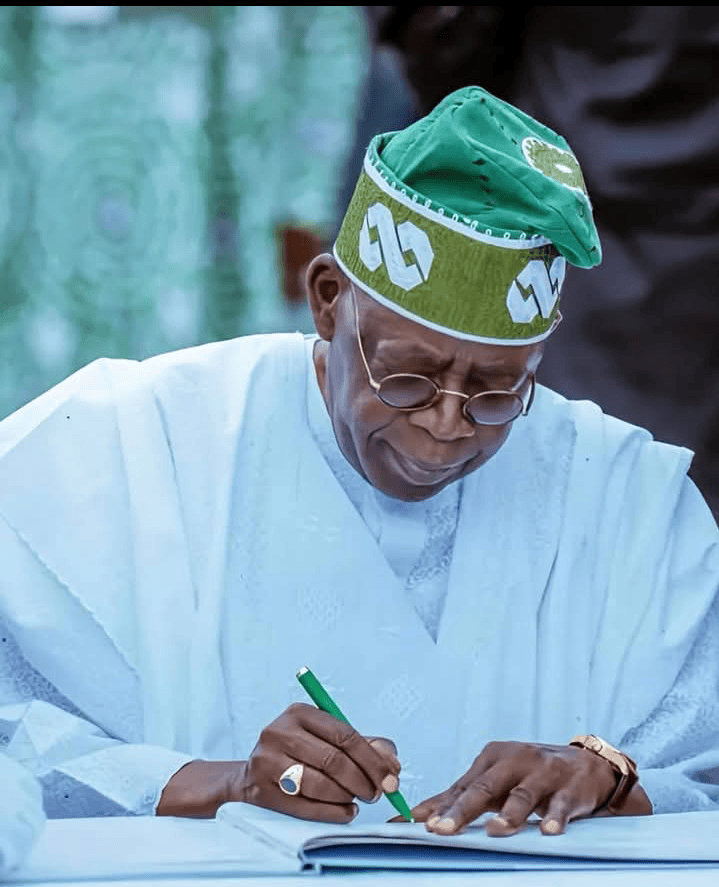
ABUJA, NIGERIA — President Bola Ahmed Tinubu is facing renewed public scrutiny over his reluctance to engage Nigerian journalists in direct presidential interviews, following his recent televised engagement with American political strategist and lobbyist Diana London, a development that has reignited questions about presidential accountability, transparency and the growing disconnect between Nigeria’s leadership and its citizens.
The controversy has become another major test of public confidence in the Tinubu administration, with Nigerians asking why a President governing a country battling economic hardship, insecurity, unemployment and declining purchasing power would grant an interview to a foreign political strategist when his own citizens are demanding direct answers from him.
The debate gained momentum following a strong criticism by Nigerian broadcaster Ayo Mairo Ese, who described the President’s decision to grant an interview to London instead of Nigerian journalists as an insult to the Nigerian people and the country’s media industry.
“President Tinubu has never granted a one-on-one interview to any Nigerian journalist, local media personality, or Nigerian television station. Instead, he chose to sit down with Diana London, an American political strategist and lobbyist with London Global Strategies,” Ese stated.
Her criticism has resonated with sections of the Nigerian public, particularly those who believe the Presidency has not demonstrated sufficient openness to independent questioning by local journalists.
Interestingly, the controversy is no longer restricted to media access. It has expanded into questions about the reported $4.5 million lobbying arrangement involving Nigeria and the United States, the circumstances surrounding London’s engagement with the President and whether the interview was an independent journalistic production or connected to a broader government communication strategy.
London has denied receiving $4.5 million from the Nigerian government or anyone else in Nigeria, maintaining that she travelled to the country to interview Tinubu for parts of a documentary. However, documents reportedly filed under the United States Foreign Agents Registration Act identified payments of $375,000 from DCI Group to London Global Strategies as retainers under a lobbying arrangement.
The precise relationship between that arrangement and the presidential interview remains a matter requiring clarification. Former Vice-President Atiku Abubakar has consequently demanded the publication of the lobbying agreement, disclosure of relevant payments and release of the full, unedited interview.
The reaction from the Nigerian media community has also been significant. Arise Television presenter Rufai Oseni questioned the wisdom of the Presidency’s decision, arguing that Tinubu should have engaged Nigerian journalists who understand the country’s political realities and the everyday struggles of its people. Former presidential spokesman Laolu Akande similarly expressed concern that the President was leaving out the Nigerian press, insisting that local journalists deserved the opportunity to interrogate his policies and decisions.
But beyond the controversy surrounding Diana London, a more fundamental question is emerging: When will Nigerians have an opportunity to hear their President answer difficult questions about the state of the nation?
Nigeria is not currently experiencing an ordinary political season. Millions of households are struggling with the cost of food, transportation, electricity, healthcare and accommodation. Businesses are battling operating expenses, young graduates are searching for employment, while insecurity continues to threaten communities and economic activities in different parts of the country.
For these Nigerians, presidential communication should not be reduced to carefully prepared speeches, ceremonial appearances, official statements or photographs from international engagements. They want explanations, measurable commitments and direct answers from the person occupying the highest political office in the country.
The President’s frequent travels and engagements across different regions and international destinations may serve diplomatic, political and administrative purposes. However, travelling across the country cannot replace direct presidential accountability. Nigerians want to know what the government is doing, what has been achieved, what has failed and when the promises of economic recovery will begin to reflect in their daily lives.
More troubling is the renewed public conversation surrounding Tinubu’s health and physical capacity to sustain the enormous responsibilities of the presidency. This issue has persisted since the 2023 election campaign and resurfaced following his extended stay in Europe in 2026 and renewed scrutiny of some of his public appearances.
The President has dismissed concerns about his health, declaring in September that he was healthy, sound and ready to work. Former Lagos State Governor Babatunde Fashola has also defended him, maintaining that he has seen nothing to suggest that Tinubu is unfit to govern.
Nevertheless, the persistence of these questions demonstrates that official reassurances have not completely eliminated public anxiety.
It is important to distinguish political speculation from established medical facts. There is no publicly established medical evidence in the reports reviewed proving that Tinubu is incapable of performing his constitutional duties. However, in a democracy, the public interest in presidential fitness, continuity of government and the ability to discharge official responsibilities cannot simply be dismissed as political opposition.
The Nigerian experience under former President Umaru Musa Yar’Adua remains a painful reminder of the consequences of insufficient transparency surrounding the health of a sitting President. Former President Muhammadu Buhari’s prolonged medical absences also left lasting questions about presidential availability and governance continuity.
These historical experiences make transparency even more important today. Nigerians should not have to depend on speculation, social media videos or political spokespersons to understand whether their President is physically and mentally capable of handling the demands of the office.
Across established democracies, presidential and prime ministerial interviews, press conferences and public questioning are important instruments of accountability. In the United States, presidents face questions from national and international journalists. In the United Kingdom, the Prime Minister regularly faces parliamentary scrutiny and media questioning. France also has a tradition of presidential press engagements and interviews on matters of national importance.
These practices are not merely public relations exercises. They provide opportunities for citizens to assess leadership, challenge government explanations and demand accountability.
Nigeria should not be an exception.
With the 2027 presidential election approaching, Tinubu’s administration faces a significant credibility test. His economic reforms, including the removal of petrol subsidy and foreign exchange policy changes, require more than repeated assurances that the country is moving in the right direction. Nigerians need transparent explanations of the costs, benefits, measurable outcomes and timelines for relief.
The administration must also demonstrate that its security policies are producing tangible results, that public resources are being managed responsibly and that the sacrifices demanded of citizens are matched by discipline, accountability and restraint in government expenditure.
A President who wants the confidence of his people must be accessible enough to explain his decisions, courageous enough to face uncomfortable questions and transparent enough to address legitimate concerns about his leadership.
Tinubu has the opportunity to change the narrative by organising an open presidential media session involving credible Nigerian journalists from television, radio, newspapers and digital platforms. Journalists such as Rufai Oseni, Reuben Abati, Seun Okinbaloye, Ojy Okpe and others should have the opportunity to ask questions without the public perception that the engagement is merely a publicity production.
The interview should address the economy, insecurity, unemployment, electricity, education, healthcare, corruption, public expenditure, presidential health concerns and the administration’s actual preparations for the 2027 elections.
Most importantly, Nigerians deserve an engagement in which questions are not predetermined, difficult issues are not avoided and answers are not reduced to political slogans.
The Presidency must understand that international recognition cannot substitute for domestic confidence. An impressive foreign engagement means little to a mother who cannot afford food, a young graduate without employment, a trader struggling with electricity costs or a community living under the threat of insecurity.
The real measure of presidential leadership is not the number of countries visited, international personalities received or political alliances established. It is the ability to make life safer, more affordable and more dignified for the people being governed.
As the 2027 political contest draws closer, Tinubu must recognise that Nigerians are not merely asking to see their President. They want to hear him, question him and understand the direction in which he is taking their country.
The question confronting the Presidency is simple but consequential: If President Tinubu is confident in his performance, why should he hesitate to sit before Nigerian journalists and answer Nigerians directly? And if he is seeking another mandate in 2027, shouldn’t Nigerians first be satisfied that he has the health, capacity, transparency and leadership energy required for another four years?
For more inquiries on this news analysis contact 9News Nigeria on +234 08036856526