By Joseph Okon
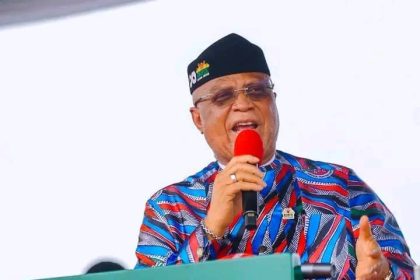
In governance, trust is not built on promises but on proof. In Akwa Ibom State today, the proof is written clearly in numbers, systems, and lived realities. Under the leadership of Pastor Umo Eno, the governor of Akwa Ibom State, the financial story of the state has moved from survival to stability, and from stability to strength.
What this administration has done is not merely to manage money, but to restore confidence among workers, retirees, investors, development partners, and ordinary citizens.
When this government came on board, it inherited a heavy financial burden defined by long-standing commercial bank debts and a crushing gratuity backlog that denied retirees their dignity.
Rather than shifting blame or postponing responsibility, the administration confronted the problem head-on. Clearing all inherited commercial bank debts amounting to over ₦39 billion sent a strong signal that Akwa Ibom was ready to free itself from the chains of interest payments and fiscal leakage.
At the same time, the deliberate and consistent reduction of gratuity arrears nearly ₦80 billion paid out of what was inherited restored hope to thousands of families who had waited for years to be remembered by the state they once served.
Beyond settling the past, this administration has shown rare competence in growing the state’s financial assets. Investment portfolios were not only protected but expanded, with returns surpassing expectations within a short time. This is not accidental success; it is the outcome of disciplined financial planning, professional oversight, and a clear understanding that public funds must work for the people.
The consistent preparation, presentation, and publication of annual financial statements in line with international best practices further underscore a culture of transparency that has become the signature of this government.
For civil servants and pensioners, governance has translated into predictability and peace of mind. Salaries and pensions are paid promptly, verification exercises have sanitized the payroll system, and resources previously lost to ghost workers are now being redirected toward genuine employment and development.
The full implementation of the Treasury Single Account, powered through the AkwaRemit platform, has sealed leakages and ensured that internally generated revenue flows transparently into the state’s treasury, strengthening planning and accountability.
What makes this financial reset even more compelling is how it has positioned Akwa Ibom on the global development map.
Through credible fiscal discipline and reliable debt profiling, the state has qualified for and accessed critical donor funds from business-enabling reforms to environmental interventions targeting erosion and flood-prone communities. These are not abstract achievements; they are concrete lifelines that improve livelihoods, protect communities, and stimulate economic activity.
Contractors are paid, inherited and ongoing projects are honored, and budgets are no longer theoretical documents but living instruments shaped by citizen participation and executed with over 85 percent performance.
At the start of each new financial year, the state now opens with a substantive balance, a rare but powerful indicator of prudent financial stewardship. Strategic support to key state-owned enterprises, including aviation and power, reflects a government that understands how sound finance underpins economic growth and job creation.
All of this explains why the call for continuity resonates across the state. Supporting Governor Umo Eno for a second term in 2027 is not about sentiment; it is about safeguarding a system that works.
It is about choosing stability over uncertainty, discipline over waste, and progress over regression. Akwa Ibom has found a steady hand on its financial compass, one that has paid yesterday’s debts, protected today’s workers, and created the financial backbone for tomorrow’s development.
The journey has begun, the direction is clear, and the people have every reason to stay the course.